fbpixel
Racism in Our Ranks | Khutbahs with Purpose
Is Islam to Blame for ISIS?
Is Islam to Blame for ISIS?

Islam’s Take on Modernity and Progress
Islam’s Take on Modernity and Progress

Prophet Muhammad - The Epitome Of Mercy
Prophet Muhammad - The Epitome Of Mercy

Cultivating Conviction (Yaqeen) - Mohammad Elshinawy
Cultivating Conviction (Yaqeen) - Mohammad Elshinawy

Why Some American Muslim Youth Are Doubting Their Faith
Why Some American Muslim Youth Are Doubting Their Faith

Rise up to Reclaim Our Narrative #SupportYaqeen
Rise up to Reclaim Our Narrative #SupportYaqeen

How Prophet Muhammad (PBUH) Dealt With His Enemies - Sh Omar Suleiman
How Prophet Muhammad (PBUH) Dealt With His Enemies - Sh Omar Suleiman

Dr. Jonathan Brown - How to Approach Hadith - Verifying and Understanding Hadith
Dr. Jonathan Brown - How to Approach Hadith - Verifying and Understanding Hadith

Religious Minorities Under Islamic Rule - Tesneem Alkiek

Religious Minorities Under Islamic Rule - Tesneem Alkiek

Reviving a Lost Sunnah: Adoption and Foster Care in Islam
Reviving a Lost Sunnah: Adoption and Foster Care in Islam

Reclaiming the Narrative About Our Prophet ﷺ | Part 1
Reclaiming the Narrative About Our Prophet ﷺ | Part 1

Reclaiming the Narrative About Our Prophet ﷺ | Part 2
Reclaiming the Narrative About Our Prophet ﷺ | Part 2

Why Do Innocent People Suffer? - Sh Omar Suleiman
Why Do Innocent People Suffer? - Sh Omar Suleiman

Repentance in Islam, Tawbah A Cornerstone of Faith - Roohi Tahir | 16th MAS-ICNA Convention
Repentance in Islam, Tawbah A Cornerstone of Faith - Roohi Tahir | 16th MAS-ICNA Convention

Dealing with Isolation: Learning from Islam’s Original Converts - Omar Suleiman | Lecture
Dealing with Isolation: Learning from Islam’s Original Converts - Omar Suleiman | Lecture

Does Islam Need Saving? An Analysis of Human Rights | Nour Soubani | 16th MAS-ICNA Convention
Does Islam Need Saving? An Analysis of Human Rights | Nour Soubani | 16th MAS-ICNA Convention

Islam, A Coherent Social Justice Tradition | Omar Suleiman | 16th MAS-ICNA Convention
Islam, A Coherent Social Justice Tradition | Omar Suleiman | 16th MAS-ICNA Convention

The Pursuit of Certainty - Sh. Yaser Birjas | Lecture
The Pursuit of Certainty - Sh. Yaser Birjas | Lecture

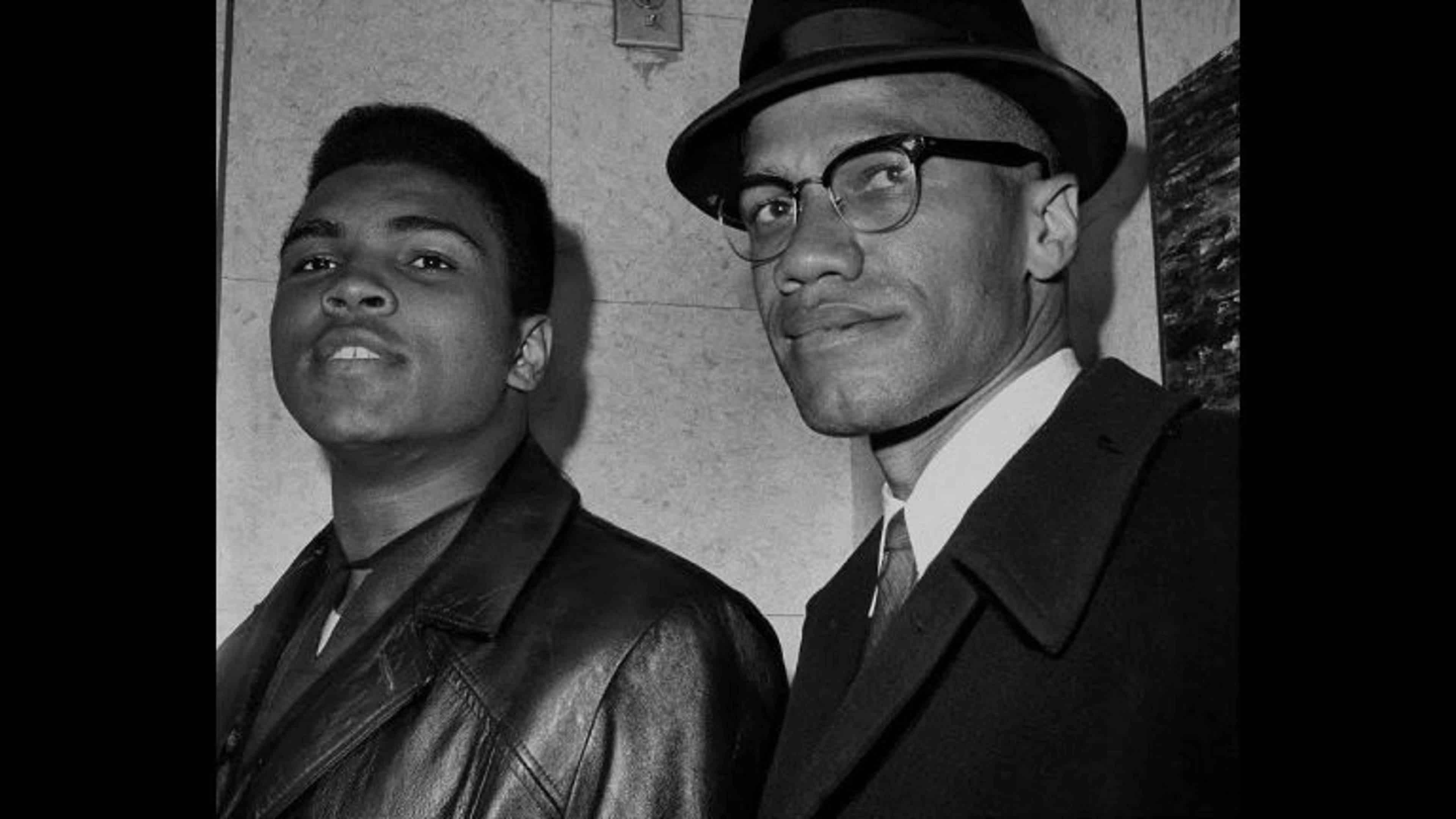
Seeds of Greatness: Malcolm X and Muhammad Ali
Seeds of Greatness: Malcolm X and Muhammad Ali

Atheism: Doubting Your Doubts - Asadullah Ali | Yaqeen in NY
Atheism: Doubting Your Doubts - Asadullah Ali | Yaqeen in NY

The Infinitely Merciful and the Question of Hellfire - Mohammad Elshinawy | YM Youth Conference 2017
The Infinitely Merciful and the Question of Hellfire - Mohammad Elshinawy | YM Youth Conference 2017

Appreciating Scholarship: Intro to Islamic Law - Tesneem Alkiek | Yaqeen in NY
Appreciating Scholarship: Intro to Islamic Law - Tesneem Alkiek | Yaqeen in NY

Station of Certainty | Lecture
Station of Certainty | Lecture

Personal Accountability in Life and Faith - Sh. Mohammad Elshinawy | Lecture
Personal Accountability in Life and Faith - Sh. Mohammad Elshinawy | Lecture

How Yaqeen Works to Educate the Public - Dr. Jonathan A.C. Brown | Making Principled Progress
How Yaqeen Works to Educate the Public - Dr. Jonathan A.C. Brown | Making Principled Progress

How Yaqeen Heals Internalized Islamophobia - Dalia Mogahed | Making Principled Progress
How Yaqeen Heals Internalized Islamophobia - Dalia Mogahed | Making Principled Progress

Contextualizing the Life and Mission of Jesus | Lecture
Contextualizing the Life and Mission of Jesus | Lecture

An Imam & A Pastor in Conversation on Loving Jesus
An Imam & A Pastor in Conversation on Loving Jesus

How Yaqeen is a Resource for Our Community - Sh. Omar Suleiman | Making Principled Progress
How Yaqeen is a Resource for Our Community - Sh. Omar Suleiman | Making Principled Progress

Conversations at The Carter Center: Harmonizing Religion and Human Rights
Conversations at The Carter Center: Harmonizing Religion and Human Rights

Meaningful Solidarity - Sh. Omar Suleiman | Lecture
Meaningful Solidarity - Sh. Omar Suleiman | Lecture

Combating Islamophobia with Marketing and Design | #SXSW19
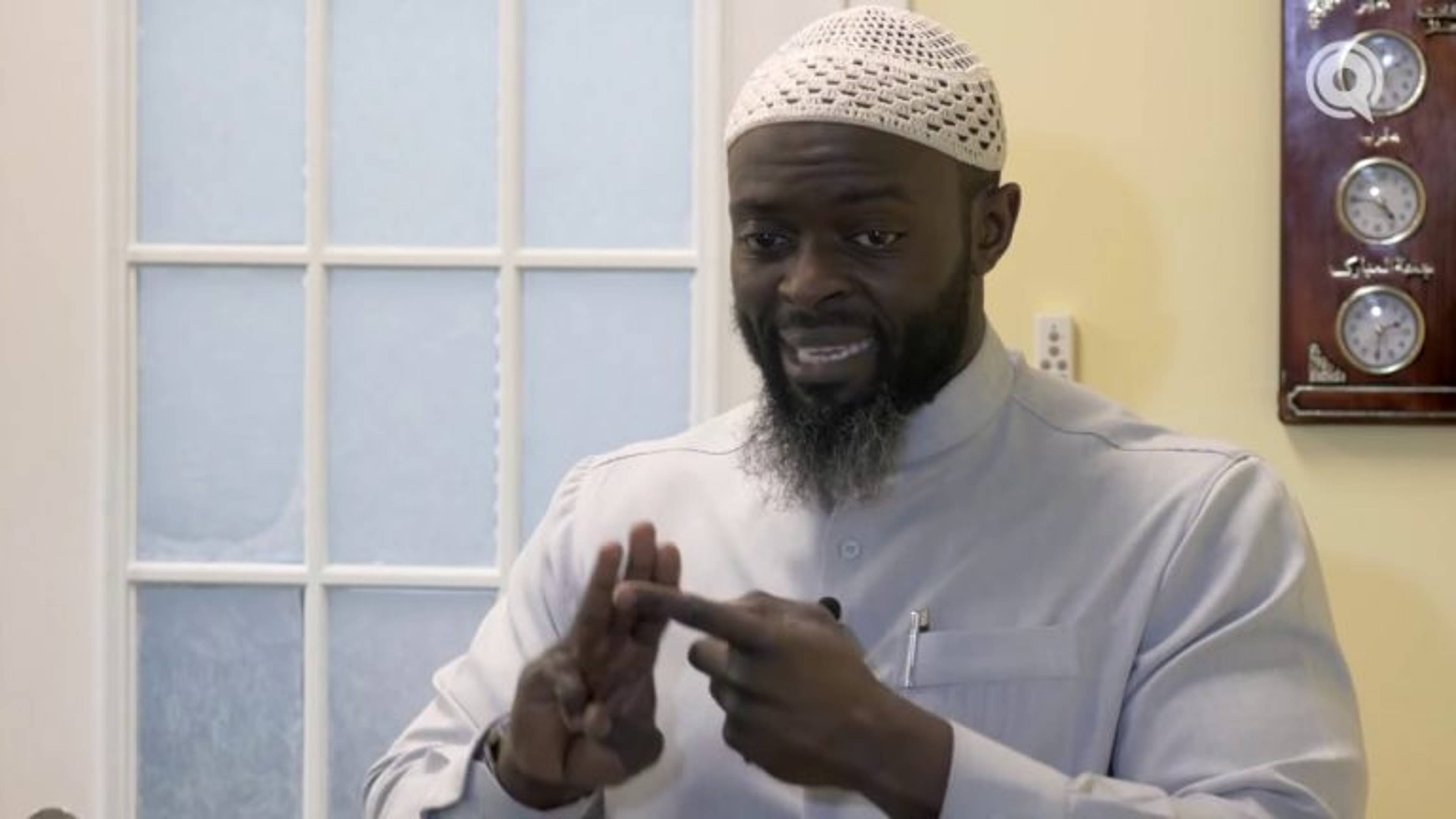
Combating Islamophobia with Marketing and Design | #SXSW19

Racism in Our Ranks | Khutbahs with Purpose
Playing

Racism in Our Ranks | Khutbahs with Purpose

Spiritual Personality - Zohair Abdul-Rahman | 2018 Yaqeen/MAS Academic Conference
Spiritual Personality - Zohair Abdul-Rahman | 2018 Yaqeen/MAS Academic Conference

Conflict Resolution: The Line Between Justice and Peace - Sh. Omar Suleiman | Lecture
Conflict Resolution: The Line Between Justice and Peace - Sh. Omar Suleiman | Lecture

The Flexibility of Islamic Law - Tesneem Alkiek | 2018 Yaqeen/MAS Academic Conference
The Flexibility of Islamic Law - Tesneem Alkiek | 2018 Yaqeen/MAS Academic Conference

To Know Him is to Love Him | Introduction by Sh. Omar Suleiman
To Know Him is to Love Him | Introduction by Sh. Omar Suleiman

The Role of Parents in Instilling Faith - Roohi Tahir | Yaqeen/MAS Academic Conference
The Role of Parents in Instilling Faith - Roohi Tahir | Yaqeen/MAS Academic Conference

Perfection and Beauty | Episode 1 | To Know Him is to Love Him
Perfection and Beauty | Episode 1 | To Know Him is to Love Him

Hope and Potential | Episode 2 | To Know Him is to Love Him
Hope and Potential | Episode 2 | To Know Him is to Love Him

Bonds and Relations | Episode 3 | To Know Him is to Love Him
Bonds and Relations | Episode 3 | To Know Him is to Love Him

The Story of Hajar: Uncovering Certainty in Uncertainty - Sh. Omar Suleiman | Lecture
The Story of Hajar: Uncovering Certainty in Uncertainty - Sh. Omar Suleiman | Lecture

Gracious Dealings | Episode 4 | To Know Him is to Love Him
Gracious Dealings | Episode 4 | To Know Him is to Love Him

Gift Giving | Episode 5 | To Know Him is to Love Him

Gift Giving | Episode 5 | To Know Him is to Love Him

The Generous | Episode 6 | To Know Him is to Love Him
The Generous | Episode 6 | To Know Him is to Love Him

Navigating Adolescence - Dr. Altaf Husain | Reframing the Gender Question
Navigating Adolescence - Dr. Altaf Husain | Reframing the Gender Question

Keeping Masculinity from Trending Toxic - Dr. Jonathan Brown | Reframing the Gender Question
Keeping Masculinity from Trending Toxic - Dr. Jonathan Brown | Reframing the Gender Question

Why Does God Ask People to Worship Him? - Sh. Mohammad Elshinawy | Lecture
Why Does God Ask People to Worship Him? - Sh. Mohammad Elshinawy | Lecture

Addressing the Topic of Trauma and Faith - Sh. Omar Suleiman | ISNACON 2019
Addressing the Topic of Trauma and Faith - Sh. Omar Suleiman | ISNACON 2019

The Impact of Trauma on Faith - Sarah Sultan | ISNACON 2019
The Impact of Trauma on Faith - Sarah Sultan | ISNACON 2019

The Rising Tide of Atheism - Sh. Mohammad Elshinawy | ICNA 2019
The Rising Tide of Atheism - Sh. Mohammad Elshinawy | ICNA 2019

The Duha Approach: A New Model to Treat Trauma - Najwa Awad | ISNACON 2019
The Duha Approach: A New Model to Treat Trauma - Najwa Awad | ISNACON 2019

How Islam Addresses Grief - Dr. Altaf Husain | ISNACON 2019
How Islam Addresses Grief - Dr. Altaf Husain | ISNACON 2019

Understanding Traumatic Grief - Najwa Awad | ISNACON 2019
Understanding Traumatic Grief - Najwa Awad | ISNACON 2019

Calling Out to Allah With Meaning - Sh. Tahir Wyatt | Lecture
Calling Out to Allah With Meaning - Sh. Tahir Wyatt | Lecture

Slavery in Islam - Dr. Jonathan AC Brown | Lecture
Slavery in Islam - Dr. Jonathan AC Brown | Lecture

The Gift of Receiving Good Counsel - Dr. Hatem ElHaj | Lecture
The Gift of Receiving Good Counsel - Dr. Hatem ElHaj | Lecture

Roots and Implications of Pop Culture | Firm Roots
Roots and Implications of Pop Culture | Firm Roots

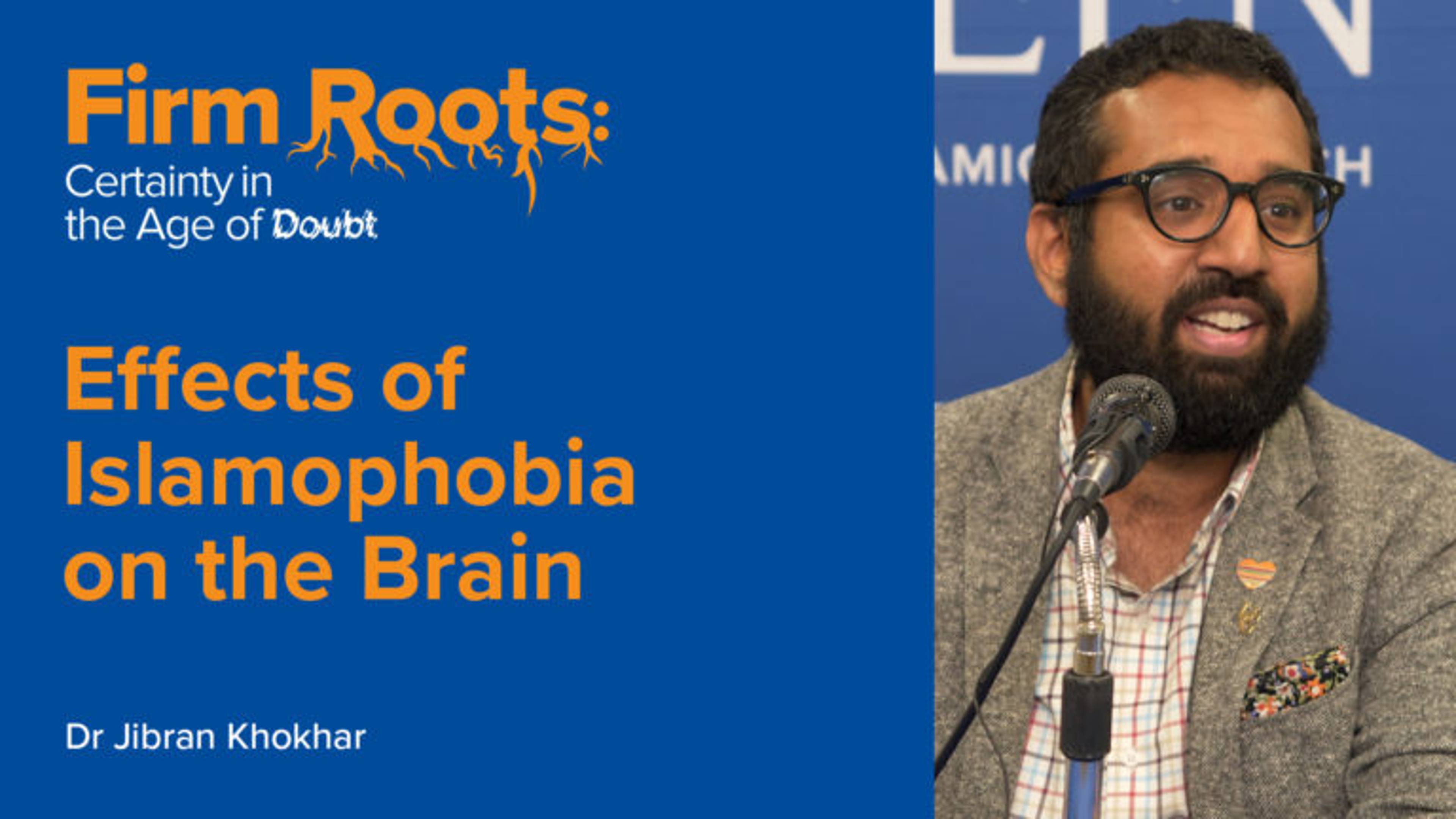
Effects of Islamophobia on the Brain - Dr. Jibran Khokhar | Firm Roots
Effects of Islamophobia on the Brain - Dr. Jibran Khokhar | Firm Roots

With Hardship Comes Ease | Dr. Omar Suleiman
With Hardship Comes Ease | Dr. Omar Suleiman

A Conversation with Afreen Fatima on the Plight of Indian Muslims | Dr. Omar Suleiman
A Conversation with Afreen Fatima on the Plight of Indian Muslims | Dr. Omar Suleiman

How the Prophet ﷺ Inspired Young People | Dr. Omar Suleiman
How the Prophet ﷺ Inspired Young People | Dr. Omar Suleiman

When the Qur’an Changes You | Dr. Omar Suleiman
When the Qur’an Changes You | Dr. Omar Suleiman

What Does Allah Really Want From Me? | Dr. Omar Suleiman
What Does Allah Really Want From Me? | Dr. Omar Suleiman

Fueling Your Faith: A Guide to Preparing for Ramadan | Dr. Omar Suleiman
Fueling Your Faith: A Guide to Preparing for Ramadan | Dr. Omar Suleiman

Be In This World A Stranger or a Wayfarer  | Dr. Omar Suleiman
Be In This World A Stranger or a Wayfarer | Dr. Omar Suleiman

Becoming the Best Version of Yourself | Dr. Omar Suleiman
Becoming the Best Version of Yourself | Dr. Omar Suleiman

Abu Bakr's (ra) Rare Speech | Dr. Omar Suleiman
Abu Bakr's (ra) Rare Speech | Dr. Omar Suleiman

To Love the Prophet ﷺ More Than Yourself | Dr. Omar Suleiman
To Love the Prophet ﷺ More Than Yourself | Dr. Omar Suleiman

Grieving Doctors of Gaza | Dr. Omar Suleiman
Grieving Doctors of Gaza | Dr. Omar Suleiman

Did the Prophet ﷺ See You in The Future? | Dr. Omar Suleiman
Did the Prophet ﷺ See You in The Future? | Dr. Omar Suleiman

Is Religion Making Us Complacent? I Dr. Omar Suleiman
Is Religion Making Us Complacent? I Dr. Omar Suleiman

Consumerism and The Inflation of Self | Black Friday | Dr. Omar Suleiman
Consumerism and The Inflation of Self | Black Friday | Dr. Omar Suleiman

Is Syria Really a Good Thing ? | Dr. Omar Suleiman
Is Syria Really a Good Thing ? | Dr. Omar Suleiman

Finding Solace Through Patience and Wisdom | Dr. Omar Suleiman
Finding Solace Through Patience and Wisdom | Dr. Omar Suleiman

Age is Nothing but a Number | Making An Impact | Dr. Omar Suleiman
Age is Nothing but a Number | Making An Impact | Dr. Omar Suleiman

Tested Like the Prophets | UK Tour Wembley Stadium Lecture by Dr. Omar Suleiman
Tested Like the Prophets | UK Tour Wembley Stadium Lecture by Dr. Omar Suleiman

Waiting for The Mahdi or A Miracle | Lecture by Dr. Omar Suleiman
Waiting for The Mahdi or A Miracle | Lecture by Dr. Omar Suleiman

Why Did Allah Mention The Number 19? Your Test of Faith | Dr. Omar Suleiman
Why Did Allah Mention The Number 19? Your Test of Faith | Dr. Omar Suleiman

Finding Resilience Beyond the Illusion of Power | Lecture by Dr. Omar Suleiman
Finding Resilience Beyond the Illusion of Power | Lecture by Dr. Omar Suleiman

Preparing for Ramadan - Making the most in Shaban | Lecture by Sh. Mohammad Elshinawy
Preparing for Ramadan - Making the most in Shaban | Lecture by Sh. Mohammad Elshinawy

The People of Gaza Are Undisplaceable | Dr. Omar Suleiman
The People of Gaza Are Undisplaceable | Dr. Omar Suleiman

How to Reinvent Yourself This Ramadan | Dr. Omar Suleiman
How to Reinvent Yourself This Ramadan | Dr. Omar Suleiman

Kashmir Is Calling: Keynote at International War Crimes Tribunal, Bosnia | Dr. Omar Suleiman
Kashmir Is Calling: Keynote at International War Crimes Tribunal, Bosnia | Dr. Omar Suleiman

The Most Amazing Wedding I’ve Ever Been To | Dr. Omar Suleiman's South Africa Tour 2025
The Most Amazing Wedding I’ve Ever Been To | Dr. Omar Suleiman's South Africa Tour 2025

This Is What Made The Prophets Unstoppable | Lecture by Dr. Omar Suleiman
This Is What Made The Prophets Unstoppable | Lecture by Dr. Omar Suleiman

What Is Allah Preparing You For? | Lecture by Dr. Omar Suleiman
What Is Allah Preparing You For? | Lecture by Dr. Omar Suleiman

27th Night Special Du’a Stream by Dr. Omar Suleiman #LaylatulQadr
27th Night Special Du’a Stream by Dr. Omar Suleiman #LaylatulQadr

Khatm al-Quran Du’a 2026 by Dr. Omar Suleiman

Khatm al-Quran Du’a 2026 by Dr. Omar Suleiman

Lecture

Racism in Our Ranks | Khutbahs with Purpose

Bring this Khutbah to your mosque or community. Download the complete Talk toolkit here.

Does racism really exist in Muslim communities? According to an ISPU poll, the answer is yes. Black Muslims are just as likely to experience racism from their own faith community as Black Americans are from their own faith communities (i.e. other Christians), with both groups more likely to report experiencing racial discrimination from the general public. In 2017, 60% of American Muslims reported some level of religious discrimination within the past year and that most non-white Muslims described experiencing some sort of racial discrimination in that same year. Imagine that atop all these offenses, Black Muslims, who represent 1/3 of the Muslims in America, also experience such treatment from their fellow Muslims. That should alarm us, because masājid are meant to be sanctuaries that protect us from forgetting Allah, and from forgetting our equality in front of Him. This talk demonstrates examples of racism within our communities and identifies steps to take to eliminate it.

This transcript was auto-generated using AI and may contain misspellings.
Alhamdulillah, we praise Allah, we seek his aid and we seek his forgiveness. We seek refuge in Allah from the evil of ourselves and the evil of our bad deeds.
Whomsoever Allah guides, none can misguide. And whomsoever Allah allows to be led astray, none can guide. And I bear witness that there is no one worthy of worship except Allah, the Exalted, and that Muhammad, peace and blessings be upon him, is his last messenger and slave.
A man walks in his home to see his daughter in the bathroom combing her hair.
You see, when he walked in his home, he heard a sound, a repetitious sound, and he sees his daughter combing her hair profusely in anger. And he's confused. Why is she combing her hair in anger?
He knows that at that time, it's most likely not her hair that is the problem. Whereupon he asks her, what's wrong? What's the problem? Young girl, under the age of 10.
And when he asks her what's the problem, she goes on to explain to him the incident that took place. You see, she was with a friend of hers, and this friend of hers had a new friend with her.
Whereupon this new friend saw this individual's daughter for the first time, and she told her, the friend that, the original friend, she said, don't play with her.
So then the friend said, why, why can't I play with her? She said, no, don't play with her. She's dirty. And then the sister, the young girl who was the brother's daughter, upon that she said, no, I've taken a shower.
And the new girl went on to explain how she was dirty because of her skin color. You see, the girl that was combing her hair, her hair was curly, and she wanted to make
her hair straight like the other girls. She wanted to make her hair straight, and she was mad, which affected her psychology,
her self-esteem until before, right before she got married in her late teens. There was another individual that mentioned, and this individual was of a certain nationality, born Muslim.
He sits with his African-American friend, and he sorrowfully explains to him, you know, I'm going to be honest with you. Now that we're friends and we're both Muslim, Alhamdulillah, I have to explain something
to you, and I have to admit it. I did not believe that individuals like you, African-American, black, I didn't know that
you all had the same level of intelligence, that you were actually educated. I seriously thought and was raised to think that you were all entertainers.
You were only good to be entertainers, sports figures, and entertainers, and in movies. This is a problem.
According to the Institute of Social Policy and Understanding, they've rated that one third of the Muslim community is made up from this demographic of African-American individuals.
One third in America of the individuals that helped build this country, one third of them. It's reported that in a poll in 2017, that they've experienced the same amount of racism
that they do in their respective religious communities as they would out in society. According to ISPU.
So we see that this survey from the Institute of Social Policy and Understanding is something that is real. It's something that is a problem. It's something that is human. It's something that needs to be challenged.
If I was to come to you today, or if there was a mosque amongst the Masajid, we were to walk in, and they were to say, we're going to give the Khutbah only in the language of our people, which has been encountered.
How would that make the person that does not know that language or that culture feel? Would they come back to that Masjid? If there is a time when someone comes into the Masjid and they feel it is culturally
potent to the degree to whereby the body language, the facial expression, the words that are used towards that person of the different nationality, culture, color, it is indirectly
speaking to them, telling them, you're not welcome here. We brothers and sisters, we all know, we all know that racism is not allowed in Islam.
And there are many things that we say are not allowed in Islam, but the actualization of that, the implementation of that, the propagation of Islamic values, morals that have ethical
codes with them. That's the challenge for us. When we see the Prophet, when he said on his last message to the world, to the Ummah, to
human beings, to the Muslims, but rather to all of humanity, in Khutbah al-Wada' which is in Arabic, the sermon in English, the sermon, the farewell sermon.
If you were to give a last message to your nation, to humanity as a Prophet, whatever you're going to tell them is universal.
Whatever you're going to tell them is a code that we should all live by, a standard that we should all try our level best to implement. Whatever you're going to tell them is that which if we implement, if we believe in our
heart and try our level best to implement it, we will change society for the better.
From this message, this long sermon, the Prophet, he said, Oh Bani Adam, all of you are created from Adam and Adam is created from turab, from clay.
There is no virtue of the Arab over the non-Arab. And there is no virtue of the non-Arab over the Arab.
And there is no virtue of white over black, nor black over white. Rather the virtue is with taqwa.
If we notice here, the Prophet first attributed everything back to the original form of creation, Adam. Then he mentioned the physical characteristics of those being Arab over Ajam.
All of those are irrelevant when it comes to who is virtuous from a genus standpoint, from a race, a class of people. All of that is irrelevant. What is relevant and what one should cherish is their relationship with their Creator,
which is manifested, which is shown by eradicating things such as racism.
When we see this message from the Prophet, is it something that we stop only at the message and do not try to implement in our lives, do not try to speak about and address, even
if it is uncomfortable. We see that the Prophet, reminding us of our asul, our essence, where we go back to all
of us have the same general features that go back to Adam. When Adam was violated, he was oppressed at one point. And we see this message in the Quran.
When Allah subhanahu wa ta'ala addresses the issue of racism, which from that emanates stereotypes, discrimination, he addresses it when he talks about the reality of the
creation of Adam and when he ordered the angels to prostrate to Adam. And from that creation, one of them refused.
When Allah subhanahu wa ta'ala says in the Quran, Allah speaks about the conversation
that was between him and Satan. When Satan refused to prostrate to Adam after Allah ordered them to, he says in the translation,
Allah prohibited you from prostrating after I have ordered you to. Listen to Satan's response. He said that I am better than him.
You Allah have created me from fire, nar, and you have created him from mere clay.
Let's pause here and look at the reasoning that Iblis used to disobey his creator. If you think about it, his creator, who he acknowledged created him, has ultimate power,
disobeyed him in front of him. And his reasoning was because of a characteristic, a physical characteristic that has been given to him. And he said, fire is better than clay.
Why should I subject myself to something lower than me? This is the essence of racism. Racism goes back to this ayah.
When we see the position of Islam and Muslims in regard to racism, it goes back to Satan. We believe it is a satanic process or belief or system to hold within oneself, within one's heart.
So Adam alayhi salam was oppressed in this regard, being that Allah ordered him to prostrate and he did not prostrate. When we look at racism, what exactly is it and what's the difference between that and
bigotry for example? Racism is to believe that a certain race or class of people or genus is inherently superior
than another race. That you believe that that color or that race of people is inherently inferior to your race,
meaning that naturally they are not that intelligent. Naturally they are criminals. Naturally they have some sort of deficiency within them.
That is racism. Bigotry is to not accept someone else's opinion or statement based on who they are. So someone could be a bigot based on racist beliefs.
In looking at this brothers and sisters, we have to stop and ask ourselves, constantly ask ourselves in review, do we have this racism within us?
Now racism can be implicit or it can be explicit. If it is something that is explicit, you know and consciously have this belief within yourself
to where when you sit with your children at home speaking to your friend on the phone or to your wife, you make a racist statement. You make a statement of belittling a class of people because of their color, because
of their last name possibly, and your children hear it and they look up to you. This is how they can be affected and have racist beliefs.
And this leads to the second category of someone having implicit racism, not even realizing in their subconscious mind that they believe that no one that is not Arab can have knowledge of Islam.
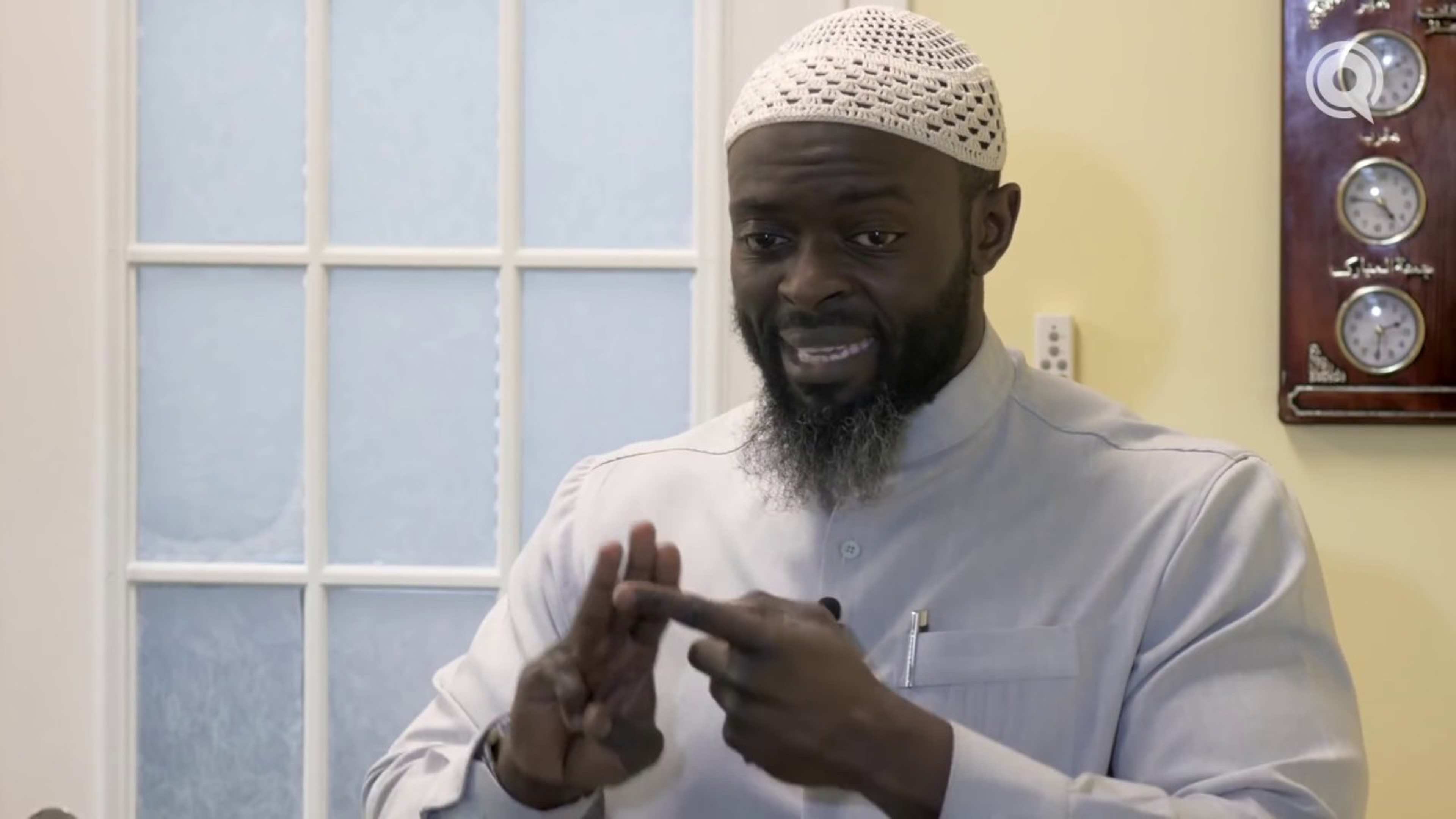
There's no way. How can someone that converts to Islam have knowledge? One time I came off the membar after giving a khutbah and a brother comes to me and he says you're different. I said how am I different brother?
You're not like the others, like the rest. The rest of what? You know like you. What does that mean? Listen to me brother. What does that mean?
When you have the belief and it's in your subconscious mind, you don't even realize it that a certain class of people is not at the same level as another race.
This could be implicit racism. And this is a problem because we may act on that implicit racism and not even realize it.
And because of that racism, what did Allah subhanahu wa ta'ala say in the next verse when Satan mentioned he's not going to prostrate to Adam because he was created from fire and Adam was created from clay.
He felt that he was superior to Adam because of his clay nature. What did Allah say? Fahbitu minha. Descend. You are Rajim. We say Rajim. Rajim means that which is thrown. Manbood. Marjum.
Someone that is thrown and casted. Allah said Fahbitu minha. Descend down to the earth. Fama yakunu laka anta takabara feeha. Fakhruj innaka minas saagireen. Allah says here, descend. You are casted down.
It is not for you to be arrogant. Leave. Verily, you are of the demised ones. Beautiful here in this verse. Allah subhanahu wa ta'ala tells him, you are descended down.
Leave out of this pure place of purification. No act or belief or statement of impurities is allowed in Jannah. So Allah makes Satan, he casts him out of heaven. And he says it's not for you to be arrogant.
And the word in Arabic for arrogance is tatakabbar. We say allahu akbar, which means great or big. So it is as though the one that is arrogant is trying to make themselves greater.
Is trying to make themselves bigger than the other, the other, or the other class or race. Allah said it is not for you to be arrogant. And he tells him, get out.
For verily, you are of the saagireen. And saagir is the opposite of kabir. Saagireen means you're trying to make yourself big, but in actuality you are small. As they say, an individual that stands on the mountain looking down at everyone thinking
that they are small doesn't realize that everyone sees him or her as small. So in the reality, the Prophet sallallahu alayhi wa sallam tells us that no one will
enter Jannah that has a mustard seed of arrogance in their heart. That is the essence of racism, is arrogance. Is arrogance. Is belittling the truth.
Is belittling mankind for what you believe. So when we sit and look at this reality of this sickness that is contagious, what is
our position? When we see and we hear this reality, what do we do?
So when we understand, brothers and sisters, we all know, we're all well aware of this,
if your non-Muslim relative or friend was to ask you, you know, why are individuals that believe in your faith racist, the first thing we should say is, well you know, our faith does not allow that. And we all can attest to that. We all believe that.
What has been given to you is the proof of the invalidity of racism that is not accepted in an Islam. And we have to ask ourselves by categorizing and seeing that there is implicit and explicit
racism that we may be aware of it in our conscious mind and some of us may not even realize that we have this belief within ourself of the other. We have to understand, brothers and sisters, is that this is something that plagues the
ummah, the Muslim ummah. And not only Muslim, other religions as well, but we as Muslims have a bigger challenge.
And that challenge is that of the beauty, and I use the word beauty, of diversity. The beauty of diversity.
Do we view this diversity, the different colors, cultures, nationalities as a threat and an adulteration to what we are comfortable with?
Or do we view it as an opportunity to increase our worship of Allah and our gratitude towards Allah Subhanahu wa ta'ala. When we see this, brothers and sisters, naturally we are human beings. And we like to be around people that are like us.
This is natural. There is nothing wrong with that if there are people that speak the same language as you and have the same understanding and heritage as you. And when someone comes in that is not of that demographic, it can be strange in the beginning. But guess what?
The Prophet, Sallallahu alayhi wa sallam, that we see within his sunnah, uncomfortability is recommended at times. To where you get out of your shell and you speak to someone that may be belittling Islam
and Muslims, for instance. You engage in a conversation. You understand that person. This is what is recommended for the Muslim. You know the Prophet, Sallallahu alayhi wa sallam, he said,
Arba'un kun fee ummati min umuru jahiliya la yatrukuhun. He said there are four things from my ummah, from my nation, that they will never leave them. They will never leave them.
Afakhru bil ansab, afakhru bil ansab, wa ta'nu fil ansab, wa listisqa'i bil nujum, wa niyahah. This is Sahih Muslim. The Prophet, Sallallahu alayhi wa sallam, he said, four things, my nation will never leave them.
My nation will never leave them. Bragging about your background, belittling someone's lineage, seeking rain from the stars
and wailing, like wailing over the dead. All of these four things are impermissible in Islam. Impermissible.
To brag about your status or to belittle someone because of their lineage or to seek help from the star and not seek help from the creator of the star or to wail, to wail, for instance,
over the dead, showing displeasure with what Allah has predestined. So with reality, brothers and sisters, we know this.
We as human beings, the Islam does address our human nature, but it gives us the medicine in order to continuously go back to it and seek help from Allah Subhanahu wa ta'ala in
it. To seek help from Allah Subhanahu wa ta'ala in that. When understanding that, brothers and sisters, as the Prophet, Sallallahu alayhi wa sallam,
says, do not be complacent even when it comes to being with your nationality or group. Always go out of your shell.
When the Prophet, Sallallahu alayhi wa sallam, says, give salams to those who you know and who you don't know. When the Prophet, Sallallahu alayhi wa sallam, says, if there are two people speaking and there is a third that doesn't understand or do not speak secretly and there is a third
person there, do not speak in secret for verily, have it. It makes that third person that doesn't understand or cannot hear what you're saying, sad. We as human beings may be wondering, what are they saying? Is it about me?
Are they making fun of me? Why are they whispering? Why are they speaking another language? Islam addresses our human nature. From that human nature is having a bias about the other.
But Islam says, look, you will be uncomfortable at times. Break through that uncomfortability for a greater purpose. What are those three things that we can do to challenge this sickness of racism and bigotry?
Firstly is education. Is to educate ourselves about ourselves. To educate ourselves about us as human beings,
the ills that we can be affected by and how to alleviate that. And then educate ourselves about the different cultures within Islam. As Allah Subh'anaHu Wa Ta-A'la mentions, and from his signs is that he has made you
different languages and different colors. And what is the reason for that? As he mentions in another verse, O mankind, we have made you nations and tribes for you to get to know one another.
So he mentions something that he does. He has mentioned that he's created you sha'oban wa qabail. For what reason? A treasure that he is disclosing to you. Why did I create different nationalities?
Why did I create different colors within the same culture? Within the same culture, different colors. Why did I do that? Li taAAarafoo.
For you to get to know one another. And again, he addresses it even here. The next portion of the verse, inna akramakum aindallahi atqaakum. Verily the most noble of you is the one who has most piety.
Fearing Allah Subh'anaHu Wa Ta-A'la. An exemplification of that fear through your actions. How is that? By getting to know your fellow brother and sister. Regardless of their culture, regardless of their language, regardless of their color,
regardless of what may be predominantly presumed in the media. Because if that was the case, no one would speak to Muslims. So we have to understand that this difference
of our human features is an opportunity, a spiritual opportunity for us to be stronger as a unit. Because if not, this will be one of the major factors that separate us,
especially in this place of diversity in America. The second thing is actualizing that. Actualizing that within our masajid.
If we have different cultures and nationalities, the board should be reflective of that to make sure that it has an influence on every congregant in that area.
Within our masajid that we have culture night, that one culture may come and bring their foods and introduce the history of their foods to the people. Yes, we as humans may not want to taste that food in the beginning,
but break through that uncomfortability to show your appreciation to Allah Subh'anaHu Wa Ta-A'la that he's created different individuals. Not everyone is like you. Not everyone is like you.
To celebrate that difference is worship. When having in the masajid, people coming to talk about the elements of their culture, the history of their culture, we learn more about one another.
And the only authentic way to appreciate something is to learn about it. Is to learn about it. And then lastly, brothers and sisters, is to acknowledge.
To acknowledge. If we have implicit or explicit racism, bigotry within ourselves. Because if we don't look in the mirror when we wake up, when we go to sleep,
when we have any encounter at ourselves as human beings, at our reality, do not try to go and speak to your children about Islam when they see you constantly do and act
in a way that is un-Islamic. That goes against the fitrah, the natural inclination. Look at yourselves, brothers and sisters, and see if within this chapter of society,
of societal ills, are you someone that allows it to continue? Because we all will have this bias in our lives. But do we allow it to continue and dictate our actions? Do we allow it to continue within our hearts,
which could be a racial belief? Do we allow it to dictate our beliefs and thoughts, which could be stereotypes? And do we allow it to dictate what we do and how we treat people, which could be, based on your position in society, discrimination.
Because this is from Jahiliyyah, as the Prophet, salallahu alayhi wa sallam, mentioned earlier, I mentioned in the hadith, the four things. And this is what took place with an illustrious companion by the name of Abu Dhar, radiAllahu anhu. When it was mentioned in some narrations
that he said this to Bilal ibn Rabah, radiAllahu anhu, who was an individual that was a slave and Islam freed him, Islam freed him, he was freed.
And Bilal ibn Rabah was insulted by Abu Dhar because they were in an argument, as in some narrations, and what did he say to him? Ya bin al-Sawda. He said, oh, son of a black woman.
You realize, just by saying something that is a reality, it was understood that that was an insult. Even though Abu Dhar, radiAllahu anhu, he is the best of companions, he did not allow that statement
to dictate how he dealt with Bilal because Bilal, radiAllahu anhu, went to tell the Prophet, salallahu alayhi wa sallam, and in some narrations, he put his head on the ground and told Bilal to step on his neck. As soon as the haq came to him,
he let go of any jahiliyyah that was within himself. And if we know the character of Abu Dhar, he was someone that was strong, but when it came to the haq, his heart was soft. When it came to the truth of Islam, his heart was soft.
When it came to Islam versus jahiliyyah, or my culture that is detrimental to my belief, he left that. So we do not say, even though Abu Dhar at that time may have made a racist statement, it was eradicated immediately when the sunnah, being the Prophet, salallahu alayhi wa sallam,
came to him. We ask Allah, subhanahu wa ta'ala, to make us of those that educate ourselves about each other. We ask him to make us of those that if we have the opportunity to eradicate this type of conduct, which is a sickness of the heart,
that we take the means in order to change that within our houses and within our masajid and within society. And we ask Allah, subhanahu wa ta'ala, to make us of those that constantly review ourselves by ourselves in prayer when we are alone.
And to ask Allah, subhanahu wa ta'ala, to alleviate that from us. Rabbana aatinaa fid dunya hasanaa wa fil aakhirati hasanaa waqinaa athab annaan Rabbana laa tuzik qulubana ba'di idh hadaytinaa wahabalanaa min ladunka rahmaa innaka antuhu wahab
Allahumma usur Islamu wal muslimeen Allahumma usur Islamu wal muslimeen Allahumma usur Islamu wal muslimeen Allahumma usur musta'dafinaa fi kulli makana wa zamana ya rabbal alameen wa midhum bimadadan min indika ya al-azizu ya al-qawiyu ya al-mateen ya ayyuha almu'minoon inna Allah ya'mul bil-adli wal-ihsani
wa ita'i dhil qurba wa yanhaa an al-fahsha'i wal-munkari wal-baghi yaAAidhukum laAAalakum tathakkaroon fathkuru Allah yadhkurkum washkuruhu ala ni'mihi yazidkum wa ladhikru Allahi akbar wallahu ya'anumu ma tasna'oon
wa a'kimu s-salam