fbpixel
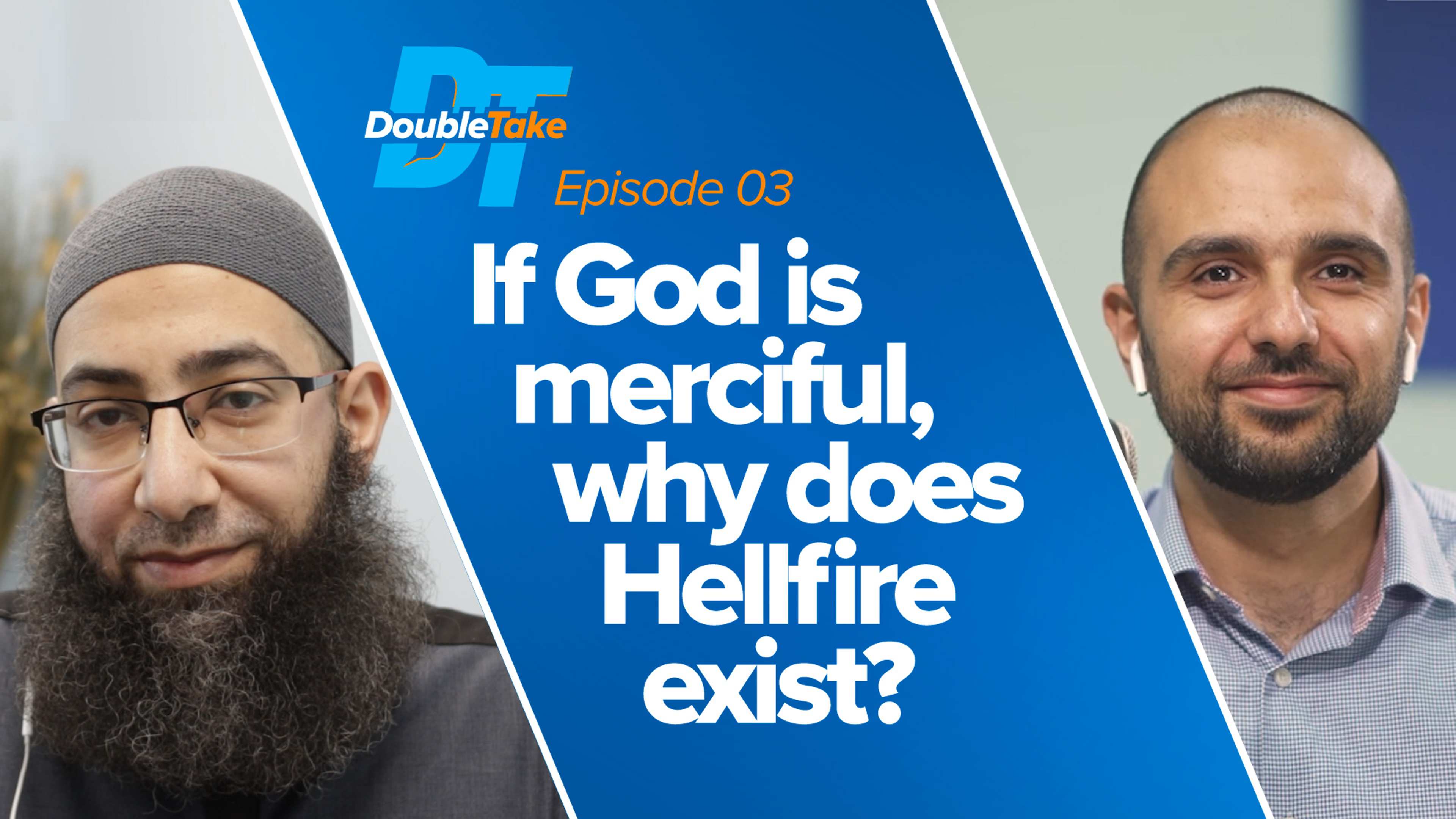
S1E3 - If God is Merciful, Why Does Hellfire Exist? | DoubleTake
Introducing DoubleTake, a Podcast by Yaqeen Institute

Introducing DoubleTake, a Podcast by Yaqeen Institute

S1E1 - Is Trauma Affecting my Faith? | DoubleTake

S1E1 - Is Trauma Affecting my Faith? | DoubleTake

S1E2 - Did Islam Spread by the Sword? | DoubleTake

S1E2 - Did Islam Spread by the Sword? | DoubleTake

S1E3 - If God is Merciful, Why Does Hellfire Exist? | DoubleTake
Playing

S1E3 - If God is Merciful, Why Does Hellfire Exist? | DoubleTake

S1E4 - Does Praying Tahajjud Make a Difference? | DoubleTake

S1E4 - Does Praying Tahajjud Make a Difference? | DoubleTake

S1E5 - Will My Children Be Muslim? | DoubleTake

S1E5 - Will My Children Be Muslim? | DoubleTake

S1E6 - Has COVID Impacted My Faith? | DoubleTake

S1E6 - Has COVID Impacted My Faith? | DoubleTake

S1E7 - Is "Counter-Radicalization" Hurting Muslims? | DoubleTake

S1E7 - Is "Counter-Radicalization" Hurting Muslims? | DoubleTake

S1E8 - What’s the Point of Repentance? | DoubleTake

S1E8 - What’s the Point of Repentance? | DoubleTake

S1E9 - Why Do Muslims Experience Doubt? | DoubleTake

S1E9 - Why Do Muslims Experience Doubt? | DoubleTake

S1E10 - How Important was Aisha (ra)? | DoubleTake

S1E10 - How Important was Aisha (ra)? | DoubleTake

S1E11 - What is the “Constitution” of Medina? | DoubleTake

S1E11 - What is the “Constitution” of Medina? | DoubleTake

S1E12 - Can Activism Be Guided by the Qur'an & Sunnah? | DoubleTake

S1E12 - Can Activism Be Guided by the Qur'an & Sunnah? | DoubleTake

S2E1: How can I connect with the Qur'an?  | DoubleTake

S2E1: How can I connect with the Qur'an? | DoubleTake

S2E2 - How can I bring peace to my heart? | DoubleTake

S2E2 - How can I bring peace to my heart? | DoubleTake

S2E3 - What does it mean to trust God? | DoubleTake

S2E3 - What does it mean to trust God? | DoubleTake

S2E4 - How to Pray for Your Children | DoubleTake

S2E4 - How to Pray for Your Children | DoubleTake

S2E5 - How Do I Talk About Drugs and Alcohol | DoubleTake

S2E5 - How Do I Talk About Drugs and Alcohol | DoubleTake

S2E6 - Can faith make me happy? | DoubleTake

S2E6 - Can faith make me happy? | DoubleTake

S2E7 - Is Islam Difficult? | DoubleTake

S2E7 - Is Islam Difficult? | DoubleTake

S2E8 - Faith, Poverty, and Community | DoubleTake

S2E8 - Faith, Poverty, and Community | DoubleTake

S2E9 - Is Islam a Man's Religion? | DoubleTake

S2E9 - Is Islam a Man's Religion? | DoubleTake

S2E10 - Stuck in Habitual Sin | DoubleTake

S2E10 - Stuck in Habitual Sin | DoubleTake

S2E11 - Smartphones are Hijacking our Spirituality | DoubleTake

S2E11 - Smartphones are Hijacking our Spirituality | DoubleTake

S2E12 - Prove the Quran is a Miracle | DoubleTake

S2E12 - Prove the Quran is a Miracle | DoubleTake

Yusef Salaam - “I was closest to God in prison.” | DoubleTake Special

Yusef Salaam - “I was closest to God in prison.” | DoubleTake Special

S3 E1: The 7 Rivers to the Heart | DoubleTake Ramadan Special

S3 E1: The 7 Rivers to the Heart | DoubleTake Ramadan Special

S3 E2: Why am I sinning if Shaytan is locked up? | DoubleTake Ramadan Special

S3 E2: Why am I sinning if Shaytan is locked up? | DoubleTake Ramadan Special

S3 E3: Are we failing new Muslims? | DoubleTake Ramadan Special

S3 E3: Are we failing new Muslims? | DoubleTake Ramadan Special

S3 E4: Ramadan is coming to an End | DoubleTake Ramadan Special

S3 E4: Ramadan is coming to an End | DoubleTake Ramadan Special

S3 E5: Social Media is Making Me Jealous | Doubletake

S3 E5: Social Media is Making Me Jealous | Doubletake

S3 E6: How to Stop Being Jealous | Doubletake

S3 E6: How to Stop Being Jealous | Doubletake

S3 E7: Responding to Suicide | Doubletake

S3 E7: Responding to Suicide | Doubletake

S3 E8: The Man's Role at Home | Doubletake

S3 E8: The Man's Role at Home | Doubletake

S3 E9: Overcoming Pørnography | Doubletake

S3 E9: Overcoming Pørnography | Doubletake

S3 E10: Muslims & Crypto: Will we fall behind?  | DoubleTake

S3 E10: Muslims & Crypto: Will we fall behind? | DoubleTake

S3 E11: Islam and Abortion | DoubleTake

S3 E11: Islam and Abortion | DoubleTake

James Webb Telescope: Muslims in Space | DoubleTake S3 E12

James Webb Telescope: Muslims in Space | DoubleTake S3 E12

Are Religiosity and Mental Health Connected? | DoubleTake S3 E13

Are Religiosity and Mental Health Connected? | DoubleTake S3 E13

Prove that God Exists, with Sh. Hamza Karamali | DoubleTake S4 E1

Prove that God Exists, with Sh. Hamza Karamali | DoubleTake S4 E1

Why Islam? with Sh. Mohammad Elshinawy | DoubleTake S4 E2

Why Islam? with Sh. Mohammad Elshinawy | DoubleTake S4 E2

Can I be Spiritual Without Religion? with Imam Tom Facchine | DoubleTake S4 E3

Can I be Spiritual Without Religion? with Imam Tom Facchine | DoubleTake S4 E3

Muslims in Web3, with Sh. Mustafa Umar | DoubleTake S4 E4

Muslims in Web3, with Sh. Mustafa Umar | DoubleTake S4 E4

OCD and Satan's Whispers, with Sr. Najwa Awad | DoubleTake S4 E5

OCD and Satan's Whispers, with Sr. Najwa Awad | DoubleTake S4 E5

Why Do We Need Hadith? with Dr. Jonathan Brown | DoubleTake S4 E6

Why Do We Need Hadith? with Dr. Jonathan Brown | DoubleTake S4 E6

The State of Masculinity with Dr. Osman Umarji | DoubleTake S4 E7

The State of Masculinity with Dr. Osman Umarji | DoubleTake S4 E7

Trusting God, The Provider with Dr. Jinan Yousef

Trusting God, The Provider with Dr. Jinan Yousef

Earthquake in Türkiye & Syria: "Why didn't God stop it?"

Earthquake in Türkiye & Syria: "Why didn't God stop it?"

Building Prophetic Communities for Women

Building Prophetic Communities for Women

Believing in the Unseen

Believing in the Unseen

DoubleTake Podcast

S1E3 - If God is Merciful, Why Does Hellfire Exist? | DoubleTake

The Qur’an frequently describes God as the Most Merciful, but it also
describes the severity of Hellfire. How do we reconcile God’s mercy with
His punishment?

In this episode, host Mohamad Zaoud explores this question with Sh. Mohammad Elshinawy, author of the Yaqeen Institute
paper “The Infinitely Merciful and the Question of Hellfire.”

Subscribe using your preferred app:

This transcript was auto-generated using AI and may contain misspellings.
If God knows that we're going to sin, why does he still punish us? If God is so merciful, why is there a hellfire? Better still, why is there an eternal hellfire?
Welcome to Double Take, a podcast by Yaqeen Institute where we explore ideas and questions in Islam that give us pause. I'm Muhammad Zawad and today on the show we're exploring the concept
of the reconciliation between Allah's mercy and Allah's punishment. And with me is Sheikh Muhammad Al-Shinnawi, author of the paper, The Infinitely Merciful and the Question of Hellfire.
Sheikh, thank you so much for joining us. Mashallah, you studied extensively English literature and you also studied at Medina University the hadith and the sciences of hadith. So you could
have gone in a million different ways, but you decided to focus at least with regards to today's episode, you decided to focus on the question of hellfire. What led you to focus on this topic
when you could have gone in multiple directions? So, Bismillah, alhamdulillah, wa salatu wa salam wa rasoolillah, we begin in the name of Allah, all praise and glory be to Him and may His finest peace and blessings be upon His Messenger Muhammad, salallahu alayhi wa sallam, and his family and his companions
and all those who adhere to his guidance until the last day. A number of reasons, it was requested of me, but this was a near and dear topic to my heart because I've gotten this a lot, that how can
we reconcile the fact that God is the most merciful and the most great and then He would actually
punish us or even care about whether or not we are upright or evil or any of that. I remember one young man struggling with his faith, he said to me in a coffee shop once that you actually want me to
believe that the creator of the galaxies actually cares what tiny me is doing in a tiny corner of
this tiny rock in the middle of the universe. And that question of course, it is a very arbitrary objection, but it speaks a lot to a sentiment that we should validate, which is the concept of hellfire
does cause apprehension, I mean no one wants to feel punishable and that is normal and maybe that sentiment is overly accentuated in our times because you know modern ethics and psychology
they're obsessed with the elimination of guilt. And so I understand where the sentiment is coming from and a lot of people struggle with this, but at the same time a lot of people struggle with the
very opposite as well, that they want to be sure that God is merciful and compassionate and does actually care about us, right? I remember being in a university once and they asked me to speak on
God's mercy and His infinite compassion and when I did so I received a email days later about a sister that was struggling with her faith and my wife and I we went to meet with her and I asked
her you know what do you believe at the moment, do you believe that there's a God to begin with? She said I'm not sure and it kind of blew my mind how this should not have you know triggered you to
hear so much about God's mercy to the point that she walked out of the lecture actually and that's why she reached out to me, said I wasn't able to finish the lecture, but at the same time if God is imaginary, if he's a fantasy, if he's a social construct, then why would you be so moved about
the mention of his mercy? And that's it like deep down inside we want to know that God is there for us on this distant planet, us tiny creatures when we're subjected to distress, when we're subjected
to evil, when we're you know subjected to wrongdoing, but at the same time you want to say I think it's beneath God or I hope that it's beneath God, he'll just overlook it when I'm the
oppressor, I'm the one doing the wrongdoing and so to reconcile these concepts is very healthy and really an opportunity to show how only revelation can do it and so to capture how revelation
captured the balance between Allah's mercy and the possibility of punishment, this paper was an opportunity for that. Now I'm honestly very grateful that you've covered the topic and
extensively as well because a question in my mind, like we're going to go through you know why it was created and you know the different aspects of that, but the one thing that I need to ask right
off the bat is why Allah even created hellfire? Like I know that you know when we pray five times a day we always talk about or always hear that Allah subhanahu wa ta'ala is so merciful you know
Alhamdulillahi rabbil alamin, ar-Rahman ar-Rahim, we always hear the concept of mercy and that's kind of you know the default understanding that we have of Allah but at the same time we're taught about
his punishment and not just that, Allah spends so much time in the Quran describing that punishment
you know in hellfire is not really kind of just mentioned and then mentioned in passing, it's very descriptive, it's very graphic you know there are moments in the Quran where Allah subhanahu wa ta'ala
says they ask for water and they get oil instead or their skin is replaced so they can so it can be burnt again like it's it's really graphic so my question to you right off the bat is
why did Allah create hellfire? Sure I mean some people may say this is graphic and it causes me
anxiety to even hear about this, this is also said and we want to question the notion is is all anxiety bad like this was partially intended of course this becoming the dominant uh you know
hyper fixation of your understanding of God and becomes you know equivalent with God himself the Punisher that's not even one of his names right that becomes the problem but there is a degree
of anxiety there is a degree of you know apprehension uh insecurity that could bring out of you the best version of yourself and that is of the reasons why God created the hellfire and
created it in such a way that he knows in his perfect wisdom will move us in that direction those of us that are willing to move those of us prosperous enough to uh accept embrace the
invitation to guidance and move in that direction but you know there's something that needs to be said here which is this is too graphic this is too much that is your you know or logical assessment
it is illogical actually to assume that we would have no limitations in understanding God because he is the most wise and which means we cannot possibly have you know the perfect uh wisdom the
perfect understanding regarding God right we say in English I'm not sure if they say in Australia you can't have your cake and eat it too do you guys say that yeah we say it you sure you guys say
it it's all right I mean the sugar is not good for you anyway but but yeah so this saying means what like you you can't enjoy something and then you know uh you know keep it in front of you forever
you have to decide right so why the apprehension like why do I need why do I need that anxiety in my life so yeah anxious enough so a healthy dose and I think we should talk about how to determine
it's a healthy dose but what I meant with the uh the example of it being illogical or this point is that is God the most wise is God the most just or are we see God created us we have a sense for
justice we know what moral principles are like you know compassion justice yes we know these things but moral judgments on the detailed level we only know what God revealed to us so you can't say I
take my judgments determinations of right and wrong from God and then come back and want to say wait a minute but how did God judge in this way that there has to be a hellfire that is this much
and so why is it it is extremely beneficial for there to be a hellfire uh and extremely equitable for there to be a hellfire beneficial because I mean look at the fruits the people that say this
is too much well you know I'm not the one and I'm not even going to quote a Muslim that says Muslims are the most religiously committed people in the world uh you know uh the the readers of this Quran
all Islam their religion has such a command on them that people from other faiths notice it I remember John Paul II you know the previous pope you know he was once like lamenting to
to Christians or Catholics he said to them that whenever I see our magnificent cathedrals and the beautiful architecture and I think about how vacant they are all the time I wish you know
people from our faith would take a lesson from the Muslims who wherever they are they stop on a dime five times a day and they pray to their lord right and so the fruit is actually there and so someone
who's offering a different framework uh needs to show us its fruits uh on the ground and so ultimately there has to be a hellfire and it has to we have to be told about it and told about it in the perfect
way which is the way the Quran said it and that doesn't mean that this hellfire will ever outdo or win over on God's mercy no but at the same time God's mercy does not necessitate that there not be
justice the same way we say in the paper that God's mercy is unlimited we say that he is also not limited by his mercy from exacting justice okay sheikh I I get it like that it's about deterrence
you know you have a carrot and a stick and um you know in this life there are people who do absolutely awful things um whether they're they're bombing something or you know there's a serial
rapist or a serial killer or there's major kind of atrocities that happen in this life and the concept of hellfire is there as a deterrence for justice I get that but Allah being the most
merciful um isn't there other ways for him to be just like does he have to burn us yeah so this is
assuming that you know uh people are going to be burned the moment they commit a sin uh there are tons of stations for a person to be forgiven so when we say God's justice God's justice God's
justice and we even focus too much on that you're assuming that God will be just with you no God will always be at least just with you but you know great scholars like Ibn Al-Qayyim he speaks about
11 stations of forgiveness that God sets up before a person is sentenced to the hellfire you know he speaks about the fact that there are eight doors to paradise uh and only seven gates
to the hellfire he speaks about how God many times sets up for you along your way uh you know mechanisms and opportunities not just to be deterred but even when you're not deterred to
reform that are involuntary so it's not even like you're seeking God's forgiveness or you do a good deed that outweighs your bad deeds but he'll send you know a difficulty your way every prick of
every thorn is yet another opportunity to you know put a dent in that pile of wrongdoing that could subject us to being burned at the very end of the road okay um thank you I mean you're you're
helping me kind of come to terms with it um and uh I uh I get it it's it's there for justice my question to you then and uh this for me is a really challenging one um because I get the
question often uh it's the concept of the infinite hellfire or the eternal hellfire which means basically if I'm on this earth for 70 years and let's just say I was sinning for 70 years
and doing the same sin over and over again for 70 years why then am I in hellfire for eternity
right so this is also another common concern that is brought up uh regarding punishment in the hellfire how do we say that God is just but at the same time there's an infinite punishment
for a finite you know set of crimes which is a lifetime of crimes so let's build from the ground up number one no sin and no lifetime of sins will ever mean lifetime in the hellfire that's not islam
not quran not true it is only shirk which is the mother of all sins shirk means to set up rivals
to God and ultimately we would need another episode to speak about why shirk why rejection of God uh
setting up equals to God is the greatest sin what is so you know dastardly about you know uh the rights of the creator being violated the creator at the end of the day in a word is worthier and
greater than all of the creation combined so violating him equal a greater violation so that's number one we're only talking about shirk associating partners setting up rivals contenders with God
that's number one the only sin a lifetime of sins that don't include that we're not talking about them number two those who actually commit this mother of all sins this shirk if they did not
receive the message of islam then they are not guilty for the greatest crimes they get dismissed as well because they didn't get a fair chance at discovering God and submitting to him and uh
aligning with the truth and then those who did commit it and received the message and you know live their entire lives upon shirk but they repented from it then they also are not included
in the category right and so we're talking about a very specific class of people these are the people who committed shirk and received the message of islam and continued to rebel against God after
discovering his message and died upon that those people might and i use the word might deliberately enter the hellfire forever why do i say might because the scholars of islam all agree all of
sunni scholars agree that you know the believer will enter paradise forever and the disbeliever who is guilty of his disbelief and dies upon that will not ever enter paradise but they disagree on whether he will be in the hellfire forever some of them this is reported about even some of the
sahaba like abdullah al-mas'ud and you know uh abu hurair radiallahu anhu and some attributed to omar the position of omar bin khattab himself may allah be pleased with them all this is like an opinion most famously championed by ibn al-qayyim rahimahullah they believe that these people spend
a very long time in the fire that very specific class of people but then they and the fire will cease to exist at some point they will vanish okay so people that cannot grasp this issue
you know we tell them it is not like you're rejecting islam you're rejecting the mainstream understanding about this very specific point within islam but let me also defend the mainstream
position because let's assume the mainstream position is right the mainstream position being that there is an eternal hell that yes that very specific class of for that specific scene would
spend eternity uh in the hellfire would that be unjust first of all god would never be unjust we've already covered that we cannot one-up god on his justice or his wisdom or hasn't but also
can this be rationalized now yes the majority would argue that it can be rationalized how because you are not being punished for your lifetime of shirk or you dying upon shirk you are being punished
based on god's knowledge that you would have continued doing this forever you see god did not need to give us this life of ours to judge us his foreknowledge is certainly sufficient and perfect
he gave us this life so that we would recognize at the end of it that he has not been unjust with us but we are told in the quran that when these people are standing over the fire may allah protect us
and you from ever drawing near to the fire when they're standing over it they will say we wish we can go back meaning to this lifetime right and allah says if they were to go back
they would still be disbelievers they'd go back to being disbelievers the first like they were the first time like they did the first time around and so that is what they are being punished that is what they are being punished eternally for according to that interpretation so there's nothing
unfair about it you did not stop being a rejecter of god forever on your own accord so you don't get credit for it you were interrupted from this by death it is similar to the prophet muhammad
salallahu alayhi wasalam you know when he said when two muslims come at each other and this is not self-defense right this is actively deliberately trying to kill each other fighting yeah without justification right not in the pursuit of justice one of them is not a police officer no two muslims
come at each other with their swords he said the killer and the killed are both in the fire they said ya rasulallah we get it why the killer would be in the fire but why would someone who's
killed go to the fire he said because he was keen on killing his brother you see the fact that he lost the fight or was one step too slow is not something he gets credit for and therefore their
punishment would be equal that is the idea of how an infinite uh punishment were that the case to still be fair if you only got a chance to act out a finite number of crimes or the mother of all
crimes should we say so if i'm to summarize because there's a lot to take up sorry to take in no no i i i'm i appreciate it you know and it's a very kind of intricate uh topic so you know
hellfire was created for for justice and i think um we acknowledge that um and the the concept of it being an eternal hellfire uh is debatable amongst the scholars um there is a portion of
scholars or some sahabi who say that there is no eternal hellfire it actually ceases to exist after a period of time but the majority of scholars say um that there is an eternal hellfire but there's
only one group of people that fall into that category um but the you know the the bulk of the bulk of people are going to paradise through hellfire if i understand correctly um uh you go
as far as saying that hellfire plays a therapeutic role uh now i have never come across this concept before of hellfire being therapeutic it's probably the last thing that i think about when i think of
kind of hell uh and and and the atrocities that happen in hell um what's this concept of a therapeutic hellfire yeah so we discussed some of this in the paper but it is beyond the scope
of even that paper there is so much uh that can be said on the therapeutic uh offerings of the existence of the hellfire how what that serves so even in this world for example a person is is
uh spiritually rehabilitated by the concept of the hellfire what does that mean the same way that
you know prosperity and luxury and extravagance can delude a person into doubting things right like doubting the reality of this world the temporal nature of this world doubting god all
that right the same way luxury can delude a person into doubting likewise uh fear can drive a person
to faith because the possibility of it being true is gonna make me wanna confirm because the stakes are high that is our human nature god who created our psyche knows how we function and so that is
part of uh the reason why there's a fire and the therapeutic function spiritually of that that's in this world and then also take an example from the next world like in the hereafter there are
people that would enter the hellfire to be purified from their crimes and so remedying the souls that have you know corrupted themselves a person can say can god you know remedy them without punishing them
yes but he deemed that part of the just requital is that there may be an element of of pain involved there may be an element of sentencing it is actually the pain it is actually the temporary suffering that purifies them as
dictated by his perfect justice upon our time also therapeutic for those that deserve to uh be avenged you know i remember one writer who did not believe
in a god she was stuck uh post-world war uh with a notion that she wrote about in her memoirs she said wait a minute hitler just died and that's it hitler just died
and that's it you know likewise you know many people who uh you know saw the brunt of an oppressor they will never feel fully healed until they see justice with
their own two eyes that's actually why in the quran allah speaks about his favor on the israelites and he says and one of the things we did for you we blessed you with allowing you
to see our drowning of the pharaoh while you were looking on from the from the shores right and so in the hellfire there will be people that will be healed by seeing those who massacred their children killed their loved ones imprisoned
their fathers theirs and their sons and so on and so forth they will be healed by this okay so it's therapeutic in two ways it's therapeutic in the sense that
those who are on the receiving end of an injustice or an oppression knowing that the oppressor is being punished is therapeutic in itself
but also hellfire being therapeutic in the sense that it's a cleanse before we get into paradise and that's two ways in in the next world on top of the spiritual rehabilitation that happens in this world being driven to
faith by fear okay okay so like clearly you know i this is the first time i i learn about concepts like this and
you talk in your paper about um the way allah's mercy is explained to us and the way allah's punishment is explained to us as we're growing up you know in our pedagogy how would you teach allah's mercy and
allah's punishment if i was sitting there after one of your lectures and i had all those doubts what would be your methodology what's the right way to kind of explain this whole concept to a younger me for
example yeah this is really about changing a person's frame of reference you know to the credit of australians when i visited melbourne uh there was a lot of political turmoil
uh muslim related a lot of raids were happening first time in australian history and you know i was met at the conference by a muslim brother who did his phd his thesis on islamophobia right the manufacturing of fear right the fear-mongering that is
very systematic towards and about muslims for policies and to the end of it right so he apparently has to like sit on a lot of panels and a lot of news briefings and he's invited by a lot of news anchors and channels to speak about this whenever like a bad muslim is in the
news so he said to me something so profound backstage and i took it with me over the years he said to me sheikh you have no idea how hard it is to begin a conversation
from a beheading right because you know some you know radicalized muslim that being the topic to kick off yeah okay yeah and so he beheaded someone or something right
he says that you know that shocking image that visualization that's been of course disproportionately focused on in the news and so on and so forth he says when that's on everybody's mind it actually doesn't matter much that i'm
the standing expert that knows all the statistics about how peaceful muslims are compared to other communities and groups and so on and none of this matters because the frame of reference the you know the premise from which the conversation launched was a beheading
so it's just like it falls on deaf ears so that's what you want to do here as well people's frame of reference needs to change by the way we speak about this as well like it's not just you know the secular age and the anti-religious sentiments
that you know skew people and create that imbalance of fear more than hope it's you know it's bad preaching also when me and you grew up and perhaps heard so much about allah
as you know an imposer of injunctions haram halal hellfire we were taught to fear allah so much more than we were taught to love allah that's a big problem because how did allah introduce himself in the quran
like you say you read all the time in al-fatihah ar-rahman ar-rahim right most merciful granter of mercy yeah we read that and before we read maliki yawm al-deen right the intimidating owner of the day of judgment verse because allah wants us to see him that
way that he is the most merciful first and then owner of the day of judgment also and this is permeates the quranic narrative by the way you know allah says for example
tell my servants that i am the most forgiving and i am the most merciful and my punishment he doesn't say i am i'm the most merciful i'm the most forgiving and my punishment is severe punishment
that's as if to say this is who i am and if i happen to punish it's bad right it's a very different it's nuanced but it's a very different description every surah in the quran begins with
allah's mercy it doesn't begin by any other attributes of god and so centering that is extremely important and that does require like you said some unlearning and some relearning
and part of this is not just reading deeply the quran part of this also it requires us to focus on and realize the importance of self-awareness like am i imbalanced what needs more
nourishment because you know they say that for your relationship with god to take flight the early muslims would say it is like you know the metaphor of a bird the head of the bird is the love of god because that's what your perspective comes from your head right and also your
life because if you lose your head you lose your life so the head of the bird the most dominant quality we a believer should be having towards god is love and then the two wings of the bird to learn yeah you gotta learn how to love god
yeah and then there are the wings the wings are fear and hope fear and hope you have to figure out am i too afraid am i not you know uh hopeful enough and then if i am hope too hopeful you know is there not enough fear so you got to create that balance
so that your flying is actually linear survival and then linear progression cheikh as you're talking about the concept of hellfire and punishment and um it's therapeutic nature
uh i'm thinking honestly like of the verse uh may follow like allah what does he want with your punishment like why why would he even want to punish you that's not what he wants allah
subhanahu wa ta'ala but growing up on the minbar you know in in islamic circles it's always the stick you know it's always kind of allah do this or you will get punished you know for example
if we grew up in that environment and you know our fear of allah is is warranted because that's what we're hearing and that's our default position um how do we find that balance you know
how do we grow up now and reteach ourselves that balance between allah's mercy and allah's you know justice and punishment
so some of our scholars they said that uh we should understand the quran to be a written universe and you know the counterpart the universe is like an observable quran meaning they go hand in hand uh towards
understanding reality and faith so if we said the quran is very clear on allah subhanahu wa ta'ala's mercy being dominant and infinite and unimaginable subhanahu wa ta'ala and his
compassion being greater for us uh than we ever realize and greater than you know our mother's mercy for us as the prophet sallallahu alayhi wasalam said if that is the case we also are able to see that in the
universe and that is why allah azzawajal told us in the quran fanzur ila athari rahmatillah go and look at the signs of the mercy of allah azzawajal everywhere you know so with that lens
you need to approach the world be mindful be looking for allah's mercy while certain from his book that it's there so that is a cognitive process that is part of spiritual growth spiritual training spiritual development to see with your insight uh you know
what your eyes are detecting what you're detecting with your eyesight that's an important part of it and then also you need to self-evaluate that what should i be focusing on how do you know that you're not focused enough on the
mercy of allah azzawajal well you quit doing good deeds you see because an extreme in uh hope is like an extreme in fear if you have too much hope you think everything's under control and i'm fine
you're not driven right fueled to do good deeds because you feel like you don't need to and likewise too much fear you're gonna say i'm done i'm doomed there's no point and so i'm not gonna do
and so you're i don't want to say sweet spot but you got to find where you are most productive where you are most accelerating on that straight path and so long as there are deeds to be done
you want to figure out the balance that will drive you forward that'll carry you and then when the deeds are over you want to resign back to allah's mercy you know like when you couldn't do the deed and you failed that's not the end of the world that's why you know
ibn athaa rahimahullah he said that of the signs that you're depending too much on your deeds is that you quit or you lose hope when you fail when you commit a bad deed it's like whoa why are you quitting it was never
about your deeds to begin with like ultimately it's about allah's mercy and that's the way we want it right and likewise when your life is at its end uh you know the prophet sallallahu alayhi wasallam jabr ibn abdullah
radiyallahu anhu said that we heard him say the prophet sallallahu alayhi wasallam three days before he died let no one of you die except while assuming the very best of allah azza wa jal this is your lord we are going to meet your maker who took care of you and
you're going back to him now and since there's no more deeds to be done you're at the end of your life then you lean on your greatest deed which is hinging on his mercy so it is a process it is a lifelong process islam is not an event islam is a journey
and so give yourself time don't to be too hard on yourself look and let the measuring stick the metric be actions for what is a healthy dose for me and then act accordingly because it really does vary and it does need to be customized
you know ibn al-qayyim and i won't take long saying this he speaks about the difference of opinions scholars had regarding your sins should i remember them should i forget them he said and the correct opinion is that these are all right
for different contexts that if remembering my sin will help me from getting arrogant like what do you get all conceited and arrogant about you've only been in the masjid for a year you've been clubbing for five years then remember your sin and if remembering
your sin will uh you know slow you down and be a tool that shaitan leverages on you that you think you're going to be a good person now you think you'll ever be able to turn a new leaf then forget
your sin and you know steamroll ahead and so it is a lifelong journey allah's book allah's universe find the balance balance determined by you know your productivity and your actions and be self-aware understand yourself
you are your own best doctor inshallah cheikh we're gonna we're gonna wrap up very shortly but i have one last question um we spent hamdulillah the last half an hour or so explaining the concept and honestly like
i i'm content i i'm happy with the the answer but how would i explain this to a nine-year-old so if if that nine-year-old asks you sheikh why does hellfire exist why does allah
want to burn me or what's to that effect what's your answer to that nine-year-old kid in 30 seconds so i i would make sure that this child has the proper frame of reference for sure like if
this is my child i know that this question will require a very simple answer because she sees allah as that uh but just in general a generic answer you know is that you know we know that allah is
the most merciful subhanahu wa ta'ala he is more merciful than all of our moms and all of our dads combined he's the one that made them merciful you know made their hugs so warm made their hearts so selfless
he did that he's the owner of all of that and so knowing this then you need to just rest assured that everyone is going to enter paradise except those who insist not to except
those who refuse because i do believe even for a child the best answer is the answer of the prophet salallahu alayhi wasalam right and he did tell us every single person in my ummah meaning those i was sent to will enter paradise
except those who refuse they said who would refuse a messenger of god he said those who follow me enter paradise and those who uh you know renegade those who refuse those who rebel then they have refused paradise
thank you so much for the paper and for your work on this concept of hellfire and allah's mercy and inshallah i look forward to the next few episodes regarding other topics
inshallah with you inshallah