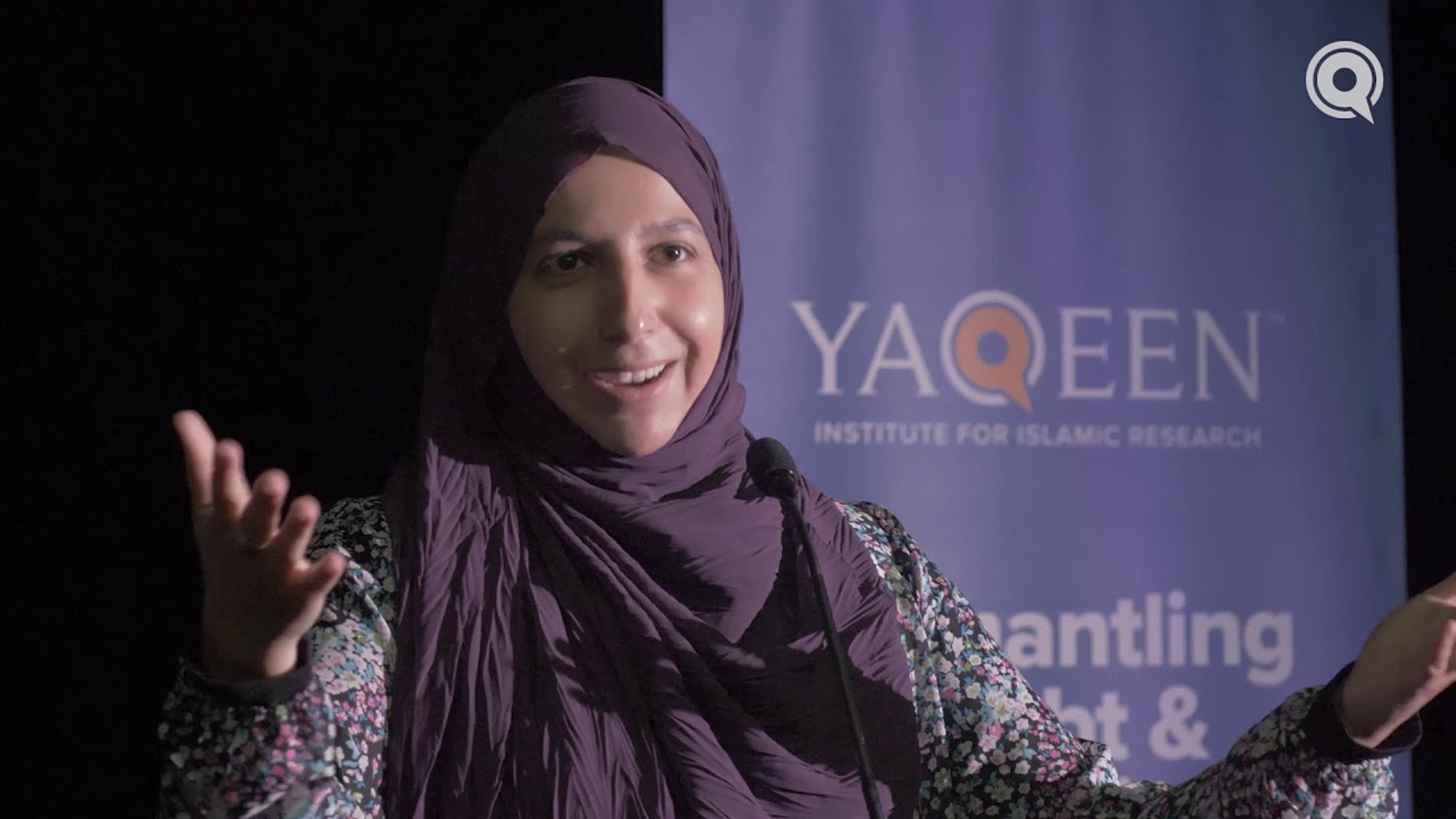
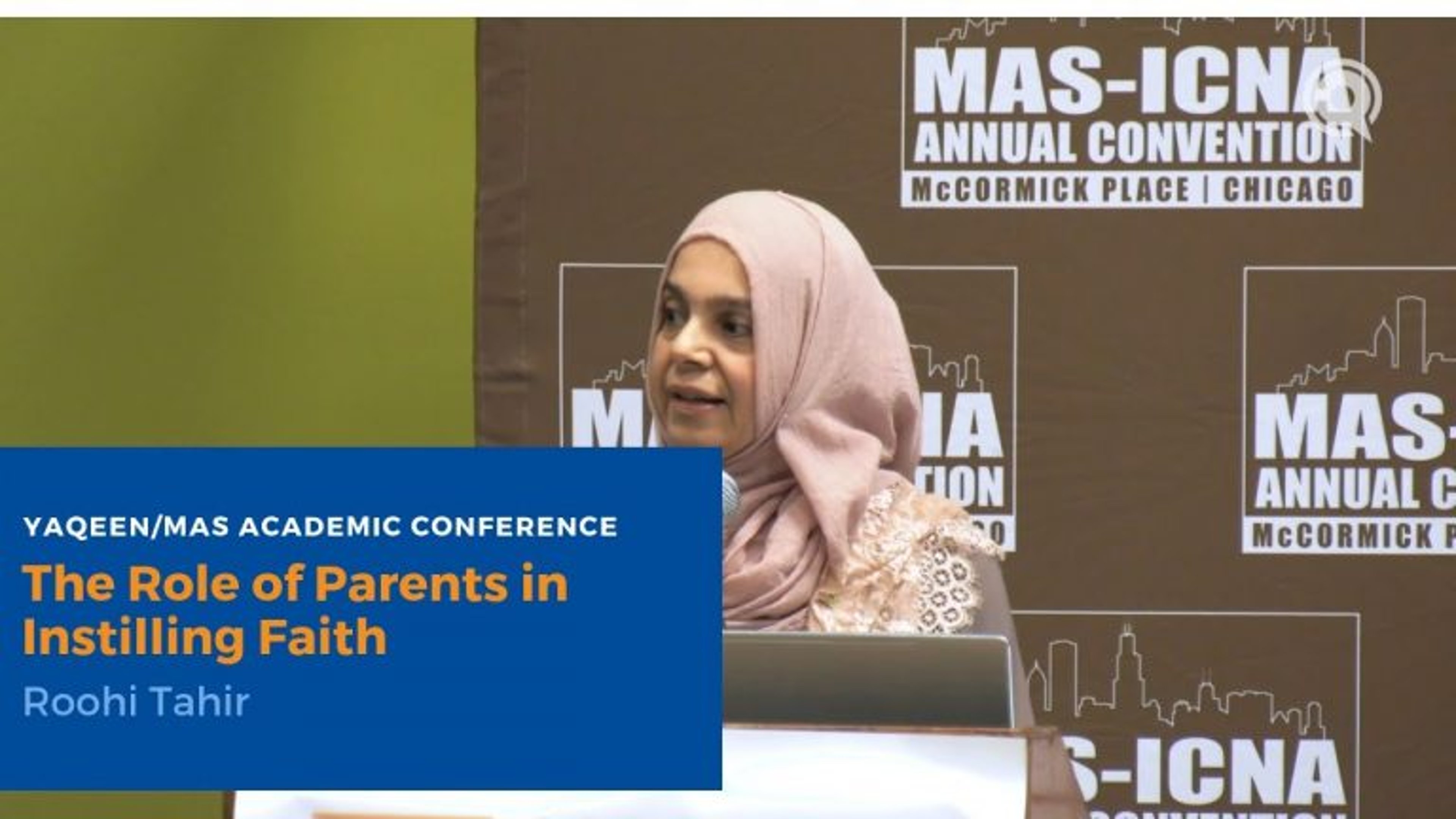
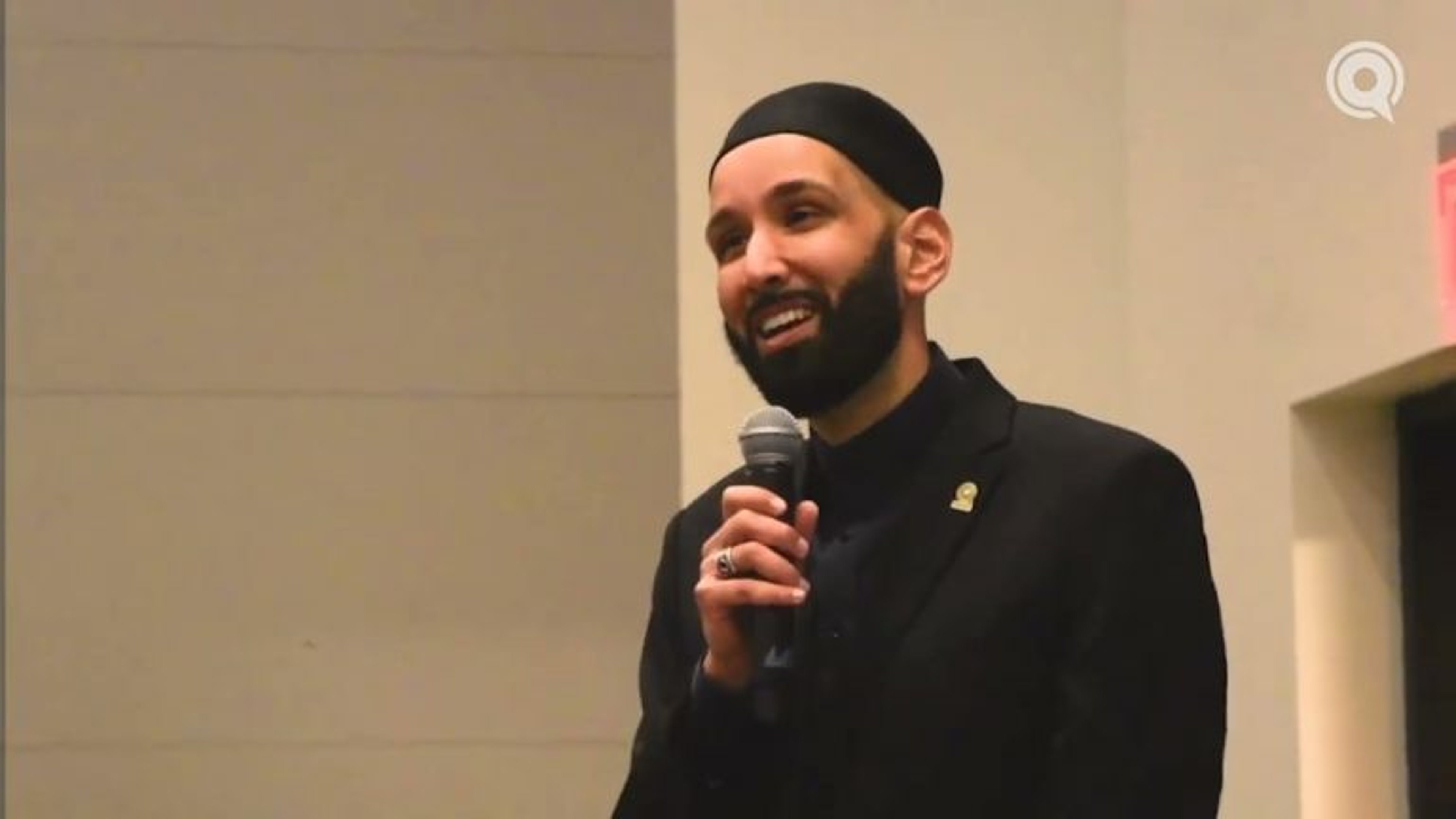
So I wanted to build on some of what Shaykh Omar was so eloquently expressing about the work that we've been doing and the importance of identifying the link between trauma and faith and the connection that's there
and a connection that we don't often really pay attention to until it's really pointed out to us. And that's kind of the hope in doing the work that we're doing, is it brings it to the forefront so that people realize that this is happening.
So when we say the word trauma, what are some of the things that tend to come to mind? Right? It's a big space so I'm not going to have you call it out.
But typically some of the things that come to mind when we hear the word trauma are going to be things like war situations, being a refugee, really traumatic violent incidents, and things like that, right?
But what we have been finding, right, that is definitely a form of trauma and those are called big T traumas, like a capital T, right? And there was a research study that was done.
It was called the Adverse Childhood Experiences Study or ACEs study for short.
They sampled 17,000 people and in their study they found that 64% of the people that they studied have experienced some of these big traumas in the course of their childhood.
But some of the traumas that they included in that criteria were things like emotional and physical abuse, neglect, a parent being incarcerated, even parental divorce when it gets really, really ugly.
So all of these different things were different forms of trauma where 64 people, that means that two out of three people you pass walking down the street, even in this convention,
two out of three people have experienced a really big form of trauma, right? And we're just not really aware. And then if we consider what are called small T traumas, right,
smaller traumas like, you know, different situations where, you know, you might have financial struggles, legal struggles, extreme stress at work, just a lot of difficulties in interpersonal relationships in your life.
These can also leave their imprint. And if we consider that in a person's childhood and then later on in life, then almost every single person sitting in here has experienced something, right?
And so when we think about it in that way, we realize how common it is, but then we also fail to realize the impact that it can have in our spirituality.
And that's what we really focused our work on. So every type of trauma that we or anybody else experiences is a form of loss.
Every single thing, every struggle that we experience is a form of loss. We lose something. We can either lose something, for example, somebody who has gone through a miscarriage, right?
Very, very, very common. Somebody who's gone through a miscarriage. They have not just lost the baby that they were anticipating. They lost the dream of what their life would look like in becoming parents.
They lost the dream of everything that they would experience with that child, every step that they would take, right?
That is incredibly traumatic, right? So all of these different things can, it's a form of loss.
Now, when we think about trauma, it can manifest in a lot of really different ways that we're not really familiar with. So some of the things, and as I'm saying these things, try and think about yourselves, right?
And whether these are any of the symptoms that you might have experienced, right? Where you might experience a heightened sense of anxiety, just being anxious, but not really knowing why, right?
Like there's something in your mind that's telling you, I need to be worried, but you go through your checklist and there's nothing there to worry about, but you're just anxious, right? That kind of anxiety. Experiencing nightmares. Experiencing a sense of emptiness or numbness, right?
Like struggling to find joy in things that you expect, quote-unquote, that you should find joy in, right?
Depression, anger. A lot of people don't realize that anger can be a part of trauma, can be a part of even depression and anxiety.
Difficulty feeling safe. Avoiding conflict, right? Like there's this inherent fear that a lot of us have of expressing what we need to people in our lives because we just, well, I just really don't like conflict.
I just would rather avoid, you know, making anybody uncomfortable, right? What is that? What is that about?
Even, you know, feelings of shame and unworthiness, you know, like struggles with your self-esteem.
That doesn't just pop up out of nowhere. There are life experiences that create that dynamic for you, right? And then even physical ailments. We see this a lot in the Muslim community, right?
Because it's completely acceptable in our community to go to the doctor with headaches or stomach aches or back pain and all of these different things.
That's completely normal. You get a pill, you're on your way and, you know, until it starts to wear off and then it all happens all over again. There's not a stigma in going to your primary care physician.
But when those ailments continue and treatment is not working, right, then it's something to consider that it could be your body connecting with your brain and your heart in a way that's bringing up these physical symptoms.
And that can be a symptom of trauma.
One of the most important things in the work that Najwa and I are writing is about this connection between the impact that our past has and the way things are happening within our present.
And the way that we are with people in our lives and especially the way that we are with Allah subhanahu wa ta'ala in our present.
And so a lot of times, you know, when we are, for example, feeling shaky after a fight with a spouse, the time that you walk through the supermarket and somebody, you know, said something anti-Muslim to you,
the time that you yelled at your child for no reason at all, all of those things make you feel shaky and they build up on one another and then you wake up feeling completely unhappy and you have no idea why.
Right, because all of these things build up and then they're not resolved.
And so sometimes knowing a little bit about the science behind trauma and what's happening within us can help to alleviate some of the stigma and some of the guilt that a lot of us feel in going through this, right.
So research has shown that even after we no longer think about a difficult struggle or a traumatic incident that we've been through, even once we don't really think about it, it's not part of our daily life anymore,
even after that, that trauma, I know it sounds strange, but that trauma becomes stored within our bodies.
And it manifests in different ways that we don't usually put together in the puzzle of our lives. And so when we're exposed to trauma, what happens is that we go into survival mode, right.
So for example, this is not traumatic, alhamdulillah, I'm not being traumatized by all of you right now, but going through a stressful situation of getting up on stage and seeing all of these wonderful faces in front of me, mashallah,
what happens to my heart rate, right? What happens to my breathing rate? All of these different things, my heart starts beating faster, my hands start to get a little bit sweaty, right? That's a stress response, that's what that's called.
And during traumatic incidents, it is obviously much, much more amplified.
And it's a very normal experience when something really big is happening to us, or when a stressful situation is happening, it is normal that our brains will translate that to, okay, this is dangerous, I need to prepare you in how to respond.
And that's called the fight, flight, or freeze response. Where our brain tells our body, hey, there's something dangerous happening here, you either need to run, you need to freeze, or you need to fight, right?
So I'm fighting, right, because I'm doing it, I'm here, and I'm like, you know, I'm still talking. Alhamdulillah, I did not freeze. Okay, so and I didn't run either, even when we switched rooms.
So, alhamdulillah, you know, that's what our brains do. So what's going to happen once I'm off the stage is that everything will get back to normal, because that's the normal response, right?
And so that's what will normally happen under a stressful situation. After it's done, you feel better, right? And it goes away, because your body and your brain are working right. But after trauma, that's not typically what happens.
After a traumatic incident, it takes a long time for your brain to realize, okay, I'm safe again. And so your body is constantly in this survival mode.
And when your body is in that survival mode, it's really difficult to connect with people. And it's really difficult to connect with Allah subhanahu wa ta'ala.
Because the brain area that lights up when you're stressed out and scared is not the brain area that's meant for connection. It's the brain area that's meant for survival and fighting for your life, right?
And so it affects us really intensely in a spiritual way.
So your soul almost starts to feel tired, especially for people who go through trauma back to back to back, like in a lot of experiences that people have.
And so what happens is that these struggles and what's going on in your brain can bring up a lot of doubts in your faith, right?
It can bring up all of, once your brain is in that survival mode, then the brain area in the front, which is dedicated to good judgment, is just not active. It can't be active at the same time.
And so you're not going to be able to judge a situation as to whether it's safe, even as to whether Allah subhanahu wa ta'ala is safe for you. It's not going to feel that way, right?
And so different thoughts are going to be happening, like anger towards Allah subhanahu wa ta'ala. Why would Allah subhanahu wa ta'ala put me through this? Or if somebody, you know, one of the traumas that people experience is if a spouse has had an affair, right?
That's incredibly traumatic because suddenly they've been betrayed and it's completely out of the blue. And if they can't even trust this person, then who can they trust? And that then extends to Allah subhanahu wa ta'ala, right?
And so all of these different things are implicated in our relationship with Allah subhanahu wa ta'ala, right?
And so one of the things that Sheikh Omar mentioned that I want to reiterate is that this is not an indication of a person's iman.
Right? There was a there's a hadith that I really, really love where the companions of the Rasul sallallahu alaihi wasallam came to him and they said, we find in ourselves thoughts that are too terrible to speak of.
And so he asked them, do you really experience these types of thoughts? Right. And it's probably thoughts about a doubt about Allah subhanahu wa ta'ala, right?
And then they said, yes, we do experience these thoughts. And he said, this is a sign of clear faith. He didn't say, Astaghfirullah, how dare you talk to me about this? He didn't say, oh, wow, you better go and pray. Open that Quran like that.
There's something that's really wrong that's happening. He didn't say that. He said that is a sign of clear faith. How can doubts and these thoughts that they hated so much be a sign of clear faith? Because they hated them. Right.
If you are feeling within yourself this this feeling of like, I can't even tell the closest person to me some of the doubts that I'm having because I'm just too ashamed.
That shows how much you care about Allah subhanahu wa ta'ala. Right. So how can that be an indication of iman when the companions of the Rasul sallallahu alaihi wasallam even experienced thoughts that they were ashamed of?
Right. And so one of the things that come with trauma, right, is I picture trauma as this black shadow that's like a wall that is built up.
Our brain and our body builds up this wall to protect us. But the problem with this dark wall is that it shelters our heart from the light. Right.
It shelters our heart from being able to access that light of having a connection with Allah subhanahu wa ta'ala. So the one major thing that can be so healing in this process is our connection with Allah subhanahu wa ta'ala.
And then we can't feel it. And that's one of the most difficult things about trauma and the impact that it has on us.
But in the research that we were studying, one of the antidotes that researchers have found is that if this is all initiated by feeling terrified, by feeling alone, by feeling at risk and vulnerable.
Right. Then the antidote is those opposite feelings. It's to feel secure. It's to feel accepted by people.
It's to feel loved. It's to feel safe. Right. And there is no greater source in allowing us to feel this, except in our experience with Allah subhanahu wa ta'ala. Right.
And so if we allow ourselves to take small steps, right, and that's through therapy and through consultation with our shuyukh and things like that about how to incorporate the Islamic aspects into your healing journey in therapy,
then allowing ourselves to take those small steps can make a huge difference. Right.
And so the one, the last thought that I want to leave you with is that although trauma can really impact our brain and through that impact our connection with Allah subhanahu wa ta'ala,
one of the things that has been most incredible in what we've been looking at in the research is how changeable the brain is. Right. It's really malleable.
And so knowing that small steps that you take, consistent steps that you take, can have an incredibly positive impact on your brain and therefore on your heart and on your body and your connection with Allah subhanahu wa ta'ala.
And knowing that you are enough to overcome that because Allah subhanahu wa ta'ala has told us he never burdens a person with more than they're capable of handling.
And so even if we feel like we can't handle it, Allah subhanahu wa ta'ala knows us better. Right. And if he puts us in that situation, he knows we're strong enough to deal with it. And so we are enough to be able to overcome that even in the darkest moments inshallah.
So jazakum Allah khayran for listening. Subhanakallah wa muhammadak nashad wa la ilaha ila ant. Nastaqfiru wa atubu ilayk.
Wa min Allahi t-tawfiq. Al-Fatiha.