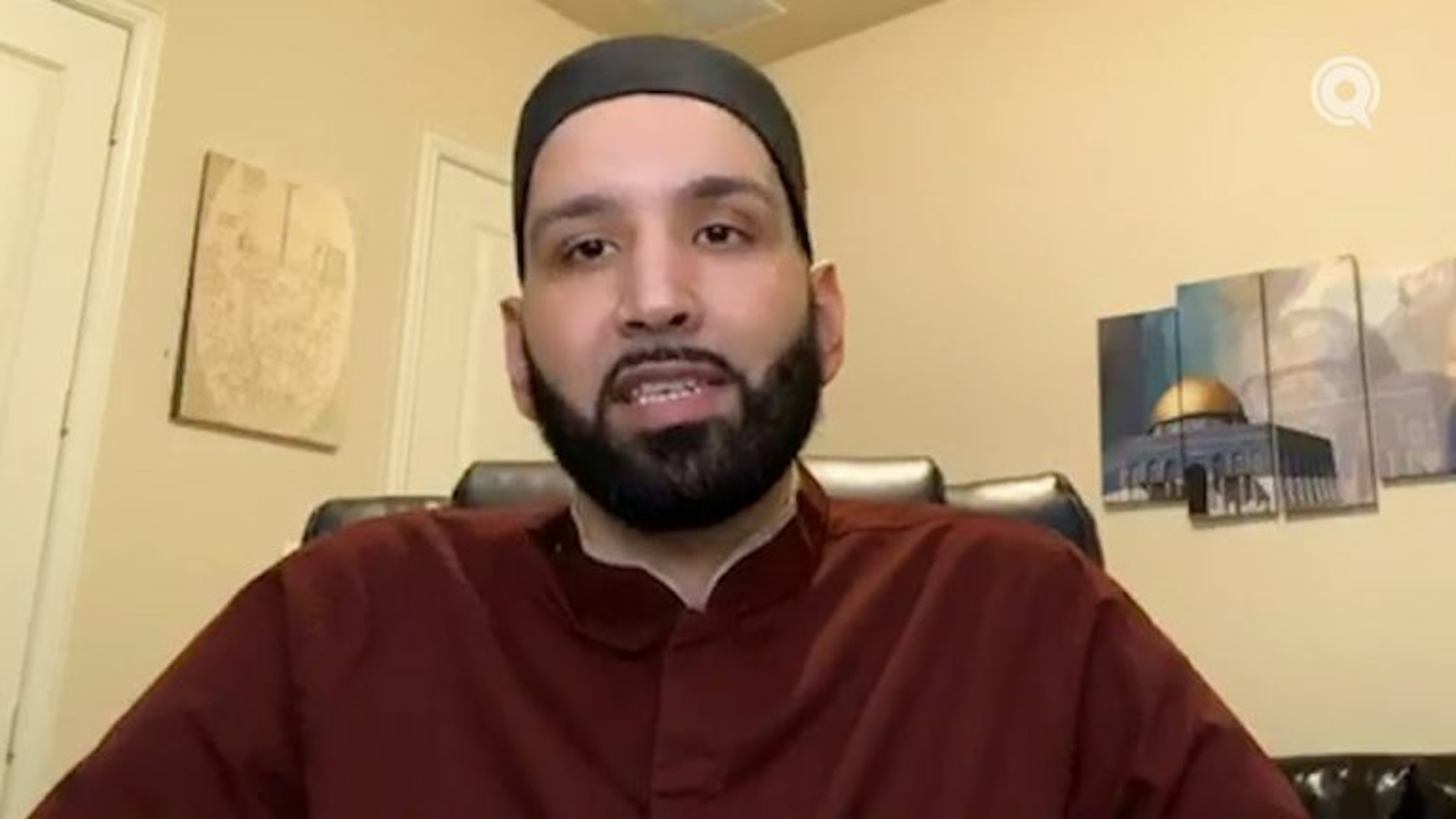
Assalamu alaikum warahmatullahi wabarakatuh, alhamdulillahi rabbil alameen, wa la 'udwana illa 'ala adh-dhalimeen, wa al-'aqibatu lil-muttaqeen, Allahumma salli wa sallim wa barik 'ala abdika
wa rasulika Muhammadin salallahu alayhi wa sallam, wa 'ala alihi wa sahbihi wa sallim, tasliman kathira. So, first and foremost, just a programming note inshallah ta'ala, so tomorrow there will
be no virtual khutbah, which were just the Friday reflections that we would do every Friday because of COVID-19. However, inshallah ta'ala, we will be live streaming the khutbah from the lawn of Valley
Ranch Islamic Center inshallah ta'ala this Friday and we'll see what happens with the Fridays to come. But this Friday inshallah, tomorrow we'll be streaming from the lawn of Valley Ranch Islamic Center inshallah ta'ala at 2:30 p.m. Central bi-idhnillahi ta'ala.
So you can tune in at 3:30 p.m. Eastern, 2:30 p.m. Central inshallah ta'ala for that khutbah bi-idhnillahi ta'ala. Now tonight inshallah ta'ala, I wanted to continue to reflect on just some lessons
that really tie into Surah Ibrahim and I find myself going on tangents more and more. So I don't know how much of Surah Ibrahim we're actually going to get to, but I wanted to talk about this concept that speaks to that first page of Surah Ibrahim.
And as we said, it really does tie into the story of Ibrahim alayhi salam. Allah 'azza wa jal talks about a people who seek to divert others from His path, who seek to divert others from His path.
And if you remember, we spoke about this profound hadith from the Prophet salallahu alayhi wa sallam where he told us about the straight path and then all of these side
paths, these divergent paths where you have a shaytan on top of the door that calls you to that path and the goal is to get you away from Allah subhanahu wa ta'ala, away from the pleasure of Allah and away from the paradise of Allah and it doesn't matter
which divergent path you take. It just has to take you away from Allah. The goal is to distance you from Allah, distance you from His pleasure, distance you from His paradise and we talked about the importance of not going down those paths.
And if you think about it, what the Prophet salallahu alayhi wa sallam is talking about is maintaining the boundaries of our Jannah, the boundaries of our paradise are the boundaries of Allah subhanahu wa ta'ala in regards to His obedience and not crossing
those lines. And so we put up these fences around our garden and what that means is that we do not let the shaytan take us away from anything that would bring us
closer to Allah subhanahu wa ta'ala, from anything that would eat into our share of paradise and eat into our pursuit of Allah's pleasure. And so you have to put up boundaries, you put up these fences. Shaytan will try from this
direction and he'll try from that direction and the point is going to be that he wants to take you away and if he fails in one regard with tempting you to one way then he'll try to tempt you with another way. For him, it's not about how he gets to you.
It's about him getting to you so he can get you away from Allah, get you away from Allah's pleasure, get you away from Allah's paradise. Now, I wanted to talk about this in terms of a methodology for how we also guard the
Jannah in our hearts, the paradise that's in our hearts, which—and I'm not just making this up—the Salaf referred to as Jannat al-yaqeen, the paradise of certainty, the certainty that you have in your heart where you do not allow anyone into your heart,
into the paradise that you have in your heart, which is a sense of certainty and a sense of inner peace where no matter what happens in the world around you, no matter who comes
at you with what, you have an anchor in that certainty and Allah's promise, His pleasure and His paradise and that is what gives you a paradise in the heart. The very famous saying
of Ibn Taymiyyah rahimahullah, he said, "What can my enemies do to me? Because my garden is in my heart. So if they kill me, it's martyrdom. If they imprison me, it's seclusion
with Allah subhanahu wa ta'ala, it's a chance for seclusion. And if they deport me, then it is a chance to travel and to contemplate the signs of Allah subhanahu wa ta'ala. So they cannot do anything to me because my garden is in my heart. I've put up the necessary
boundaries that do not allow for that garden to be accessed with any form of taunting, with any form of insults, with any form of humiliation, whatever it may be. There's a garden in my
heart that my oppressors cannot access." And you have to think about shayateen al-ins, human devils, and the Prophet sallallahu alayhi wa sallam is told about them in the Qur'an, right?
They wish to cause you to fall—la yuzliqoonaka bi absarihim—they wish to cause you to fall with their mean stares, they wish to cause you harm with their sight. And whether that
manifests itself actually in the evil eye or just the degree of humiliation and the degree of harassment that comes with their stares, they wish to rock you, O Messenger of Allah sallallahu alayhi wa sallam, they wish to get you off
of your foundation. And Allah subhanahu wa ta'ala is giving the Prophet sallallahu alayhi wa sallam the fortress and we have the fortress which is that dhikr, that remembrance of Allah subhanahu wa ta'ala. And we protect our paradise and we protect our inner peace by keeping
our sight on the goal and not allowing anyone, whether it is the shayateen from the jinn or the shayateen from the ins, human devils or jinn devils, we don't allow them access
to our paradise and we don't allow them access to our paradise that's here. And that is essential for us that we always maintain that in everything that we do. There's a very beautiful saying
that's attributed to Imam Abu Hanifa rahimahullah. He said, "Law ya'lamu al-muluku wa abna'u al-muluki ma nahnu fihi," "If the kings and the children of the kings knew the happiness that we were in," "la jaaladuna 'alayhi bi al-suyuf,"
"they would try to fight us for it. They'd try to attack us to get it out of us, what we have in terms of inner peace, what we have in terms of Jannah." It cannot be taken away from them. And that's the beauty of it, that your enemies can take everything away from you except for
your paradise and your paradise—okay, your Jannah in the hereafter, which is the manifestation of Allah's pleasure, or your Jannah that's in your heart, which is the certainty in Allah's
promise and pleasure and paradise in the hereafter. And you have to be able to put up boundaries and that means not allowing your enemies in your head, not allowing your enemies in your
heart, not allowing those who try to distract you with this to succeed in doing so, but maintaining a sense of certainty and a sense of consistency. And I know that usually, you know, when you
hear about putting up fences and boundaries, it's usually in a negative sense, especially when you're talking about in terms of the psychology of those
who would like to guard their vulnerabilities and do not process their emotions in a healthy way. So they put up boundaries, right? But that's usually talking about unhealthy boundaries and putting up boundaries between you and the people that you love. This is talking about
putting up boundaries and fences between you and those that wish you harm. Again, whether it's from the human devils or from the shayateen from the jinn, putting up those fences, putting up those boundaries and not letting them in. "Laysa qabli madkhal,"
"there's no entrance here. This is my heart, this is my paradise, you cannot access it." And subhanAllah, as I was thinking about this example of putting up those fences and those
healthy boundaries to where you protect from all of those that would seek to get you out of your garden, all of those that would seek to get into your real estate. If you think
about it, they'll always say that you need to learn how to process your emotions in a healthy way, you need to learn to express your negative feelings, to express
your hurt. And that's the beauty of this all, is that we are taught to channel as much of
this as we can in du'a and supplication. In Ibrahim alayhi salam, Allah 'azza wa jal says that Ibrahim alayhi salam is someone who is frequently grieving, but he turns to Allah
subhanahu wa ta'ala—haleem, awwah, muneeb. He bears a lot of pain. He takes that pain
to Allah subhanahu wa ta'ala. And so basically by putting up boundaries between you and those who wish you harm and then expressing that pain to the One who only wishes you good and wills for you good, Allah subhanahu wa ta'ala, you gain the healthiest way of processing
that and you protect your paradise. So again, the boundaries here that I'm talking about are the boundaries that you put between you and those who wish you harm, whether it is from shayateen al-jinn
and shayateen al-ins, the human devils and the jinn devils. And it's the same methodology, the same methodology for protecting your paradise in the hereafter is how you protect your paradise in this world, right? Do not let them in, do not let them in. Don't let them
distract you, don't let them hurt you, don't give them too much real estate in your thoughts, don't give them too much real estate in your feelings and process as much as you can by calling out to the One who never puts a boundary on you, Allah subhanahu wa ta'ala, whose line
of communication, whose path of du'a, or whose access to Him through du'a, through sincere supplication, is never shut off, never shut off until the moment of death.
So we ask Allah subhanahu wa ta'ala to protect our paradise, to grant us the paradise of the heart, Jannat al-yaqeen, and to grant us the paradise in the hereafter which is the manifestation
of His pleasure. We ask Allah subhanahu wa ta'ala to allow us to protect our hearts from all of those things that are displeasing to Him and all of those things that distract
us from the pursuit of pleasing Him. Allahumma ameen. JazakumAllahu khayran. InshaAllah ta'ala, once again, tomorrow the khutbah should be live streaming at 2:30 p.m. Central, inshaAllah,
3:30 p.m. Eastern. JazakumAllahu khayran. Wassalamu alaikum warahmatullahi wabarakatuh.