
Who is Muhammad?
Muhammad ﷺ, the son of Abdullah, was the final prophet and messenger of God.
While Muhammad ﷺ is often described as the “founder of Islam,” Islam did not begin with his prophethood. It is more accurate to say he was sent to restore the core messages of previous prophets, and that of the original, uncorrupted scriptures revealed by God. The prophets and messengers of God, from Adam to Noah to Abraham to Moses to Jesus to Muhammad (peace be upon them), and many more between them, all conveyed the same fundamental message of monotheism and good works.
Despite facing extreme challenges, rejection, and persecution during his lifetime and prophetic mission, Muhammad ﷺ unfailingly exhibited beautiful character, rose above hatred and insults, and accomplished a stunning array of achievements. He is the greatest of God’s creation, and the most beloved of them all to God.
Check out the Meeting Muhammad video series with Dr. Omar Suleiman.
When was Muhammad born & when did he die?
Prophet Muhammad ﷺ was born in 570 CE in Mecca, where he eventually received the final revealed book sent to humanity, the Qur’an, and began calling people to the religion of Islam.
Prophet Muhammad ﷺ passed away in 632 CE, in the city of Medina, eleven years after his hijrah (migration) there. While historians differ on the exact date of his passing, many held that it was on the 12th of Rabi‘ al-Awwal, which would correspond to the 8th of June in 632 CE.
Prophet Muhammad ﷺ remains buried in his house, in Medina, exactly where he had passed away. The Sahabah—the Companions of Muhammad ﷺ—initially disagreed about where to bury the Prophet ﷺ. Some suggested taking him back for burial in his birthplace of Mecca, but others remembered that the Prophet ﷺ had said to them, “A prophet should not be buried except where he died.” [Sunan al-Tirmidhi, #1018]
What was Muhammad's impact?
Prophet Muhammad’s ﷺ impact on the world was extraordinary and unique in terms of his global political achievements, him being a demonstrably greater influence on spirituality than any other founder of the major faiths, and him advancing social wellbeing in unparalleled ways.
Many non-Muslim historians in the west acknowledge this, such as Michael Hart who famously ranked him atop the list of the “100 Greatest” influencers of human history. Similarly, Alphonso de Lamartine writes, “If greatness of purpose, smallness of means, and astounding results are the three criteria of human genius, who could dare to compare any great man in modern history with Muhammad?”
What revelations did Muhammad receive?
Prophet Muhammad ﷺ received the Qur’an, the miraculous literal Word of God, gradually over the span of his prophethood. It was communicated to him from the Divine, at times directly and often through an angel. Revelation of the Qur’an began when he was 40 years old, when the archangel Gabriel came to Muhammad ﷺ and recited to him the following verses:
Read! In the Name of your Lord, Who has created (all that exists),
He has created man from a clot (a piece of thick coagulated blood),
Read! And your Lord is the Most Generous,
Who has taught (the writing) by the pen.
He has taught man that which he knew not.
[Qur’an, 96:1-5]
This revelation continued descending upon the heart of Muhammad ﷺ for 23 years until he passed away. Thereafter, while the Qur’an was primarily committed to memory, it was compiled into a single undisputed manuscript by the Prophet’s Companions.
Other, non-literal secondary revelations called Hadith, were also inspired to Prophet Muhammad ﷺ to supplement the Qur’an and ensure its proper understanding.
How many wives did Muhammad have?
The Prophet ﷺ had 11 wives over the course of his life. They were:
- Khadijah bint Khuwaylid
- Sawdah bint Zam‘ah
- A’ishah bint Abi Bakr
- Hafsah bint Umar
- Zaynab bint Khuzaymah
- Umm Salamah bint Abi Umayyah
- Juwayriyah bint al-Harith
- Zaynab bint Jahsh
- Umm Habibah bint Abi Sufyan
- Maymunah bint al-Harith
- Safiyyah bint Huyayy
Why did Muhammad have so many wives?
Prophet Muhammad ﷺ first married Khadijah (may God be pleased with her) when he was 25 years old, and she remained his only wife until her death, when he was 50. For several years thereafter, Muhammad ﷺ remained unmarried, living with his daughters and sharing the message of Islam. Then, between the ages of 53 and 60, he married his remaining wives. All except A’ishah (may God be pleased with her) were either widows or divorcees. Each had the title of “Umm al-Mumineen,” or “Mother of the Believers,” and they were widely respected during and after the Prophet’s life.
Some of the obvious wisdoms behind the Prophet ﷺ having numerous wives include:
- He supported the widows and divorcees of his community and normalized the practice of marrying them, removing the stigma against both within early Arabian society.
- His wives would go on to narrate the Prophetic tradition to the world. Many of them became respected scholars in their own right, and taught Islamic knowledge to the scholars of the next generation.
- His wives narrated tender, daily moments within their households, revealing greater insight into his and each other’s beautiful character.
- Each marriage was a practical example of how to deal with many different scenarios within home and family life.
Why did Muhammad marry A’ishah?
There are several reasons the Prophet ﷺ married A’ishah. The first is that he was instructed to by divine revelation. He ﷺ said to A’ishah: “You were shown to me twice in a dream. I saw that you were wrapped in a piece of silk, and it was said, ‘This is your wife.’ I unwrapped her and saw that it was you. I said, ‘If this is from Allah, it will come to pass’” [Sahih al-Bukhari #3682].
Secondly, some narrations mention that the Prophet ﷺ was impressed with A’ishah’s intelligence and understanding. Later scholars note how A’ishah’s unique intelligence and vast knowledge was pivotal in transmitting Islam to future generations.
Finally, the Prophet ﷺ had a great love and respect for A’ishah’s father, Abu Bakr (may God be pleased with him). Abu Bakr was the first man to accept Islam, and he was harshly persecuted for his steadfastness. Their homes were forever connected through this blessed marriage.
How old was A’ishah when she married Muhammad?
The age of A’ishah (may God be pleased with her) at the time she married the Prophet ﷺ is disputed. Most scholars rely on the related testimony of A’ishah, who stated that she married the Prophet ﷺ at the age of 9. (It must be noted that current conceptions of age vary greatly from those of premodern times, and that marriage at younger ages was common throughout history.) Other scholars claim that A’ishah would have been older, closer to 17 years old, based on inferences from historical reports which arguably support that view.
Do Christians believe in Prophet Muhammad?
No, Christians generally do not believe in Prophet Muhammad ﷺ or the Qur’an as authoritative sources of religious guidance. However, unique emphasis on the oneness of God, and how the Qur’an engages Christian literature, and particularly how it celebrates Jesus & Mary (peace be upon them), make it no surprise that more people convert to Islam—the world’s fastest growing religion—from a Christian background than any other faith.
Do Jews believe in Prophet Muhammad?
No, Jews generally do not believe in Prophet Muhammad ﷺ or the Qur’an, nor Jesus (peace be upon him) and the Bible, as authoritative sources of religious guidance. However, during the Prophet’s ﷺ life and until today, many followers of Judaism and ethnic Jews have been inspired to become Islam due to the pure monotheism of the Qur’an, and its veneration of Moses (peace be upon him).
Does the Bible mention Muhammad?
There is no explicit mention of Muhammad in today’s Bible, although the Qur’an does affirm that Jesus Christ (peace be upon him) gave the world glad tidings of Muhammad being the final messenger of God (Quran, 61:6).
Some biblical scholars today also identify passages of the Torah and Gospels as allusions to Muhammad, theorizing that no better candidate fits the descriptions prophesied in the Bible about the final anticipated bearer of divine truths to humanity.
See: An Ethical and Historical Necessity for more on Muhammad in the Bible.
What did Muhammad look like?
The Prophet Muhammad ﷺ was consistently described as the most handsome of all people, and as always beaming with a radiant smile despite his difficult circumstances and unmatched concern for everyone. While the texts of Islam consider it part of honoring the legacy of Muhammad ﷺ to never draw an image of him, both his physical appearance and ethical qualities remain preserved and documented in finer detail than any other person in history.
Did Muhammad perform miracles?
Yes, Muhammad ﷺ performed many miracles. The Qurʾan mentions several that were witnessed by his Companions. These included the splitting of the moon in half, the night journey and ascension, the weeping tree, the great victory at Badr, and the Qurʾan itself. The Qurʾan and Hadith also mention several more miracles, including the sending of rain at his request, the healing of the sick, and increasing supplies of water and food. All of these miracles were divinely bestowed upon the Prophet ﷺ as a sign of his truthfulness.
You can read more about the miracles of Muhammad ﷺ in our e-book: The Final Prophet: Proofs for the Prophethood of Muhammad.
Why did Muhammad leave Mecca for Medina?
The Prophet ﷺ left Mecca to establish a new community of believers, as the religious persecution in Mecca had made that impossible. He settled in Yathrib, which later became known as Medina, or the City of the Prophet. This relocation, called the hijrah, was a significant milestone in the history of Islam, and hence the year of the hijrah marks the beginning of the Islamic calendar.
How did Muhammad establish Islam?
The Qur’an is very clear: “Let there be no compulsion in religion, for the truth stands out clearly from falsehood” (2:256). Prophet Muhammad ﷺ and Muslims after him spread Islam through da‘wah, or inviting people to engage with Islam’s persuasive message and appealing way of life. While justified and ethically constrained violence was at times necessary to establish justice, non-Muslims were not forced or pressured to accept Islam. Rare instances of forced conversion later in Islamic history must be properly contextualized. The spread of Islam across the world is clearly attributable to conversion out of conviction, and has been a complex process facilitated by trade, social influencers, marriage, migration, and other factors.
How did Muhammad receive the Quran?
Prophet Muhammad ﷺ received the Qur’an, the miraculous literal Word of God, gradually over the span of his prophethood. It was communicated to him from the Divine, at times directly and often through the archangel Gabriel. Beginning at 40 years old, revelation continued descending upon the heart of Muhammad ﷺ for 23 years until he passed away.
Is Muhammad a descendant of Abraham?
Yes, Prophet Muhammad ﷺ is a descendent of Prophet Abraham through his son Ishmael. Kedar was the son of Ishmael, to whom the Arabian tribe of Qurasyh all trace back their ancestry. Banu Hashim was a subtribe of Quraysh, and the immediate family into which Prophet Muhammad ﷺ was born.
How did Muhammad react when attacked or insulted?
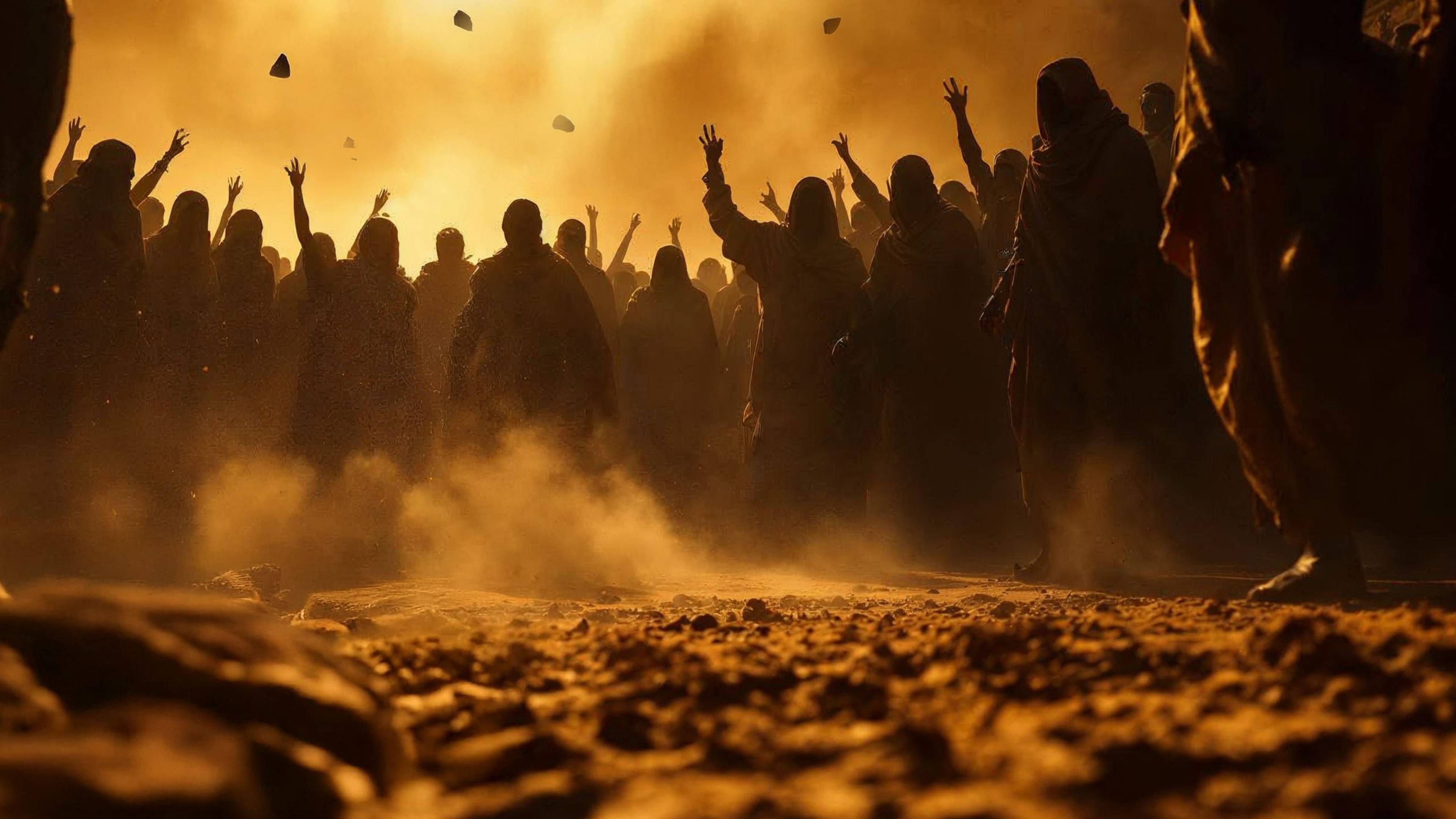
Prophet Muhammad ﷺ and the earliest Muslims faced incredible brutality and humiliation for choosing Islam. Yet, this ocean of cruelty was never able to drown the compassion, goodwill, and protective concern the Prophet’s ﷺ heart contained for friend and foe alike. He consistently exhibited graceful, magnanimous character in the face of enmity and insult.
Even at the height of his power, instead of pursuing vengeful retribution which was normal in his society, he opted to abolish such practices and instead declared to his former persecutors, “There will be no blame on you today.”
Read more about how the Prophet Muhammad (peace be upon him) responded to insults in our paper: How the Prophet Muhammad ﷺ Rose above Enmity and Insult.
How did Muhammad die?
The Prophet Muhammad ﷺ passed away in 632 CE after a final illness marked by a severe fever, in the months following his final Hajj, during which he had delivered his Farewell Sermon. Even in his last days, he continued to think of his community and to ease their worry as his own strength faded. On what proved to be his final morning, the companions saw him draw back the curtain of his room and smile at them while they prayed, and many took it as a sign that he was recovering. He passed away soon after, resting in the lap of ʿAʾisha (rA), having chosen nearness to God, al-rafiq al-aʿla (the highest companion), over remaining in this world.
His death was the greatest grief the Muslim community had known, and some companions could not accept it at first. It was Abu Bakr (rA) who steadied them, reminding everyone that whoever worshipped Muhammad ﷺ should know that he had died, but whoever worshipped God should know that God is ever living and never dies.
Check out Meeting Muhammad ﷺ, a series with Dr. Omar Suleiman that recounts his final moments.
Did Muhammad have any children?
Yes. The Prophet Muhammad ﷺ had seven children. His first wife Khadija (rA) was the mother of six: two sons, al-Qasim and Abdullah, who both died in early childhood, and four daughters, Zaynab, Ruqayya, Umm Kulthum, and Fatima (rA). His seventh child was a son named Ibrahim, born later in Medina to Mariya (rA), who also died as an infant.
All of his children except Fatima (rA) passed away during his lifetime, and their loss weighed on him deeply. When his young son Ibrahim died, he wept openly, saying that the eye sheds tears and the heart grieves, while affirming that he would say nothing except what pleases God.
Check out The First Family, a series exploring the household of the Prophet ﷺ.
What was Muhammad before he became a Prophet?
Before revelation began, Muhammad ﷺ was known across Mecca as a man of exceptional honesty and integrity. He worked as a merchant and trader, and earlier in life tended sheep. His truthfulness was so widely recognized that his own people gave him the title al-Amin, the Trustworthy. Even those who later opposed him still left their valuables with him for safekeeping, and when he migrated from Mecca, he instructed Ali (rA) to stay behind specifically to return every deposit to its owner.
This reputation became one of the clearest arguments for his prophethood. A man never once caught in a lie among his own people could not credibly be accused of lying about God.
Check out His Honesty, part of the Proofs of Prophethood series.
Do Muslims worship Muhammad?
No. Muslims do not worship the Prophet Muhammad ﷺ, and he never asked to be worshipped. Worship in Islam is directed to God alone. The Muslim declaration of faith, the shahada, states that there is no god but Allah and that Muhammad ﷺ is His messenger, affirming that none is worthy of worship except Him and recognizing Muhammad ﷺ as God’s final prophet rather than a divine figure.
The Prophet ﷺ himself taught his followers to center their entire lives on the worship of God alone. This was made unmistakable at his death, when some companions struggled to accept that he had passed away and Abu Bakr (rA) reminded them that whoever worshipped Muhammad ﷺ should know he had died, but whoever worshipped God should know that God is ever living. Muslims honor and love the Prophet ﷺ as the best of creation, yet that love is expressed by following him, not worshipping him.
Check out Basics of Islam for an overview of core Muslim beliefs.
Why do Muslims say “peace be upon him” after the mention of Muhammad?
When Muslims mention the Prophet Muhammad ﷺ, they follow his name with a prayer for God’s peace and blessings upon him, known as salawat. This is done out of love and reverence, and in response to a direct command in the Quran for believers to send blessings upon the Prophet ﷺ. It is also a way of honoring the immense sacrifices he made to deliver God’s message.
The practice is understood to benefit the one who offers it as much as it honors the Prophet ﷺ. Muslims believe that God returns the greeting many times over, so that sending blessings upon him becomes a means of having one’s sins forgiven, being raised in rank, and drawing closer to the final Messenger.
Check out Sending Blessings Upon the Prophet ﷺ, a short series on its rewards.
What is the Sunnah, and why do Muslims follow Muhammad’s example?
The Sunnah refers to the words, actions, and approvals of the Prophet Muhammad ﷺ, inspired by God and preserved through reports known as hadith. Alongside the Quran, it is one of the two primary sources of Islam. Where the Quran gives a command, the Sunnah often shows how to put it into practice, which is why Muslims throughout history have looked to the Prophet’s ﷺ example to understand and live their faith.
Muslims follow this example because the Quran itself presents the Prophet ﷺ as a beautiful model for the believer. Following him is not imitation for its own sake, but a way of drawing nearer to the character he embodied, a man described as a mercy to the worlds. The closer a believer comes to him in worship, dealings, and conduct, the more fully they live the faith he taught.
Check out Faithful Activism: A Sunnah Framework for what following his example looks like today.
Did Muhammad write the Quran?
No. Muslims believe the Quran is the literal speech of God, revealed to the Prophet Muhammad ﷺ, and not composed by him or any other human being. The Quran presents itself in exactly this way, and it challenges anyone who doubts its origin to produce something like it, a challenge that has stood unmet.
Several features make the claim that a person authored it difficult to sustain. Muhammad ﷺ was unlettered and had spent some forty years occupied with trade and shepherding rather than literary study, yet the Quran is regarded even by leading experts of the Arabic language as a work without equal. It also contains precise references to past events and future realities, together with a consistent theological and legal framework, delivered orally across twenty-three years and often in immediate response to unfolding events. For Muslims, the fact that no one has ever matched it is itself a sign of its divine source.
Check out Introduction to Iʿjaz al-Qur’an on the miraculous nature of the Quran.
Why do Muslims love Muhammad so much?
Muslims love the Prophet Muhammad ﷺ because of who he was and what he did for them. He is regarded as the best of God’s creation, sent as a mercy to the worlds, and the one through whom people came to know their Creator. His life was marked by extraordinary mercy, forgiveness, and compassion, even toward those who wronged him, and by a constant concern for the well-being of his community, including generations he would never meet.
This love is not only historical sentiment. The Prophet ﷺ taught that a believer’s faith is not complete until they love him more than they love themselves, a love shown by following his example and continuing his impact in the world. His companions loved him enough to shield him with their own bodies in battle, and centuries later he remains the most admired and imitated figure in the lives of Muslims.
Check out To Love the Prophet ﷺ More Than Yourself with Dr. Omar Suleiman.
Was Muhammad a religious leader or a political leader?
He was both. The Prophet Muhammad ﷺ began his mission in Mecca purely as a religious teacher, calling people to the worship of one God. After he and his followers endured years of persecution, he migrated to the city of Medina, where he was received as its leader and took on political authority alongside his Prophetic role.
What makes him rare in history is that he excelled in both spheres at once, filling the roles of spiritual leader, head of state, general, diplomat, educator, and family man in a single lifetime. In Medina he built a functioning community founded on justice and human dignity, and by the time he died his authority extended across much of Arabia. For Muslims this is no contradiction. His leadership in public life was an extension of the same message of mercy and justice he preached, showing how faith could shape not only private belief but the ordering of an entire society.
Check out the Proofs of Prophethood series on his life and legacy.
Why did Muhammad’s own people turn against him if they trusted him?
The opposition Muhammad ﷺ faced was never really about his honesty. His own tribe, the Quraysh, had trusted him for decades as al-Amin, the Trustworthy, and continued to leave their valuables in his care even while they fought him. What they rejected was not the man but his message and what it asked of them.
His call to worship one God alone struck at the idols their religious and social life was built around, and at the inherited traditions and ancestral pride they were unwilling to abandon. It also placed the powerful and the weak on equal footing before God, unsettling an elite whose standing rested on the very hierarchy he was dismantling. As his following grew and their attempts to silence him failed, their frustration hardened into open persecution: mockery, a years-long boycott that starved his clan, physical assault, and finally exile. Through all of it, he refused to retaliate, and even prayed for the guidance of those who harmed him.
Check out How Muhammad ﷺ Confronted Hate and Became the Most Influential Person in History for how he responded to his persecutors.
Explore more on this topic




What Islam Says About...
Basics of Islam
What is Islam and who are Muslims? This section covers some of the basic questions asked about Islam and pillars that define the faith.
Share this