Muslims are often confronted with a pressing question: if Allah has revealed His guidance through the Qur'an and the Sunnah of His Prophet ﷺ, and if these sources are now easily accessible through modern technology, why must ordinary believers depend upon fallible human scholars to mediate their relationship with their Lord? A balanced answer affirms both the indispensability of authentic Islamic scholarship and the enduring moral responsibility of every believer to exercise sound judgment in matters of doubt. Muslims of every era have recognized that the ʿulamāʾ are necessary to explain how the Qur'an and Sunnah, revealed in an Arabian context nearly fifteen centuries ago, ought to apply in later times. It was only the socio-cultural upheavals accompanying Europe's industrial revolution and colonial expansion that globalized secular assumptions and rendered the scholars seemingly irrelevant in the eyes of many today.
The gravity of speaking about the religion without knowledge is illustrated by the incident of a wounded Companion who, after a nocturnal emission while travelling, was told by his fellows that he must perform ghusl rather than tayammum. He complied and subsequently died. The Prophet ﷺ, upon hearing of this, declared with rare severity, "They killed him. May Allah kill them!" and added, "Could they not ask when they did not know? The cure for ignorance is asking." As Ibn Qayyim al-Jawziyya observed, this was the Prophet's supplication against "a group of people who gave a fatwa without knowledge," leading to a man's death. The harshness of the rebuke, far from negating the Prophet's mercy, underscores by its very rarity the seriousness of issuing verdicts about Allah's religion without sound learning.
The need for scholarly expertise arises from the very nature of revelation. The Qur'an is a richly textured text whose finer details often cannot be grasped without recourse to the Prophetic Sunnah, and both admit of multiple interpretations. A useful comparison is the United States Constitution: at merely 4,543 words, it is shorter than a modest article, yet it has generated an enormous judicial and educational apparatus devoted to its interpretation. Likewise, the Qur'an and the teachings of the Prophet ﷺ have guided one of history's most significant civilizations for a millennium. Human societies cannot thrive without specialization; just as we depend upon physicians, engineers, and public servants, the lay Muslim depends upon the ʿulamāʾ as specialists in the divine revelation that directs how we must live. This is affirmed by the verse, "Ask the people of knowledge if you do not know" (al-Naḥl 16:43), regarding which the Andalusian exegete al-Qurṭubī (d. 671/1273) noted the scholars' agreement that it establishes the obligation of the common people to follow their ʿulamāʾ.
The vast majority of Muslims cannot access the Qur'an and Sunnah without translation, and translation is itself a scholarly labour requiring mastery of the Arabic of first/seventh-century Arabia. Jonathan A. C. Brown, in his work Misquoting Muhammad, argues that efforts to understand the Qur'an without the interpretive exertions of the ʿulamāʾ are doomed to failure, noting that even the Companions at times turned to pre-Islamic poetry to elucidate the Qur'an's word choices, and that modernists who seek to marginalize extra-Qur'anic authority such as the hadith are self-defeating, since they too must rely upon the extra-Qur'anic work of Arabic lexicographers. This complexity extends even to a single letter. In the verse of wuḍūʾ, al-Māʾida 5:6, the phrase "wa'msaḥū bi-ruʾūsikum" involves the letter bāʾ, which the grammarians say carries fourteen meanings, and the jurists accordingly differ over whether the whole head or only part must be wiped. Multiplied across the Qur'an's roughly six thousand verses and the tens of thousands of hadith, the difficulty of arriving at the divinely intended meaning becomes clear. Though some earlier scholars warned against pointless pedantry driven by egotism, such interpretive disagreements are far from trivial. Indeed, modern states devote vast resources to interpreting their own laws; the United States alone has some 32,000 judges and roughly 1.3 million practising lawyers. That many assume religious experts need not be consulted while secular legal experts must reflects the internalization of secularism, a legal culture at odds with the Islamic understanding that has prevailed throughout its history, in which Islam mandates behaviors reasonably described as laws, though many, such as the prohibition of backbiting, carry no worldly sanction but rest upon belief in otherworldly reward and punishment.
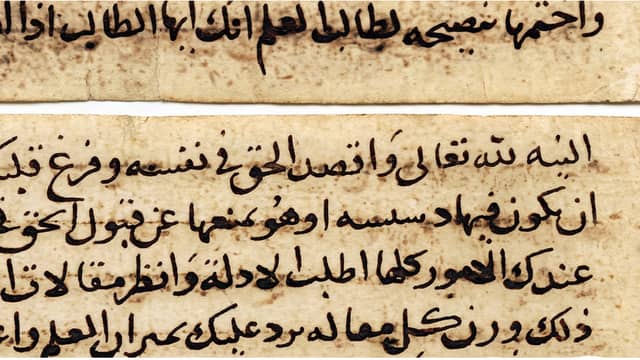
Throughout Islamic history the ʿulamāʾ provided the legal, spiritual, and normative foundation of Muslim societies, and their labors were highly valued, sometimes with unintended consequences. Abū Ḥāmid al-Ghazzālī (d. 505/1111), in the "Book of Knowledge" of his Iḥyāʾ ʿUlūm al-Dīn, lamented that Muslims were abandoning the study of medicine for fiqh because of the latter's prestige, complaining that jurists crowded into a communal obligation others had fulfilled while neglecting medicine, which none had taken up, drawn by access to endowments, estates, orphans' wealth, and offices of judiciary and government. This reveals both the exalted social standing of the scholars in his day and the stark contrast with the present, in which medicine is prized while religious learning brings little prestige and much financial insecurity. Ghazzālī's own concern, however, was deeper: not the health consequences of outsourcing medicine to non-Muslims, but the spiritual danger that scholars had lost their sense of working for Allah rather than worldly gain. His was the moral crisis of a confident and wealthy society. The modern Muslim crisis is different and arguably more acute, arising not chiefly from worldly corruption of the scholars but from their loss of social standing and moral authority, an erosion wrought over the colonial period by a Eurocentric, secular conception of modernity imposed upon the Muslim world.
The deterioration of once-flourishing Islamic societies reflects a transformation of several centuries, involving colonial subjugation, transfers of wealth, and repression grounded in a racist liberal-colonial ideology that cast Western imperialism as a "civilizing" mission. The decentralized legal orders underpinned by an Islamic ethos were uprooted, and many Muslim elites internalized their colonizers' values so deeply that a social order in which the Sharia plays a central role now seems to them unnatural and regressive. This is doubly ironic, for the Western academy itself increasingly recognizes the contingency of its own foundations: the confidence of the Enlightenment has given way to a divided academy consumed by identity politics and culture wars, split between those who cling to an Enlightenment project surviving as a neo-colonial endeavor and relativist postmodern alternatives that tend toward incoherence and meaninglessness, grounded in the ideas of self-identifying nihilists such as Michel Foucault.
This confusion underlines the need for divine guidance and raises the question of how reliable scholars are to be recognized. Credible scholars are generally those recognized as authoritative by other scholars, often graduates of major seminaries such as al-Azhar, Deoband, al-Imām Muḥammad ibn Saʿūd University, the International Islamic University of Malaysia, Madīna University, Nadwat al-ʿUlamāʾ, the Indonesian Pesantren system, Qarawiyyin, and Saharanpur, though maturing Western institutions may in time produce scholars of comparable caliber. Yet formal training, while essential, is insufficient. Abū al-Ḥasan ʿAlī al-Nadwī (d. 1420/1999) would tell graduates of Nadwat al-ʿUlamāʾ, "You now have the tools to become ʿulamāʾ," implying that true scholarship requires a lifetime of study and worship. A Western doctorate in Islamic studies, taught in a secular register, does not itself make one an ʿālim. Beyond juristic expertise, the scholars are heirs to the Prophet ﷺ in upholding the highest standards of conduct, though a sound Sunni understanding forbids any claim to inherit his access to revelation. The Qur'an declares him an exemplar: "The Messenger of God is an excellent model for those of you who place your hope in God and the Last Day and remember Him often," and affirms Allah's wisdom in sending a human messenger rather than an angel. Where in-person access is lacking, reliable fatwa resources exist, though their sources must be verified; the Qatari-funded Islamweb.net, the Egyptian Dār al-Iftāʾ, and Saudi bodies under Muhammad b. Salman must be read with caution on politically sensitive matters. Ibn Taymiyya (d. 728/1328) reportedly said, "Everyone has a share of ijtihād to perform, and the ijtihād of the layperson is to choose whom to follow."
In principle, scholarship is not the preserve of men. The Mother of the Believers ʿĀʾishaؓ was a noted jurist and muftiya, praised by Ibn Qayyim al-Jawziyya (d. 751/1350) as a prolific issuer of fatwas, and Shaykh Muhammad Akram Nadwi has documented thousands of women hadith scholars across Islamic history in his forty-volume encyclopedia. ʿĀʾishaؓ herself praised the women of the Anṣār, saying, as recorded in Ṣaḥīḥ al-Bukhārī, "How excellent are the women of the Anṣār: their shyness did not prevent them from gaining a deep understanding of their dīn." Yet female ʿālimāt today are few, owing to the general lack of prestige and the poor quality of training available to women, a situation urgently needing reform, especially given that mothers are the primary educators of children.
Because no scholar receives revelation to correct him, Muslims must neither place the ʿulamāʾ beyond error, nor withhold forgiveness when they sincerely repent of clear mistakes, nor mistake legitimate scholarly difference for error. It is narrated from Mālik ibn Anas (d. 189/795) and others, "We may accept or reject statements from everyone, except the Prophet ﷺ." A scholar whose ijtihād yields conclusions contradicting what is known of the religion by necessity, such as permitting wine or pork, may not be followed. Ibn Qayyim al-Jawziyya held that rulers are to be obeyed only insofar as their commands accord with knowledge, obedience to them following from obedience to the scholars, citing ʿAbdullāh ibn al-Mubārak (d. 181/797) that the welfare of the people rests upon the rulers and the ʿulamāʾ. Historically the scholars could remove even a caliph, as under the Ottomans (r. 1517/923–1924/1341), a power unimaginable today. Jonathan A. C. Brown cautions against treating as authoritative the political pronouncements of state-controlled scholars in places like Egypt, Saudi Arabia, and the UAE, though their rulings on prayer and ordinary fiqh remain trustworthy; where they legitimize oppression or normalization with an occupying Israel, they should be avoided. Yet it is unjust to generalize, for most ʿulamāʾ either avoid contentious politics or openly criticize the small number who serve authoritarian regimes.
Muslims recognize the Qur'an and Sunnah as infallible, while all human opinion remains fallible. Believers can know with certainty the broad contours of belief and practice, and any position mainstream within the four madhhabs may be followed, even where finer details, such as the precise manner of wiping the head, remain uncertain. The ʿulamāʾ, like any specialists, may err, and communities must balance reverence with accountability, particularly regarding what is now termed "spiritual abuse." Yet in much of the modern world the problem is not excessive reverence but its total absence and the neglect of Islamic learning. The Prophet ﷺ said, as recorded in Riyāḍ al-Ṣāliḥīn of al-Nawawī (d. 676/1277), "the scholars are the heirs of the prophets," who "do not leave behind dinars or dirhams, but rather knowledge." Yet intention is decisive, for another hadith warns of the scholar dragged into Hell for having sought knowledge so that people would call him learned. The producing of adequate scholars, for both men and women, is a communal obligation the umma has failed to fulfill, potentially leaving it in sin until discharged; what is needed is nothing less than a new revival of the religious sciences for our times.