
Why Laylatul Qadr? The Significance & Virtues of the Most Important Night of the Year
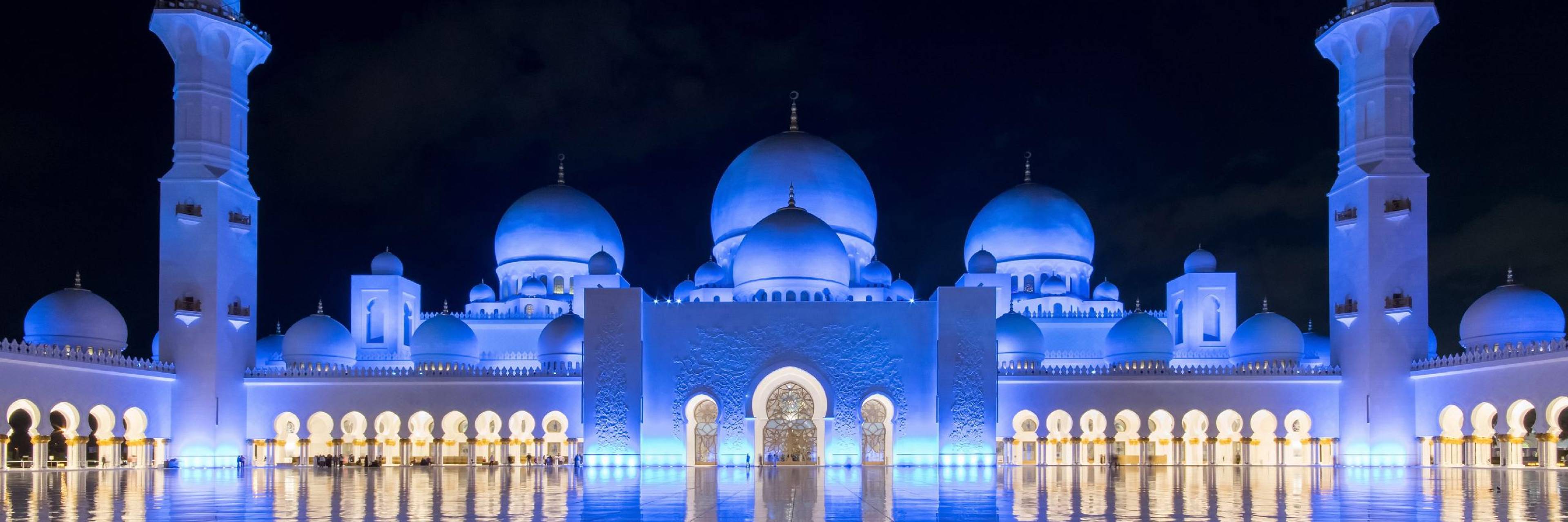
Islam offers opportunities for intense spiritual experiences. Of the greatest of such opportunities are the last 10 days of Ramadan. By far however, there is no day or night that has been emphasized more than the night known as laylat al-qadr (the Night of Decree).


Published: June 4, 2018 • Ramadan 20, 1439
Updated: October 13, 2026 • Jumada al-Awwal 2, 1448
12 mins • Acts of Worship
Introduction
What is Laylatul Qadr?
Indeed, We revealed [the Qur'an] during the Night of Decree. And what can make you know what is the Night of Decree? The Night of Decree is better than a thousand months. The angels and the Spirit descend therein by permission of their Lord for every matter. Peace it is until the emergence of dawn. (97:1-5)
God has concealed this night from the ummah so that they may strive in seeking it and performing worship throughout the month in the hopes of catching it. Similarly, He concealed the hour of special acceptance on Friday so that one would increase in their supplications throughout the day, and He concealed His Greatest Name (ism al-a’dham) amongst His Divine Names and His Pleasure with acts of obedience so that people would strive for them. And He concealed an individual’s lifespan and the Hour [of the Day of Judgment] so that humanity would continuously strive in good deeds, being heedful of them.8
More Like This





The theological significance of Laylatul-Qadr
The meaning of "Qadr"
Why is the Night of Decree the best night to worship in
What is the connection between Laylatul-Qadr being the night of decree, and also being the most virtuous night to pray on? Why is the night when angels descend with the decree also the best night to worship in?
tafsir) of the opening passage of Surah ad-Dukhan:Hā, Meem. By the clear Book, verily, We revealed [the Qur’an] during a blessed night. Indeed, We have always forewarned humankind. On that night, every wise decree (amr hakeem) is specified, by Our command. Surely, We have always been sending [messengers] as a mercy from your Lord, indeed He is the All-Hearing, All-Knowing. (44:1-6)
This passage reiterates the significance of Laylatul-Qadr as the night during which the fates, destinies, and decrees are sent down for the forthcoming year. The famous Qur’anic commentator, Abu’l-Thana’ al-Alusi (d. 1270 H/1854 CE), notes in his tafsir that when God says, “On that night, every hakeem decree is specified,” one of the meanings of hakeem is mukham (decisive) which entails that “this decree cannot be changed after it descends, in contrast to before that.”21
Laylatul-Qadr provides the perfect opportunity to pray for the realization of their best dreams, and the prevention of their worst nightmares. This is the night when that yearly decree is finalized. In a sense, this is that night when one’s fate is ‘downloaded’ from the heavens. Just as a person awaiting the decree of a judge in the courtroom prays most intensely at the moment when that decree is about to be decided, likewise
Laylatul-Qadr may signal that final opportunity to change one's fate (taqdeer). After that, a person's taqdeer in the record of the angels is only changed if it was written from before that it would be changed. The hadith scholar, Ibn Hajar al-`Asqalani (d. 854 H) notes the difference between the contingent decree (al-Qada’ al-Mu’allaq) which God has given the angels and the irrevocable decree (al-Qada’ al-Mubram) which is with God.22 The recording of one’s fate which the angels possess can be subject to change, as the Qur’an states “God erases and confirms what He wills” (13:39) and the Prophet Muhammad ﷺ said, “Nothing averts fate except supplication (la yaruddu al-qadar illa al-du’a).”23 However, one’s record with God in the Preserved Tablet (al-Lawh al-Mahfudh) is immutable. Thus, a person praying on Laylatul-Qadr may result in their records with the angels being altered, before those records seal one’s fate for the coming year. Du'a on this night has the greatest power to change decree, hence the night is both the Night of Power and the Night of Decree. There is also a special link between this night and seeking forgiveness from God. A’isha asked the Prophet, “O Messenger of Allah! If I knew which night is
Laylatul-Qadr, what should I say during it?”
اللَّهُمَّ إِنَّكَ عُفُوٌّ كَرِيمٌ تُحِبُّ الْعَفْوَ فَاعْفُ عَنِّي
O Allah! You are Most Forgiving, and you love to forgive. So forgive me.24
And whatever strikes you of calamity (museebah), it is because of what your hands have earned, although He pardons (ya’fuw) a great deal. (42:30)
Seeking the rewards of Laylatul Qadr
Notes
1. ^ Qur’an 3:191.
2. ^ The Prophet used to supplicate, “O Allah, I ask you for the sweetness of seeing Your Face, and the eagerness (shawq) of meeting you” (Sunan an-Nasa'i 1305). Ibn al-Qayyim describes shawq as “the journey of the heart in seeking its beloved” (Tareeq al-Hijratayn, Dar `Alam al-Fawa’id, vol. 1, p. 723).
3. ^ Sunan an-Nasa’i 2192.
4. ^ Sahih Muslim 1174.
5. ^ Sahih Muslim 1171.
6. ^ Sunan Ibn Majah, 1644.
7. ^ Sahih Bukhari, 2017.
8. ^ Ibn Qudamah,al-Mughni (Dar `Alam al-Kutub), vol. 4, p. 453.
9. ^ Tafsir al-Baghawi 7/227-228.
10. ^ Al-Bayhaqi, Kitab Fada’il Al-Awqat, 213.
11. ^ Al-Majmoo’ Sharh Al-Muhadhab, 6/447.
12. ^ Tafsir Al-Baghawi, 8/48.
13. ^ Sharh Al-Mumta’, 6/494.
14. ^ Quran, 97:4.
15. ^ Quran, 4:174.
16. ^ Musnad Ahmad, 10734.
17. ^ Muwatta Malik, 19:706. On the basis of this narration, some scholars, like Ibn `Abdul-Barr and al-Nawawi, asserted that the virtuous reward of this night was exclusive to Prophet Muhammad’s ummah, although other scholars like Ibn Kathir and Ibn Hajar al-`Asqalani did not consider it exclusive (see Al-Zarqani, Muhammad Abdul-Baqi. Sharh al-Zarqani `ala Muwatta Malik, 2003, p.326).
18. ^ Mustadrak al-Hakim 3781, Sunan al-Nasa’i 11625, Sunan al-Bayhaqi 8521. Ibn Taymiyyah explains that this revelation from a written form (in Lawh al-Mahfudh) to a written form (in Bayt al-`Izzah) does not negate the Angel Jibreel hearing the Qur’an directly from Allah and bringing it to the Prophet (Majmu al-Fatawa 12/126-7). Thus we have the oral revelation of the Qur’an, and the written revelation of the Qur’an.
19. ^ Badr al-Deen al-Zarkashi, Burhan fi Ulum al-Qur’an, vol .1, p. 230.
20. ^ Manna’ al-Qattan, Mabahith fi `Ulum al-Qur’an, p. 97. He explains that both of these opinions are in fact correct and compatible.
21. ^ Al-Alusi, Abu’l-Thana’. Ruh al-Ma’ani (tafsir of verse 44:4).
22. ^ Al-'Asqalani, al-Hafiz b. Hajar. Fath al-Bari li sharh sahih al-Bukhari. (Cairo: Dar al-Rayyan li al-Turath, 1986) vol. 10, p. 430.
23. ^ Sunan Ibn Majah, 1:95.
24. ^ Jami’ al-Tirmidhi, 3513.
25. ^ Lisan al-`Arab, 4/3019.
26. ^ The majority of scholars are of the opinion that Laylatul-Qadr may occur on any of the odd nights in the last ten nights of Ramadan, thus demonstrating the importance of practicing a consistent amount of worship for all of these nights. Ibn Taymiyyah made the interesting point that the “odd nights” could be counted from the beginning or the end of the month (e.g., the 28th night could be considered the third last night of a 30 day Ramadan and hence also odd), and therefore one should endeavor to strive in all ten nights (Majmu’ al-Fatawa 25/284-285).
27. ^ This is especially important to note for women who are on their period and unable to perform Qiyam since the rewards of the night are still fully available to them.
28. ^ Jami’ Tirmidhi, 221. Similarly in Sahih Muslim, 656a.
29. ^ Muwatta Malik, Book 19, Hadith 707.
30. ^ Sahih Bukhari, 1901.
31. ^ Jami’ al-Tirmidhi, 3513. Discussed earlier in the article, p. 9.
32]. ^Sahih Bukhari, 49.

Senior Fellow
Religious Director of Yaqeen Canada
Founder & President (CEO)
Disclaimer: The views, opinions, findings, and conclusions expressed in these papers and articles are strictly those of the authors. Furthermore, Yaqeen does not endorse any of the personal views of the authors on any platform. Our team is diverse on all fronts, allowing for constant, enriching dialogue that helps us produce high-quality research.
Want to appear on Yaqeen?
Cite this paper
Khan, N., Hindy, I., & Suleiman, O. (2018). Why Laylatul Qadr? The Significance & Virtues of the Most Important Night of the Year. Yaqeen Institute for Islamic Research. https://doi.org/10.65061/ZYMY6401
Feedback
We'd love to hear your thoughts on this unit!
Sharia

Related
