


On The Timing and Virtues of the Night of Power: The Heart's Joy in Remembering Laylat al-Qadr by Ibn al-ʿIrāqī
Latest

Hindutva and Anti-Muslim Violence: How to Navigate Hindu Supremacy
Safa AhmedHindutva does not only harm Muslims in India; it has found resonance in diasporic communities, involves itself in transnational repression, and openly pledges its allegiance to other far-right movements. Its supporters amplify Zionist propaganda that enables Israel’s genocide in Palestine, provide eager audiences for prominent Islamophobes, and even collaborate politically with dangerous white supremacists. To counter this growing threat, Muslims and allies must recognize the global harms of Hindu supremacy and build equally coordinated efforts to resist it.
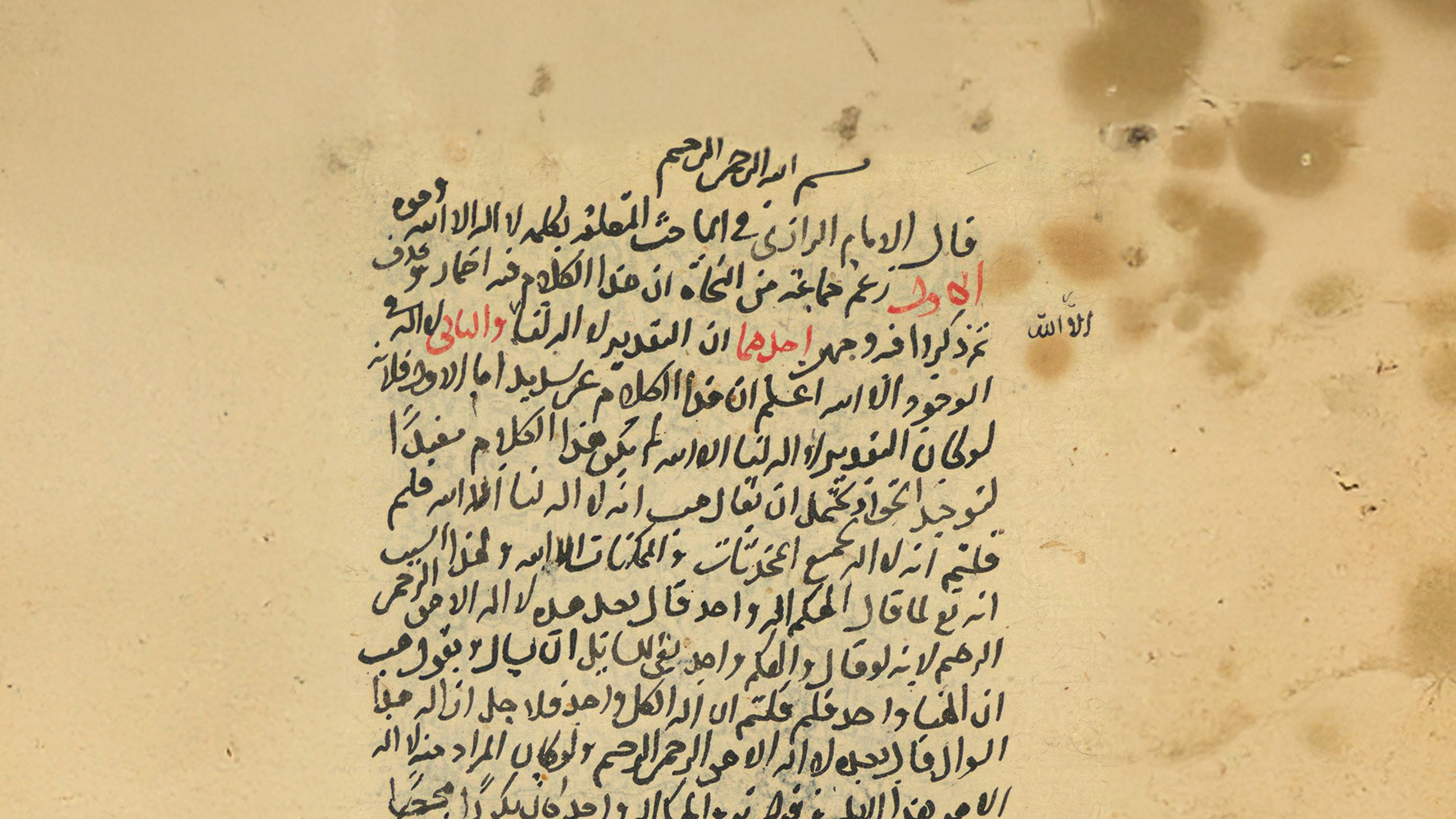
The Meaning of La Ilaha Illa Allah: An Annotated Translation of Imam al-Zarkashi’s Treatise on the Islamic Testimony of Faith
Sh. Yousef WahbIntroduction In the forty-seventh sūra of the Qur’an, Sūrat Muḥammad, God commands, “So know that there is no deity except Allah.”[1] What makes this command especially striking is its timing; it was revealed approximately fifteen years into the Prophet’s mission, at a point when he and his companions already held an unshakable conviction in the oneness of God. Why, then, would such a foundational truth require reaffirmation? The verse suggests that knowing God’s oneness involves more than a one-time acknowledgment; it is an ongoing process that demands sustained reflection, deliberate cultivation, and inner renewal. Scholars have interpreted this divine command in various ways, many […]
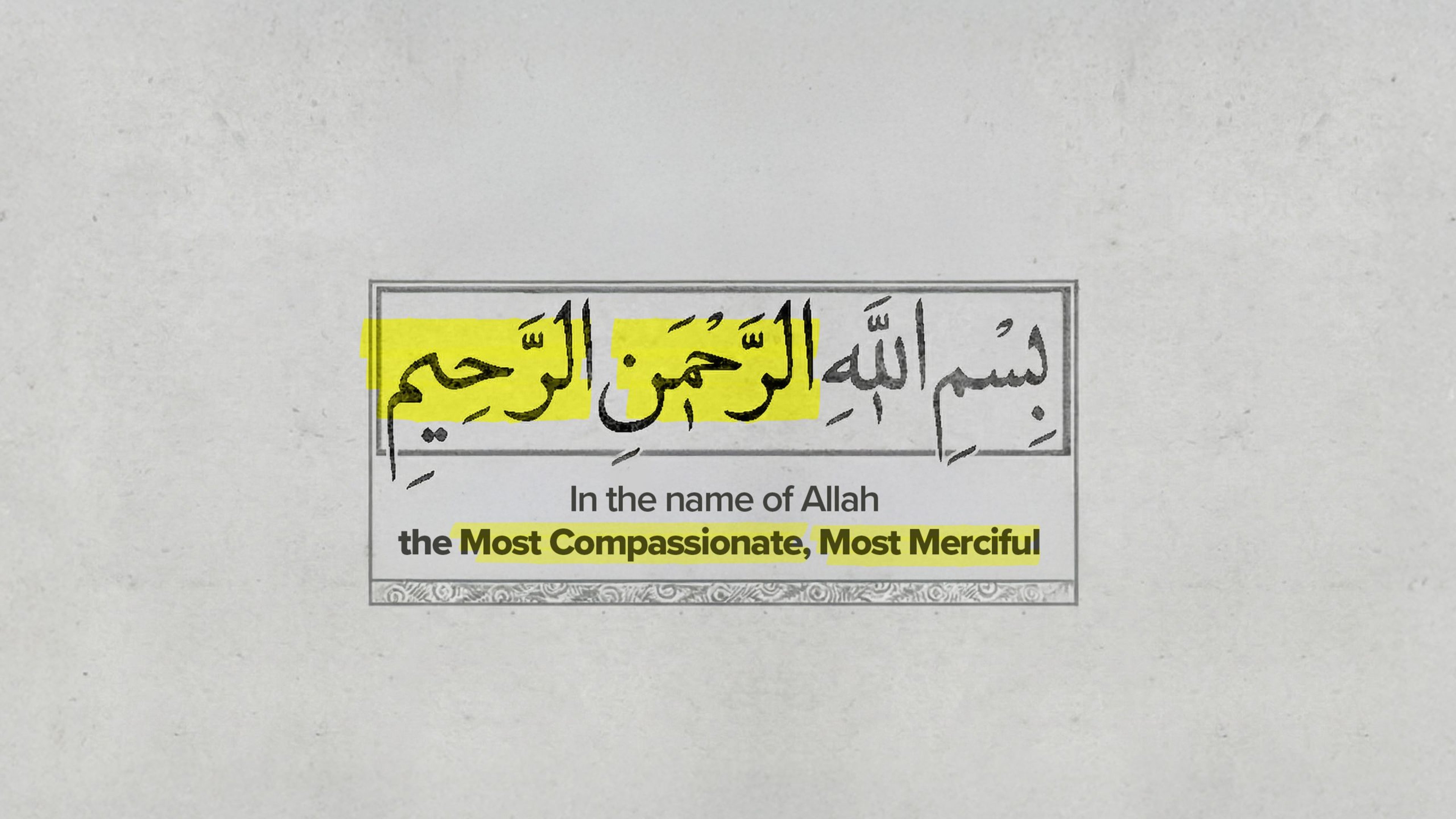
The Divine Wisdom Behind the Pairing of Allah's Names in the Qur'an
Jinan YousefIntroduction “Allah has ninety-nine names. Whoever preserves (ahsaha or hafidhaha) them will enter Paradise.”[1] Such was the teaching of the Prophet ﷺ. Many of us have heard this hadith, but fewer of us have internalized the true scope of its meaning. To preserve Allah’s names is not simply to memorize them—it is to live by them. “To Allah belong the best names, so call upon Him (udʿuhu biha) with them.”[2] Duʿa in the Qur’an can refer to supplication specifically and worship more broadly, depending on the context.[3] Here, we are being told to call upon Allah with His names—for example, “O Allah, forgive me, You are the Most Forgiving […]

Love and Hate for God’s Sake: Revisiting the Doctrine of al-Wala’ wal-Bara’
Dr. Hatem al-HajIn the name of Allah, Most Compassionate, Most Merciful Properly reconciling commitment to God and compassion for man is among the most pressing needs of today’s world. It is no secret that Muslims’ relationship with the “other” (including fellow believers of other theological orientations) has become such a major trial for many—particularly those hailing from the Western world[1]—that it risks eroding the sweetness of their faith, or even pushing them away from it. The Islamic doctrine of al-walaʾ wal-baraʾ, often translated as loyalty and disavowal, has the power to remedy this conflict—if and when accurately defined. The equilibrium it achieves between obedience to God and compassion to mankind attests to Islam’s […]

Marriage and Gender Roles in Islam: Beyond Rights and Duties
Dr. Tesneem AlkiekIntroduction Over the past two centuries, Muslim societies confronted what often felt like insurmountable trials: from colonial domination and military defeat to political fragmentation and institutional decay. And yet, even as the Western world began to stagger under the recoil of the very ideologies it violently imposed, Muslim societies remained remarkably resilient in one vital domain: the family. Muslim homes buckled down to weather waves of religious and intellectual onslaught. Marriage was not merely a social arrangement but a space for cultivating moral values and sustaining quiet resistance. But the storm has now caught up with us too, straining one […]
Virtues of Surah al-Baqara: Healing and Protection in the Qur’an’s Longest Chapter
Sh. Suleiman HaniIntroduction One night, standing underneath the vast stretch of the starry sky, Usayd ibn Ḥuḍayr found himself reciting Surah al-Baqara. His horse, tied beside him, suddenly grew agitated. When Ibn Ḥuḍayr paused his recitation, the horse fell silent. He resumed his recitation, only for the horse to again become visibly distressed. He stopped, and again so did his horse’s agitation. For one final time he tried to continue his recitation, but to no avail—his horse was unsettled and worked up, and his son, Yahya, was too close for comfort. Ibn Ḥuḍayr, fearing that the horse might trample his son, bent down […]


Are You a Visual Learner? Here Are 5 Islamic Infographics to Learn From Today | Blog
Yaqeen InstituteVisual learners make up 65% percent of the population, so it’s no wonder that infographics are one of the most popular forms of content today. In addition to simplifying complex topics, infographics also improve our retention of the information presented. At Yaqeen, we’re dedicated to making Islamic content as accessible as possible, which is why we offer infographics on various topics.Here are 5 Islamic infographics to check out today. 1. Living by Judgment Day’s Promise The Day of Judgment is not some distant reality. It’s a promise. One day, we’ll stand before our Creator and be held accountable for our […]

Saving Truth and Beauty: The Destruction of Nature and the Islamic Solution
Rhamis KentIntroduction The destruction of nature can be understood as a running indictment of the collective character and state of the human species. The ecological health of a given place mirrors the true ethical, spiritual, and psychological condition of its inhabitants. The connection between our moral failings and the destruction of the Earth is affirmed by Allah in the Qur’an when He tells us, “Corruption has appeared on the land and sea, by reason of what your hands have earned. That Allah may make them taste a part of that which they have done, in order that they may return.”[1] History is strewn with catastrophes […]
Predestination vs. Free Will in Islam: Understanding Allah's Qadr
Anonymous Guest AuthorHow can we reconcile two apparently contradictory facts that Allah has absolute power and sovereignty over all creation, and that at the same time we are responsible for our actions? Are we forced to do what we do, or are our choices meaningful?
Parenting Style and Our Relationship With God: The Influence of Parental Love on Our Perception of God
Dr. Osman UmarjiIntroduction One of the most foundational Islamic beliefs is the acknowledgment of Allah’s sovereignty. Sovereignty refers to Allah’s absolute ownership, power, and supreme authority over the universe. Allah refers to Himself as ‘the Owner of Sovereignty’[1] (Mālik al-mulk), and Sūrat al-Mulk begins with the proclamation, “Blessed is He in whose hand is all sovereignty.”[2] “Indeed, your Lord is Allah, who created the heavens and earth in six days and then established Himself above the throne. He covers the night with the day, which is in haste to follow it; and the sun, the moon, and the stars are subservient to His command. Unquestionably, to Him belongs […]
Are You a Visual Learner? Here Are 5 Islamic Infographics to Learn From Today | Blog
Yaqeen InstituteVisual learners make up 65% percent of the population, so it’s no wonder that infographics are one of the most popular forms of content today. In addition to simplifying complex topics, infographics also improve our retention of the information presented. At Yaqeen, we’re dedicated to making Islamic content as accessible as possible, which is why we offer infographics on various topics.Here are 5 Islamic infographics to check out today. 1. Living by Judgment Day’s Promise The Day of Judgment is not some distant reality. It’s a promise. One day, we’ll stand before our Creator and be held accountable for our […]
Saving Truth and Beauty: The Destruction of Nature and the Islamic Solution
Rhamis KentIntroduction The destruction of nature can be understood as a running indictment of the collective character and state of the human species. The ecological health of a given place mirrors the true ethical, spiritual, and psychological condition of its inhabitants. The connection between our moral failings and the destruction of the Earth is affirmed by Allah in the Qur’an when He tells us, “Corruption has appeared on the land and sea, by reason of what your hands have earned. That Allah may make them taste a part of that which they have done, in order that they may return.”[1] History is strewn with catastrophes […]
Learn about the virtues of fasting in general, the spirit of the practice, why we fast, and what moral, psychological, and spiritual outcomes are desired.
Predestination vs. Free Will in Islam: Understanding Allah's Qadr
Anonymous Guest AuthorHow can we reconcile two apparently contradictory facts that Allah has absolute power and sovereignty over all creation, and that at the same time we are responsible for our actions? Are we forced to do what we do, or are our choices meaningful?
Parenting Style and Our Relationship With God: The Influence of Parental Love on Our Perception of God
Dr. Osman UmarjiIntroduction One of the most foundational Islamic beliefs is the acknowledgment of Allah’s sovereignty. Sovereignty refers to Allah’s absolute ownership, power, and supreme authority over the universe. Allah refers to Himself as ‘the Owner of Sovereignty’[1] (Mālik al-mulk), and Sūrat al-Mulk begins with the proclamation, “Blessed is He in whose hand is all sovereignty.”[2] “Indeed, your Lord is Allah, who created the heavens and earth in six days and then established Himself above the throne. He covers the night with the day, which is in haste to follow it; and the sun, the moon, and the stars are subservient to His command. Unquestionably, to Him belongs […]




Explore self-improvement tips and habits that facilitate personal growth on a spiritual, mental, and physical level through an Islamic perspective, utilizing resources like the 'Habits to Win' series and companion journal. Learn to cultivate consistency and success in both worlds by following the examples of pious predecessors and adopting small, transformative deeds.

The Power of Motivation
Dr. Zohair Abdul-Rahman
Abstract Motivation is at the root of our conscious thoughts, emotions, and behaviors. It provides the basis for experiences of happiness and joy as well as anxiety and sorrow. It strongly affects our judgments and beliefs about the world. The Qur’an describes the internal components of the self that provide the foundation for our motivational states. Continuing with the larger project of formulating an understanding of human psychology from an Islamic perspective, this article aims to shed light on the concept of motivation. The paper is divided into three sections, (1) Fundamentals of Motivation; (2) The Motivational State; and (3) […]

Repentance as a Way of Life: Islam, Spirituality, & Practice
Roohi Tahir
Abstract While the general notion of repentance may be familiar to most, the Islamic concept of repentance is far less familiar and is often the subject of misconceptions and doubt. Repentance plays a central role in Islam and is comprehensive in nature. Deeply rooted within the belief system, it manifests in multiple dimensions—as the core of Islamic theology (aqeedah), as a subject of jurisprudence or rulings (fiqh), and ultimately in practice as an act of worship (‘ibadah). Equally important are the spiritual and self-purification (tazkiyah) aspects of repentance which reside in the heart. This paper specifically addresses how to repent, with a […]

Repentance, Redemption, & Salvation: An Islamic Framework
Roohi Tahir
Introduction “Every son of Adam commits sin, and the best of those who commit sin are those who repent.”[1] While seemingly counterintuitive, this profound statement from the Prophet Muhammad ﷺ is a cornerstone in the understanding of repentance (tawba) within the framework of Islamic theology. Much can be gleaned from these few words; perhaps the most striking question is how one in a continual state of sin and repentance can at the very same time be regarded as the best of humanity? This question is even more significant given the darkness and negativity often associated with sin within our collective imagination, an association that […]

How to Overcome Addiction through Faith: Ibn Al-Qayyim's Rehabilitation Program
Dr. Zohair Abdul-Rahman
Preface A flurry of highly curated images, sounds, videos, lights and colors designed to captivate our minds flood our consciousness on a daily basis. Mass production of food products engineered in labs to tease our taste buds fill our pantries and satiate our appetites. Intoxicants have never been more widely available with the decriminalization of recreational drugs in a number of countries and the pharmacological use of illicit drugs for pain relief and mental illness. The opioid epidemic has surged onto public concern as middle-upper class populations in developed nations are in the grips of a drug crisis. The spirit […]

Faith in Mind: Islam’s Role in Mental Health
Dr. Osman Umarji
Introduction At Yaqeen, we consider Muslim mental health research to be a top priority. In the current study we examined the role of religiosity in Muslim mental health and well-being. Traditionally, the roles of religiosity and spirituality have been left out of definitions of mental health.[1] However, as Muslims we know that our purpose in life is to worship Allah,[2] and that the serenity of our souls is tied to our remembrance of Him.[3] Therefore, we want to start the conversation about mental health with God in mind. For the believer, spiritual health cannot be divorced from this equation, as religiosity and […]
Explore self-improvement tips and habits that facilitate personal growth on a spiritual, mental, and physical level through an Islamic perspective, utilizing resources like the 'Habits to Win' series and companion journal. Learn to cultivate consistency and success in both worlds by following the examples of pious predecessors and adopting small, transformative deeds.
The Power of Motivation
Dr. Zohair Abdul-Rahman
Abstract Motivation is at the root of our conscious thoughts, emotions, and behaviors. It provides the basis for experiences of happiness and joy as well as anxiety and sorrow. It strongly affects our judgments and beliefs about the world. The Qur’an describes the internal components of the self that provide the foundation for our motivational states. Continuing with the larger project of formulating an understanding of human psychology from an Islamic perspective, this article aims to shed light on the concept of motivation. The paper is divided into three sections, (1) Fundamentals of Motivation; (2) The Motivational State; and (3) […]
Repentance as a Way of Life: Islam, Spirituality, & Practice
Roohi Tahir
Abstract While the general notion of repentance may be familiar to most, the Islamic concept of repentance is far less familiar and is often the subject of misconceptions and doubt. Repentance plays a central role in Islam and is comprehensive in nature. Deeply rooted within the belief system, it manifests in multiple dimensions—as the core of Islamic theology (aqeedah), as a subject of jurisprudence or rulings (fiqh), and ultimately in practice as an act of worship (‘ibadah). Equally important are the spiritual and self-purification (tazkiyah) aspects of repentance which reside in the heart. This paper specifically addresses how to repent, with a […]
Repentance, Redemption, & Salvation: An Islamic Framework
Roohi Tahir
Introduction “Every son of Adam commits sin, and the best of those who commit sin are those who repent.”[1] While seemingly counterintuitive, this profound statement from the Prophet Muhammad ﷺ is a cornerstone in the understanding of repentance (tawba) within the framework of Islamic theology. Much can be gleaned from these few words; perhaps the most striking question is how one in a continual state of sin and repentance can at the very same time be regarded as the best of humanity? This question is even more significant given the darkness and negativity often associated with sin within our collective imagination, an association that […]
How to Overcome Addiction through Faith: Ibn Al-Qayyim's Rehabilitation Program
Dr. Zohair Abdul-Rahman
Preface A flurry of highly curated images, sounds, videos, lights and colors designed to captivate our minds flood our consciousness on a daily basis. Mass production of food products engineered in labs to tease our taste buds fill our pantries and satiate our appetites. Intoxicants have never been more widely available with the decriminalization of recreational drugs in a number of countries and the pharmacological use of illicit drugs for pain relief and mental illness. The opioid epidemic has surged onto public concern as middle-upper class populations in developed nations are in the grips of a drug crisis. The spirit […]
Faith in Mind: Islam’s Role in Mental Health
Dr. Osman Umarji
Introduction At Yaqeen, we consider Muslim mental health research to be a top priority. In the current study we examined the role of religiosity in Muslim mental health and well-being. Traditionally, the roles of religiosity and spirituality have been left out of definitions of mental health.[1] However, as Muslims we know that our purpose in life is to worship Allah,[2] and that the serenity of our souls is tied to our remembrance of Him.[3] Therefore, we want to start the conversation about mental health with God in mind. For the believer, spiritual health cannot be divorced from this equation, as religiosity and […]
Shari'ah in Today's World: Renewing Islamic Discourse
Dr. Hatem al-Haj
Introduction Renewal of religious discourse in Islam (tajdeed) has taken center stage due to the turmoil in Muslim lands nowadays. While the concept of tajdeed is legitimate, the implication (occasionally stated explicitly) that religious discourse is the root cause of the many problems from which Muslim-majority countries suffer is unfair. It deliberately overlooks a myriad of factors leading to these problems, which if examined, would show that these harms are partly self-inflicted and partly inflicted on Muslims by others. However, it would also be unreasonable to claim that the contemporary religious discourse is completely free of any guilt. First, let me state here that it is […]
Slavery and Emancipation in the Sharia: The Islamic Framework for Ethical Treatment of Slaves in the Minhāj fī shuʿab al-īmān of al-Ḥalīmī
Dr. Jonathan Brown
Translated and Annotated by Jonathan A. C. Brown The moral problem of slavery The topic of slavery is not an easy one. In part this is because many today live in societies still shaped by slavery’s racial hierarchies and inequalities. But it is also because thinking about slavery in any depth involves serious dilemmas about morality, identity, and beliefs. Today slavery is seen as an intrinsic evil—maybe the greatest evil—throughout time and space. “No evil more monstrous has ever existed upon the earth,” said the English poet Samuel Coleridge (d. 1834).[1] As the 2001 Durban Declaration stated, slavery is “a crime against humanity […]
Tahajjud: Fuel for the Self and Society
Dr. Tamara Gray
Introduction Damascus is a beautiful city. Jasmine vines and bright purple bougainvillea flowers grow on balconies all over the city and jacaranda trees sneak up in the small spaces between blocks and buildings. I used to live in a twelve-story cement block building that stood in a row of at least ten other buildings almost exactly like it. At maghrib time, the sun would go down and the buildings’ windows would light up with crystal chandeliers and fluorescent lights. People would go about the evening work of children’s homework, supper, and soap operas all up and down the floors. It was a […]
Shari'ah: From Diverse Legal Discourse to Colonial Misrepresentation
Dr. Tesneem Alkiek
Introduction Just over a century after the Prophet’s passing, Ibn al-Muqaffaʿ, the well-known Persian secretary and vizier to the second Abbasid caliph al-Manṣūr, penned his famous Risāla fī al-Ṣaḥāba (Epistle Concerning the Entourage), advising the caliph on how to confront the political troubles of his caliphate.[1] Among his handful of recommendations, Ibn al-Muqaffaʿ suggested that the caliph codify the growing corpus of what constituted Islamic law. Although the Caliph al-Manṣūr did not ultimately undertake Ibn al-Muqaffaʿ’s proposal, he did have another idea: why not simply use the respectable Imam Malik’s legal compendium, al-Muwaṭṭaʾ, as a standardized legal code?[2] When the caliph summoned Imam Malik to propose this idea, however, […]
Fard Kifayah: The Principle of Communal Responsibility in Islam
Sh. Yousef Wahb
Introduction In a world where the dominant culture is becoming increasingly individualistic and social isolation is on the rise, there is a need to revisit the factors necessary for Muslim communities to prosper. Muslim communities have obligations to not only perform acts of worship like establishing congregational prayers and funeral services, but also to provide a wide range of other essential social and financial services. As a community, we have a responsibility to look after the physical, mental, and spiritual well-being of one another. The Messenger of Allah ﷺ said, “The relationship of the believer with another believer is like […]


