fbpixel

10 years of Yaqeen. Help power the next 10.
Donate Now

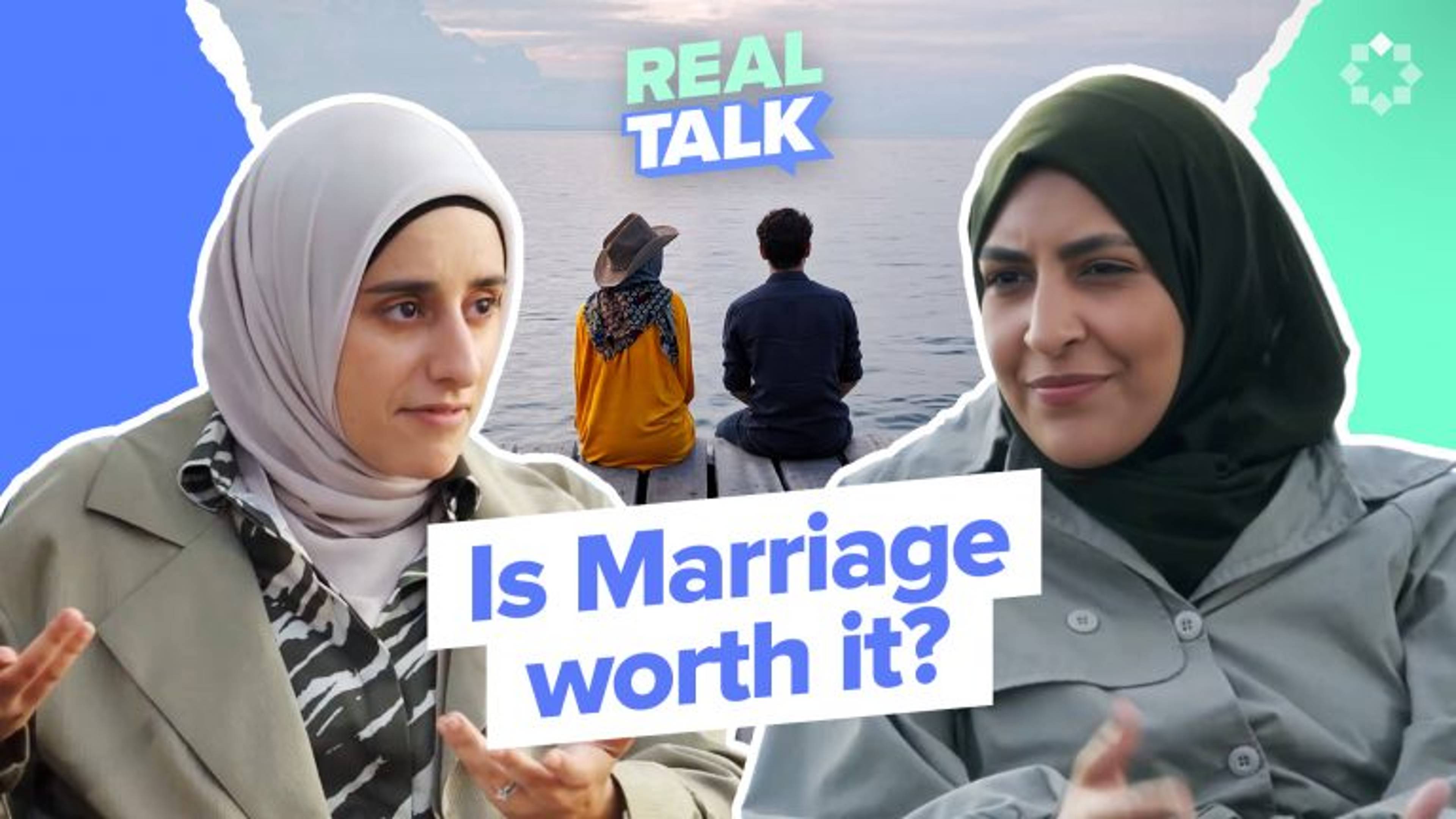
Understanding Marriage, Polygyny and Divorce | Real Talk | Dr. Tesneem Alkiek

Real Talk Series

Understanding Marriage, Polygyny and Divorce | Real Talk | Dr. Tesneem Alkiek

Does Islamic law give men rights it doesn't give women? Dr. Tesneem Alkiek and host Cadar Mohamud work through the rulings Muslim women find hardest to sit with, beginning with polygyny and the colonial history that shaped how we react to it.

Dr. Alkiek while placing significant emphasis on the conditions and responsibilities that constrain its practice, and draws the line between what is legally valid and what is religiously legitimate.

The conversation then turns to why a Muslim man may marry a woman of the Book when a Muslim woman may not, and how ʿUmar ibn al-Khaṭṭāb addressed concerns about the practice and its potential consequences for the Muslim community.

This transcript was auto-generated using AI and may contain misspellings.
00:00You can't just take advantage of another woman. You can't just drag her along. Where does the culture of secret marriage even come from? For the woman, explore other options before you return to this relationship.
00:12We would guard our speech around our wives. We need to decolonize how we think.
00:17There are three topics people love to talk about.
00:35It's marriage, divorce, and death. And today, obviously we're on Real Talk Season 2, we're going to talk about all three of them.
00:45But we're going to start with the most popular topic, I guess we could say that, and that is polygyny. But before we begin this discussion, I kind of want to share a fun fact about me.
00:58Both my parents are a byproduct of polygyny. I'm not just talking about first and second, I mean my mom and dad came from a real polygyny household, four wives, four wives.
01:09And for my dad's family, it worked out beautifully. It was quite beautiful to look at. They had such a positive experience. I got to see it. But for my mom's side,
01:20unfortunately, it was the opposite. It didn't work out so well. And so I have both sides, right? And so when I was telling my dad about this conversation we're about to have,
01:31he asked me, he's like, oh, so what are your thoughts on it, about polygyny? And I had, I'm not going to lie, because this is real talk. So let me tell you the real. Let's hear it. I had a visceral reaction. I had a cringy reaction. I don't know what polygyny is for me.
01:45And my dad looked at me, he goes, but why do you have that reaction? You saw the positive. And I'm like, I actually didn't have an answer for him. And so I'm excited to ask you this question, right? Why do you think so many of us have that reaction?
02:00Why do so many of us have a visceral, what did you say, cringe reaction to polygyny? Let's get started. So, you know, it's actually funny because I think I want to start off with
02:11an anecdote as well. Because you say polygyny, I'll tell you what comes to mind. Growing up, we had known several people that essentially the man is married,
02:23cheats on his wife with his co-worker, gets married to the person he cheats with. And then the wife, of course, is upset. And he says, what's your problem? Oh, you're just
02:36upset that I got married to a second wife. And you're like, uh, I mean, might have had something to do with the fact that you engaged in one of the biggest sins possible. But, you know, it's
02:46always now it's a wife's problem, because she's just unhappy with, you know, her husband having a second wife. Right. So, look, obviously, a lot of our experiences are anecdotal.
02:59But I do think that we've heard a lot of traumatic incidents, abuses of the cases, and that's affected how we perceive it and how we react to it. That's 100% there. And what I'm
03:12not going to try to do today is convince you that you need to be in a polygynous relationship. But what I think is important is, as Muslims, it's obviously permissible under certain
03:25circumstances, under certain conditions, but it's there. And so what I think is important is to understand the wisdom behind it, right? Not that tomorrow you're going to wake up and this is okay
03:38for me, and this is what I want, and we need to have like a whole social cultural campaign. Frankly, that's not my job. My job is to convince you, again, why in the world is this even on the
03:49table? And I had to do that convincing to myself a lot. Did you? Yes. Because, again, we're all
03:58byproducts of a 21st century modern world that has obviously very specific values and certain frameworks that we see the world. And I grew up in that. So I had to really sort of understand,
04:12what is it that makes me feel so uncomfortable? Let's talk about it. But also, to do that, you have to really understand what are the assumptions that I'm bringing to the table, right? So I was going through a phase of, well, actually not a phase, I think I probably still
04:25do this a lot. I'm going through the experience currently of reading through a lot of books on the history of marriage. And I find this fascinating because the one area of interest
04:37that I have, the main area of interest that I have in Islamic law is family law. And I think understanding the history of marriage is so important because, like, you got to understand
04:47how marriages functioned all across the world, all across time, for you to really appreciate, like, what were Muslim jurists trying to do in different eras, right? So I'm reading this book
04:59on the history of marriage. And there's two things that really stood out to me that shaped, that helped shape my perspective on this topic. Number one, the fact that polygynous marriages
05:11were the defaults for most societies for most of history. And that to me was like, it kind of, it seems like such a simple fact. But like, my whole life, I grew up like monogamy is
05:25defaults. That's the standard. It's the golden standard, right? And I thought it was fascinating. I'm like, I have never been once told that. And I thought that was interesting because now we're
05:38the odd ones out, right? That this is the standard. So that made me think, like, what is it about polygyny that it clearly was effective and functioning for hundreds or thousands of years,
05:50right? The second thing, this was more interesting, okay? This comes up when I was studying U.S. political history of marriage, okay? Now, we've got the white Christian settlers who come
06:03to the United States of America. And there's Native Americans here, obviously. And they have a problem with them. They have a lot of problems with them, right? A lot of problems with a lot
06:15of people. And it is, so this is really interesting. Because when it came to the Native Americans, there was a specific issue they had with the family arrangements. Number one,
06:27they didn't like that the Native Americans were hunters and not farmers. Why? Because if you're a hunter, you got to leave your home frequently and for long periods of time. And when you do that,
06:41who's watching the households? Not just watching, who's dominating the households? Wow. That's a problem. And that's actually a big reason why farming became so like in vogue for
06:53the American community because it allowed for more control over the household, okay? That's one. Two, Native Americans, as most communities were throughout history, were polygynous communities.
07:06And they really didn't like that. Because if you're married to more than one woman, the problem was you can't assert your authority over both of them at the same time.
07:17So in an effort to establish the patriarchy, they ran a deliberate political campaign to enforce monogamy. Because they couldn't, they, no, no, no, you need to be in your household
07:32overseeing it at all times. That's your role as the man. That is your role in society. And then, like, that, I just, I thought that was fascinating. You're blowing my mind. Because, yeah,
07:45because you would think that polygamy was, it wasn't the norm. It wasn't, like, you would think that monogamy was this, like, that was the way to live. And that was the best way to live. Yeah,
07:56but also polygyny is, is described as, like, something that's patriarchal, right? Oh, it's a man, he can marry multiple wives. But wait, did you know that in order to enforce the patriarchy,
08:08monogamy was, was actively campaigned for? Look, I share this example, not to, like, take us back into history and get stuck there, or whatever the case is. But we need to decolonize how we think,
08:20right? That's important, because we are assuming that when we come to these conversations, we're coming with a fresh slate. We've got no biases, no subjectivities. That's not always true.
08:32And in this case, it really is an act of decoloniality to say, wait a minute, why is it that we take this as a golden standard? Right? Again, we're doing this neutrally. We're not saying
08:44pro or against. We want to observe something, the history of a phenomenon, and appreciate what biases are we bringing to the table. And I think that's really important, because once we
08:55acknowledge, look, historically speaking, that was the norm. And historically speaking, monogamy was enforced for reasons that you and I might be uncomfortable with. Now we get to start to sort
09:07of ruffle the feathers a bit and have a more productive conversation in the process. I think the honest truth here is from the Western context, I think women feel reluctance to the idea of
09:19polygyny, because it feels like it's highly sexualized. Where do you think those feelings come from? Polygyny feels highly sexualized. That makes us uncomfortable. Interesting.
09:33Not right, not wrong, right? What's interesting, why I say interesting is because it reminds me of there was an article I was reading. This is actually a few years ago. I'm scrolling through
09:46my phone, and I come across an article in the Telegraph, okay? And it says, big headlines, swinging is on the rise. Oh my goodness. I was like, okay, interesting. Swinging, what's swinging?
10:00The idea that you are having an open sexual relationship despite your being married or being in a relationship. So someone looks to their husband, their wife and says, look, I want to try
10:12other people. I want to have other experiences. You okay with that? Sure. All right. Next weekend, you do you, I do me, right? And it's not just swinging, the idea of open relationships, right?
10:25The fancy term for it is called polyamory, right? Polyamorous relationships are on the rise, meaning people having multiple relationships at once. And I'm not comparing by any means polygyny to
10:37polyamorous relationships or just to swinging because they're fundamentally different. But what I am trying to do is like, let's talk about the discomfort elements again.
10:49Let's decolonize our mindsets again for a second. Because I think about the fact that what is it about our society that something like polygyny is barbaric, it's associated with
11:03negative terms, it's oppressive, all of that. But now when it comes to swinging or polyamorous relationships, sure, I would say it's still not a majority opinion that it's something that's
11:14acceptable. But all these articles are coming back and saying there's a higher acceptance rate. And it makes me think of what are the fundamental moral principles that we have as a society?
11:25Why is it that there's any acceptance for that whatsoever, but zero tolerance for anything else? And there's really two magical principles that we have. Number one, consent. They got the consent
11:40from their wife or their husband. What's the issue? They approved, right? The second is now the no harm principle. I got consent. There's no harm involved. What's the big deal? And as long
11:55as those two things, those boxes are checked, then something as wild as swinging has growing
12:05tolerance and acceptance. I share this because again, we need to really understand what's the true source of that discomfort. What does it mean when we say that one type of relationship
12:19is permissible, but the other polygyny, which is not like it because in fact, let's talk about it for a second. It's fundamentally different because unlike those other relationships,
12:30it's ensuring that a woman is protected. She has legal rights. She has social rights. Her children have lineage, inheritance rights. She herself has inheritance rights. So what one relationship
12:43is doing is rejecting this idea of no strings attached because when there are no strings attached, most of the time, it's the woman who gets the shorter end of the stick. And now Islam
12:56is saying, you don't do that. You don't mess around. You don't harm someone's relationship. You don't harm someone's identity for your pleasure. There are strings attached and that
13:08entails having responsibility towards one another when engaging in that intimate relationship. So they're fundamentally different, but for some reason towards one of them, there's like this
13:18inherent repulsion that we feel. But in another, it's like, oh, roll your eyes. It's no surprise there type of reaction. So again, it's just like, how do we sort of think about this a little
13:31differently and question some of the assumptions that we're bringing to the table?
13:40Let's put the horror stories aside, right? Let's put like a commentary and let's get to the real
13:48question that I want to ask, which is what does Islam actually say about polygyny? What does Islam actually say about polygyny? Let's look at the context first. Number one,
14:02because the context is important. Like I said, polygyny was a default for most of history. That includes pre-Islamic Arabia, right? And it wasn't just pre-Islamic Arabia because I think
14:13the way that I heard it was I was like, those Arabs, of course they're doing this, right? No, this is like a universal phenomenon, right? Arabs were doing it before the time of the Prophet
14:25peace be upon him, but they had no conditions and there was no restrictions. So it was normal, so normal in fact, to marry more than four, marry five, six, 10, 12. Like, I mean,
14:40like one relationship is a lot. Could you imagine being married to 10 people, right? That's a little village. Yeah, it's like a little village, right? And the Prophet peace be upon him, once the ruling was issued, he had to tell companions, he can't remain married to all 10,
14:54right? Like that's how normalized it was that you have so many different hadith of the Prophet peace be upon him telling these men, like that's, we're not allowing that anymore. And so that is
15:06important because now we see the very first rule that comes in, polygyny existed, it's always existed everywhere, but now Islam is coming to restrict it. Let's, though, look at the ayah
15:18because I think the Ayah is really important here. This is where we get the clear sort of non-negotiable ruling in regard to polygyny. And the context of this Ayah is that if you fear,
15:30if you're essentially, if you're trying to take care of orphans, let me reword it here. The context came at a time where they were trying to care for orphans and orphans,
15:42Islamically speaking, like legally speaking, is not someone who's lost both parents, it's when you lose your father specifically because he was a financial breadwinner. And so when he is gone, that's when it, that's really when it becomes a concern for people to care for the orphans
15:56because that financial security is now gone. So men were dying off in battle, men were disappearing, men were, you know, leaving behind children. And so the context of this verse comes in and says
16:09that in the case that you want to take care of these orphans, marry these women who now have these children to take care of. Two, three, or four of them. But if you think you can't be just
16:21with these women, then only stick to one. Okay, that's the verse paraphrased. Important context here. I've heard this a lot, is that Tasneem, you just told me this is about caring for orphans.
16:34So if there's no orphans in the picture, why are we still talking about this? This is the context of the verse. It's not what we call 'illah. It's not the reason for the ruling to exist.
16:46And so simply because a verse was revealed based on a certain context, that doesn't limit the legal application of it, right? So that's an important clarification because now that condition
16:57is not a condition that would like, if it disappears, the ruling disappears, right? Because most of the Qur'an was revealed after certain incidents. That was timely. It was responding
17:07to a specific circumstance, but now it's issuing a ruling that is applicable to time and space, like cross time and space. That's number one about the ayah. Number two.
17:16So we know that it's already restricting it down to four. Number two, the second most important element we need to take into consideration, this is what scholars talked about a lot, is the condition of justice.
17:27But in order to talk about the condition of justice, I have to share another ayah in the Qur'an. And that's another ayah later in the same surah, Surah an-Nisa, where Allah ﷻ says, You are unable to be just with your wives, even if you tried.
17:41Okay, I share this because I think another common argument you hear today is, well, Allah ﷻ is saying you can't be just.
17:51And the verse itself says, if you're not just, then you have to have only one. And therefore, the ruling now is only limited to one.
17:59That would be a good argument, but that would have to assume that Allah ﷻ is revealing something that's either contradictory or that's something that is frivolous, meaning like it has no point.
18:10Why would Allah ﷻ say that and then say something else as if it's contradicting? That's not how Allah ﷻ communicates with us. And so we have to understand it in a different way because the logic wouldn't add up there.
18:21So a lot of scholars looked at these ayahs and said, okay, well, what is really essentially saying that it's very, very difficult? As much as you try, it's going to be very difficult. So you've got a lot of scholars who come back and say, don't do it.
18:35Stick to one. Shafi'is, the Shafi'i school of law actually comes back and says, it's makruh. It's highly, highly disliked.
18:43Why? Because, again, you're constantly on edge. You're constantly risking that injustice.
18:50Even Ibn 'Ashur, who's a Maliki scholar, comes back and says, like, that's something that we should highly avoid because of the risk.
18:59And it's a big risk. You know why? There's a hadith of the Prophet, peace be upon him, who says, if you treat one of your wives unjustly, right?
19:07You will be, he is brought forth on the Day of Judgment. He's essentially disfigured. He's coming, leaning like he's disfigured. Like you, you know, you had that injustice.
19:21Now, side note, I think it's worth pointing out. This hadith is like very intense. It's very, very intense. I just want to point that out because I think a lot of times we're so hyper focused on all the intense language
19:35the Prophet uses for women. But if you start to look at other hadith, the Prophet, peace be upon him, talks to different people, sometimes in tough language, and it wasn't just like towards women.
19:46Look, in this case, you know, the Prophet, peace be upon him, is talking also very intensely to men, as he does in many other hadith. Look, this is not, this is not a joking matter. So people look at this ayah,
19:55وَلَن تَسْتَطِيعُوا أَن تَعْدِلُوا بَيْنَ النِّسَاءِ It's not possible for you to have justice between your wives. They look at this hadith of the Prophet, peace be upon him, and now they're concluding like, well, you're risking a lot. Is it worth it? Probably not, right?
20:09And so that's, I think, that's really the main conversation in terms of its permissibility and the rules around it.
20:18But I do want to just mention one, like one last time, like the significance of the fact that polygyny requires. I mean, it's essentially requiring you to give dignity for the person that you want to have that relationship with, right?
20:32Look, I mean, obviously people engage in extramarital affairs, engage in relationships, they cheat, they do whatever they do, right? It's very common. And without comparing the two, because I think it's apples and oranges,
20:46but the idea that, look, you have to take this seriously. You can't just take advantage of another woman. You can't just drag her along. And you see this so much now, even in like the marriage scene.
20:57Oh, he ghosted me or he strung me along for months on end only to like not, he wasn't taking me seriously. Like women say this all the time. And the idea here is that, no, like if you want this, this is something you take seriously.
21:09She has rights. You have to give her that public recognition, inheritance, law, all of that stuff.
21:16It's a package deal. And that really places responsibility and just like firm decision making on behalf of someone who wants to pursue that.
21:33So I have a funny story. Before I tell you a funny story, I will tell you a little bit about myself. I'm the type of person to hear and obey when it comes to the Qur'an and Sunnah.
21:45I strive for that. OK, so the story is really funny because once I was in a halaqah with a bunch of sisters
21:52and we're all sitting around chatting away and a sister begins to ask the girls around who's married, who's single. Some people said, I'm married. And others said, I'm single. And a sister turns to me and she says, what about you?
22:05Are you married or single? I'm not allowed to say I'm single. She goes, are you looking to get married? I said, yeah. A good brother comes along and she goes, why no one? I said, oh, do tell me more? So I'm leading it forward. I wish I didn't lean forward because I was a guy. Tell me. Yeah, I want to hear it.
22:19She goes, my husband, we could be co-wives. He's a great guy. And the whole room just turned to look at me.
22:28And I never. And, you know, I'm a yapper. I never go speechless. I was absolutely speechless because what do I say? No, no, no. I'm not into that.
22:40You know, I'm I'm a person. I say, yeah, we've got to follow Sunnah. We've got to follow. You know, we've got to do this. Here I am being tested. OK, well, are you trying to deny? If I said no, that would be like denying what Allah said. I mean, halal.
22:54Hmm. So what do I do? Do I just take up the offer from a co-wife and just take it? What do I do? And I remember I just froze. Thank God for my friends.
23:04Who said, hey, change the subject. But I've always wondered. OK, I've always wondered if I'm not a person who is particularly, you know, interested in polygyny.
23:17Is that a reflection of my faith? That's a fantastic story. I can't say that's happened to a lot of women I know. So I'm glad you shared that. But no, this is the funny catch. I see this everywhere now. It's like a sign of your faith.
23:31Yeah. It's like a test of like, how religious is she? Yep. Are you willing to be a co-wife? Yeah. Would you accept now? It's like the question people ask before they get married. Are you would you accept it if I married someone else over you? Yeah.
23:44In cases like this, we've conflated something, a legal permissibility. Yeah. Right. Yeah. In certain circumstances, to now, if you're not OK with it, there's something wrong with your relationship with God.
23:56Yeah. It's a very bad argument for a lot of reasons. I can I can name a couple. The fact that the Prophet, peace be upon him, was married to multiple wives.
24:06And you have so many stories of essentially what was jealousy. Right. And one incident there, the Prophet, peace be upon him, is with his companions and one wife is cooking food. And she presents she's presenting to the Prophet, peace be upon him.
24:20All right. She takes the platter and breaks it. Right. Wow.
24:24Look, if you're going to come back and say polygyny is something that like if you're not fully OK with and any type of like expression of jealousy or resentment is a sign of weak faith.
24:36The Prophet, peace be upon him, would have looked to Aisha and would have said, what are you doing? Yeah. What's your problem here? This is God's law. He smiles like your mother's. He laughs it off. Your mother's jealous. Right. And you have these incidents.
24:50And I think it's just it's worth noting, because would we ever imply that the mothers of the believers have less iman than us?
24:57No. Right. And there's like there's no other evidence that you that really helps paint a full picture. I think about the fact that many scholars allow for you to add conditions to your marital contract. Right.
25:11The Hanbalis are particularly well known for it. And you have someone like Ibn al-Qayyim. Right.
25:16Who says, look, if that's not something you want, if you don't want your husband to take a second wife and he has like a long list of things that you don't want your husband to do this or this or this, just write it in your contracts.
25:30And if they're not going to accept, you tell your Wali, the person who's going to conduct the marriage, you're not giving your your consent until it's accepted as a condition.
25:41And you know what? You can withhold that until they agree. And there's la ba'sa fihi. There is nothing wrong with doing this.
25:49Wow. So if a scholar is going to come back and tell me, allow that this is a valid condition in the marital contract.
25:56They're also conveying something really important, because there are a lot of conditions that scholars would say that invalidates the marriage contract.
26:05Therefore, you can't add it. You can go down a different route. Why would you add that? Like Ibn al-Qayyim could have taken like a different route. Why would you add that? You should be totally fine with it. You adding it just tells me you're not a good Muslim. Right.
26:18But they didn't. They validated it. They allowed it. It becomes a norm for a lot of communities throughout history. Like this is just a condition you add to your marital contract because they recognize that this is not something you necessarily have to be comfortable for yourself. Right.
26:31And so I do think it's important because this is what I see conflated online. There's the legal permissibility of something. That's one thing. But your personal acceptance and tolerance for it is totally different.
26:44And then they shouldn't be, you know, merged together. So like, look, I mean, even Islamic law, like the idea that custom has legal weight is not something foreign to our religion.
26:57That was deeply embedded into scholarly thinking. Custom has weight. So if it's your society, your norms have different standards. That's OK. Right.
27:08You are not rejecting God's law. You're not underappreciating God's wisdom in the process.
27:15You can have a different cultural upbringing or social like take on this, your own personal acceptability on this.
27:25But that doesn't reflect your relationship with Allah and it doesn't reflect a weakness in your iman.
27:32Allahu Akbar. Now I know if it ever comes up, like, you know, I have something to say, at least a teachable moment, because this has been weighing on me for a long time. I'm not going to lie. I've almost dodged the question when somebody asked me, "Are you single?"
27:46I'm scared to answer, you know, because I'm like, is there another wife asking me the question? But I'm doing that. That is that's good to know. It is.
28:00We talked about how polygyny has restrictions and the emotional weight of it and what the scholars' opinions are like. Listen, if your justice isn't at par, maybe just stick to one.
28:11With all this caution, why doesn't Allah prohibit it altogether? Like what's the wisdom behind polygyny? You know, this is this is fascinating because now you think to yourself, like, is it worth it at all?
28:24And by the way, I think framing here is important because the assumption is like everyone is doing it. Right. Historically speaking, most people can afford to do it. And most people still cannot afford to do it because of the financial responsibility, the fear of justice.
28:39So historically speaking, the times that we have like recorded numbers in terms of those of communities that engage in polygynous relationships, based on my research, I think the highest I've ever seen is around like a 10 percent mark.
28:53So, look, the default is that most people had to be in monogamous marriages, whether they liked it or not. Right. So I don't want this conversation to come off as like, all right, everyone's in a polygynous relationship or they're not like that's the default.
29:06I think economically, socially, politically, you name it, that has always enforced monogamy, not just in Muslim relationships, but also historically speaking, too.
29:16So now what we're talking about, the difference is that why are there exceptional cases or why is this sometimes, you know, on a conditional basis open altogether? Right. That narrows the conversation, I think, a little more.
29:31And look, I mean, I can say it today. I know several experiences where it's worked. It's worked very effectively.
29:39I'll give you some examples. There was one person I knew who, in fact, they were married for over 25 years.
29:51They were married for over 25 years and they both were done and wanted out of the marriage.
29:58But the problem was the wife did not have a job. So she's never worked, doesn't have an education. She's always relied on her husband's financial support.
30:12And so in this case, the husband wanted to get remarried because they were both essentially separated for some time. And he came back and said, look, I'll remain married to you so I can financially care for you.
30:24But I'm going to get married to someone else as well. Right. And so I've seen that I've seen that instance occur a lot.
30:31And then essentially it's one way of protecting the first wife, but also allowing for a husband who has not had that relationship to be able to have it.
30:45So it's interesting, fascinating how there's so much wisdom in this situation, because now, in a way, it's protecting the first wife significantly. Right.
30:55I've seen it in a way where women have used it to their advantage. There's someone I met last year. She came back and told me she's like, look, I'm a career woman.
31:05Like, it's my life. I studied journalism. I travel a lot to cover news stories. And I frankly don't have time for a husband. She knew what she wanted.
31:17And didn't want. Right. And then she came back to me and said, well, there's something about knowing that other people know that you're married. That gives you a social capital. People treat you differently when you're married.
31:31She's like, I start with my colleagues. I sit with people around me. I'm treated differently. Whether or not we agree that we need to change that. Obviously, that's a terrible assumption to have, that you treat a woman who's single differently.
31:44But whatever. That's the reality. I actively pursued a polygynous relationship because I didn't want to have to deal with a full-time relationship.
31:54Right. I just wanted the social capital that came with marriage. That's fascinating. Right. So, I mean, you can go through so many different examples of how both men and women have used it in ways that have been effective, that have been protective, whatever the case is.
32:07But I think that even today we can see that there is value.
32:12Timeless wisdom. You know, I've also seen that with friends that I have, who maybe they're, you know, they have daughters between the ages of, let's say, eight to 16.
32:24And for them, a polygamous marriage works because he's here for a few months and then she gets to raise her children, you know, and raise her daughters comfortably. And I understand that that accommodates what she needs. So I like that you're challenging this idea that polygyny is just for men.
32:38But it also works for women and what they want. And I like that you mentioned it because they do exist. There's actually quite a lot of them.
32:45And I think that's really amazing.
32:53So I don't know about you, but I've never attended a walimah of a fourth wife. Have you?
33:01Never either with a second or third. And there's this assumption with the other wives that it kind of feels like a culture of secrecy, like a secret marriage. It's not like a whole wedding for a first wife in the same way as for a second, third, and fourth.
33:15But you also see that outside of polygamous marriages, there is a rise in secret marriages. And I just want to say, where does the culture of secret marriage even come from?
33:28Yeah. And I think that there's always that connection, because in an effort to marry a second wife, right, you do it hush-hush.
33:37And I think it's fascinating because this is where you see the problem. It's a trend, right? You see how it comes back again to haunt us. If something is legally valid, it now becomes permissible.
33:51Because what do people think when they do secret marriages? I got her consent. I got two witnesses. What's the problem? All the schools of law. That's what, you know, the Shafi'is, Hanafis, and Hanbalis, all that.
34:01That's all you need for a marriage. And there's no issue with me telling the witnesses to keep it to yourself.
34:07But of course, now we're doing it again. We're saying legal validity for something is the same thing as what makes something right or wrong.
34:18You know what the Malikis do? Malikis, they keep pushing, right? Malikis are fascinating because they actually don't require two witnesses specifically.
34:29They say that the wedding just needs to be publicized.
34:33Because the Malikis understood that the point of the witnesses is so that it is now public information that these two individuals are married, and that in the process the wife, both of them, have that public social recognition, and if something goes wrong they have rights they can pursue in court, both the husband and the wife. And so the other schools of law understood that too, right? There's a difference again. They can say it's legally valid.
35:04Are they going to tolerate you keeping it secret? Those are different conversations. You know what it's like? It's like going on Hajj with stolen money. It's legally valid, but you still incur sin.
35:17There's still something wrong with it, right? You checked all the boxes. Does that make it okay? No. What do you have to do in order for that to happen?
35:25You're lying to your first wife and your family. You're lying to your community. There's deception involved. The second wife now doesn't get the recognition that she deserves. She doesn't have recourse for legal outlets if something happens. She doesn't get her rights either, right?
35:42And so people are being deceived. People are being lied to. People's rights are being violated. And now all you're concerned about is you're going to sit back and say, well, I did what I had to do. That's all the fiqh book says. That's not how Islamic law works, right?
35:57And so I think that a part of this problem is that there's a lot of pain that's involved with the process of secret marriages. And it's even more painful when it's brushed off as, like, what's your problem? I did everything right. That's not Islam.
36:12So I want to pivot to another topic. I think this is an important topic because I see this question a lot. I'm in my 30s. I'm unmarried. I don't know what the girls be talking about. And women in their 30s right now, maybe some women in their 20s, are having a hard time getting married. We're having a hard time finding our equal partners, right? It's rough out there.
36:39But even so, we're still meeting non-Muslim men who seem to have the same commonalities and good values. And we're thinking, I could make life work with this guy. But Islam says Muslim women can't marry non-Muslim men. But Muslim men can marry non-Muslim women. And that, I'm not going to lie, there's a tension there. Because they can do what we can't. But we're also, look at our circumstance.
37:05Yeah. Why is it that Muslim men can marry people of the Book, so Jewish women and Christian women, and why can't Muslim women? Why can't we? Hot question. Yes.
37:17I'm just laughing. I think this hurts so bad because I've seen it play out in practice. You're in your 20s, your 30s. I've got a lot of friends who are still unmarried. And they come back and say, man, there's this really good Muslim guy in my class, or at work, or whatever the case is. Really, really good. Maybe we can make it work.
37:38But little did you know that Muslim guy had his eyes on Ashley in the cubicle next door. And it's so frustrating because you're thinking to yourself, I was here the whole time. You're a good guy. You pray. You have all of the values that I have. And you went for her.
37:57We grew together, real bad.
37:59Right. And then at the same time, you're like, all right, Nick down in chem lab or whatever. He's a really good guy. And frankly, like, he, he, he believes in God, but he, you know, he's religious. He's got great character.
38:15He's nice to me. He's nice to me. We can make it work. Right. So it's just such a real frustration when you see that playing out.
38:26So now you have to ask the question, like, why is it that the Qur'an specifically says, in a verse in Surah al-Ma'idah, that Muslim men can marry people of the Book? Muslim men can marry Jewish or Christian women.
38:38Let's do a context dive, right. Most of history. So today, yeah. Hot take. It's patriarchal, right? You want to dismantle it or not? That's a different conversation. That's the reality. Okay.
38:52The reality is most of history. Again, you only have a few exceptions. Societies were patriarchal. So when a Muslim man gets married to a non-Muslim woman, the default assumption is that his children are going to be raised Muslim.
39:07And even if he's not a good father and doesn't do his religious duty, you just, that's the world you're living in. You are raised, whether it's a tribe or a different system, you just take the lineage of your father, religious identity, religious affiliation as well. That's the default.
39:24Yeah. So if you flip it and say, well, Muslim women can do that. But now you're living in a world where your children will be raised on the religion of their father, then your children will be raised non-Muslim.
39:37Look, that's the default assumption and default reality for most of the world. Right. Most of history. This is interesting because really now when you understand the context in terms of the importance of having a household, of having the next generation being raised Muslim, you start to appreciate the wisdom.
39:57Okay. Now it starts to make sense as to why things are different because we're talking about a very specific context. Yeah. So I'll be honest with you. I understand that back then your religious identity was passed on through your father. I'm going to share something personal. That wasn't the case in my family.
40:13I had a grandfather who married a non-Muslim woman. And because he passed, she raised him. And they were raised believing nothing. And actually recently I went to visit them so they can get to know us and build back our family tree. But essentially we lost a whole side to that. And that's the modern-day reality. I'm sure there are many people who are listening right now who are saying, yeah, that's the same for my family.
40:35And so for me, I have a hard time understanding that because the world changed. Yeah. Right. Like where women stand, what happens at home has changed drastically. So how does that still apply now? So number one, scholars said, if there's a high likelihood that your children are going to be raised non-Muslim because you married a non-Muslim woman, you can't do it. Right.
41:03And that's why scholars, in fact, many of them came out and explicitly said, if you are in a non-Muslim majority land and you marry a non-Muslim, you cannot marry a non-Muslim woman, because that now the playing field has changed. The assumption is that if you are the minority, your kids are not going to grow up Muslim. Then it's not allowed. Right. And so, you know, it's fascinating.
41:25This conversation was happening during the time of Omar. Omar was the Khalifah. And Hudhayfah bin al-Yaman, another major companion, gets married to a Jewish woman. And Omar bin Khattab sends a message to Hudhayfah bin al-Yaman. Look, you're a big companion. People are going to follow your lead. Let her go. No way. Divorce her. Why?
41:54And in one narration he explains: What's going to happen to the Muslim women if you marry non-Muslim women? What about our women when you go for non-Muslim women? Look, this is so important, because Omar bin Khattab and Hudhayfah respond to him.
42:11Am I doing something haram? Is she haram for me? Why are you telling me this? And he gives that explanation because there's a bigger picture at play. It's not just about haram and halal. Omar bin Khattab saw that. And he said, I'm not saying she's haram. I'm not talking about haram and halal.
42:30But I'm saying that your action is going to create a ripple effect in this community. It's going to create consequences for our Muslim women. Don't do it. And I think that's so important, because a lot of times where this conversation goes is, it's the 21st century. Children are not raised on their father's religion.
42:50So I think we need to change the rules as it goes, that Muslim women should be able to marry non-Muslim men. I just don't think that's a good idea, because you know what? It's just going to double the problem. We've got a marriage crisis. No one's denying that. But now if we're opening the door, it's like both of you guys just marry non-Muslims. That's not going to solve the problem.
43:12What I think is more effective is taking Omar bin Khattab's approach. This concept of restricting something that is permissible, because he came back and said, look, no one's saying it's haram and halal. It's halal. It's permissible. It's not a good idea and you shouldn't do it. And this is a legal principle.
43:32And so you can take that and say, look, Muslim men, especially those in non-Muslim majority lands, you cannot do this anymore. Because we have a larger ethical vision where we want to protect both our future generations and the Muslim women in our community. And that's a perfectly legal and valid argument within Islamic law. We have the tools to do that. And I think that's the direction we should shift to.
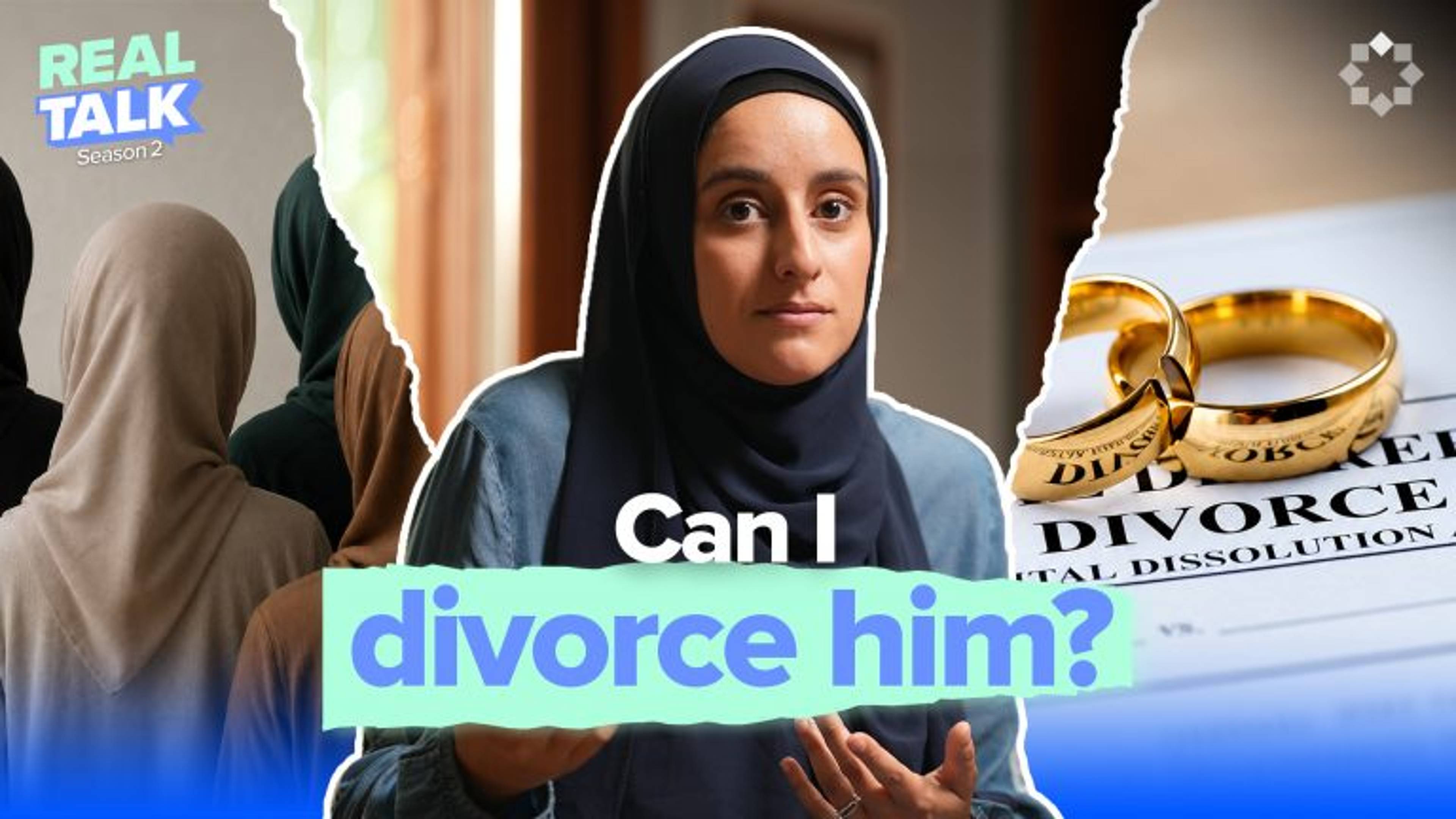
44:02I keep mentioning that I'm in my 30s. But the reason I keep mentioning it is that I'm seeing a lot of things. And one of the things I'm seeing is that women are exiting their marriages. Women are getting divorced. Dare I say, right now, divorce is chic.
44:19But what I've also seen is that the divorces have been extremely hard on them. Because from what we know, the responsibility of divorce, the process of divorce, is in the man's hands. And it hasn't looked pretty for them at all.
44:34This is probably one of the most frequent questions that I get asked. Why is it that a husband can divorce the wife and that same privilege is not extended to women?
44:45Okay, so number one, I have to get this off my chest. Because I hear this so much that, Islamically speaking, we know from verses in the Qur'an, we know from a hadith of the Prophet, peace be upon him, that a husband has access to something called talaq.
44:59Which in English translates as the unilateral right to divorce. Means no reason, no consent, no judge intervention. You can pronounce a divorce and it's that. Like that. Snapping your fingers and you can end a marriage.
45:16And I'm going to give you that imagery because I think that's the imagery that always comes to mind. It's like, snap! It's all so easy, right? Their lives are so easy. That's where the conversation goes.
45:25Okay, I have to get this part off my chest. Because the amount of times I've heard that the reason a man has this access or this right is because you women, you're too emotional. If you women could do it, snap your fingers, then all the marriages would end.
45:43I think that's hilarious because you know how many books have been written on this topic of talaq al-ghadab? The divorce of an angry man. The amount of cases that scholars had to deal with when a man is angry and in a burst of anger, yells at his wife, she's divorced.
46:03And then they go to the judge like, yeah, I shouldn't have said that, but I was really upset. And now the judges are like, great, now what do we do? There's a whole genre of literature in Islamic divorce law on talaq. It's this practice that ends up gaining traction, where now men are starting to say, if you leave that house, I'm divorcing you.
46:28What does a woman do? Bloop! She walks right out that house. And now who's going to the judge and going, what do I do? She left the house. Is it actually a divorce? And so there's so much written on this. Because men have emotions too. Shocker.
46:42So I just want, I have to get that off my chest because I think that was so, I heard that so often. It's like, women, this is your fault. You've got too many problems. And we, you know, we've got it under control. It's a human phenomenon. There's wisdom in it. We appreciate the wisdom, but don't overemphasize one wisdom over others. That's where I'm taking this.
47:04Okay. So let's talk about it. Right? So now we have this concept of, is it snap your fingers? Because really there are two types of divorce. There's one that we call talaq al-sunnah. This is what scholars call talaq al-sunnah and talaq al-bid'ah, right?
47:21An innovative practice, a bad talaq essentially, versus how the Prophet taught us to divorce. And that's a very important distinction because the Prophet, peace be upon him, specifically gave measures for divorce that were appropriate, that allowed for time for things to simmer down, to cool down, to remove any emotional impulse to issue divorce.
47:47And the concept of like snap your fingers wasn't there. It was a well-thought-out process. And so talaq al-sunnah involves, number one, the man pronounces a divorce in a period of purity, meaning she's not on her period. And then a woman has to wait 'iddah, has to wait three months or three menstrual cycles before that divorce takes effect.
48:13And if he doesn't take her back within those three months, then the divorce takes effect and they're officially divorced. Think of the brilliance of that prophetic practice, because number one, if you're sexually frustrated and you're issuing a divorce on her period, that's a reflection of something like a weakness on your part. Maybe you're doing it impulsively because of that frustration.
48:38And perhaps you did it for other reasons, but you've got a waiting period now. Let's have time to pass where you're still halal for one another. You don't have sexual relations, but you're still in the same household, because maybe you'll change your mind.
48:53Maybe in your interactions you'll remember, like, this wasn't a good idea. The Prophet, peace be upon him, encouraged specifically putting time and distance between that decision and the ultimate decision, because divorce is a big deal. Take it seriously. That's what the Prophet, peace be upon him, is teaching us.
49:11And then there's another layer. The other layer is that you can only do it three times maximum. So the Qur'an says, you do it once, the waiting period ends, divorce is done. And if you want to get back together, you have to have another marriage contract. Okay.
49:33And start all over again, all over again, all over again, unless you take her back during the three-month period, right? Then you can resume your marriage. But guess what? That's still one strike. You can do this only three times, because by the third time, if you do it, no take-backs.
49:54And this is important because women in pre-Islamic Jahiliyyah, I should say men in pre-Islamic Jahiliyyah, what they would do to their wives is that I divorce you, I take you back. I divorce you, I take you back again and again and again. And what does this do to the woman? Now she's in limbo. She gets no rights in her marriage, no sexual access in her marriage, and she can't get out of her marriage to get remarried.
50:18Wow. So it's an intentional form of abuse. Allah.
50:48What's going on? What is my relationship? What am I doing? Why am I here? Right? Allah subhanahu wa ta'ala put an end to that. And so in a similar manner, the idea that divorce is up to three times max is also this push, this reminder. This is not a snap of your fingers. This is not something you take lightly. It's a serious matter. You don't want to end a relationship that you can make work, right?
51:14You really want to be able to put in every ounce of energy and thought into making a decision that's important. And so if you hit divorce three times, that's a signal to re-evaluate the seriousness of this relationship, as to whether or not you should return or the husband can take you back.
51:34The Prophet, peace be upon him, says after the third time, the woman has to get remarried, essentially have another sexual relationship with a man before she can return to her first husband. Wow.
51:47And that again, that's important because.
51:50What is that conveying? It's telling us to take it seriously and explore other options before you return to this relationship. It might not be good for you. Right? So these are some of the wisdoms that happen through talaq al-sunnah. And what scholars talk about, talaq al-bid'ah, is exactly the opposite. It's this whole concept like snapping your fingers, issuing multiple divorces, doing this concept of ta'liq where you're divorcing and taking back
52:21all of that. Scholars say this is not prophetic. You should not do it. This is not something we engage in. So I think that's important context.
52:35Okay, so what happens when a husband divorces? Yeah. All right. So we're saying talaq is, if we're assuming it's this magical like snap, then you walk away. It's almost like you've got nothing to lose in the process.
52:48And it's fascinating because Islamically speaking, when a husband issues a divorce, he initiates it through talaq. He owes his wife all of the mahr he promised her and didn't give to her already.
53:02And this is important because you know what women historically end up doing? Many communities, they're using their legal rights within the shari'ah. They're using legally valid principles. These are not loopholes. Right.
53:14And they're coming back. And because mahr was such a big deal for talaq, communities started dividing mahr into two parts. It's so common for us now, but this is actually a historical phenomenon.
53:29Like after the time of the Prophet, peace be upon him, you have mahr muqaddam. It's the upfront mahr that you pay upon marriage. And then you have the mu'akhkhar, the delayed mahr that you pay upon death or divorce.
53:46And now essentially what families start doing is that the mahr mu'akhkhar, the delayed portion, becomes almost like a financial insurance for the woman. Because a husband, the second he would pronounce that divorce, now has to pay that remaining amount.
54:02And so some communities, some families would intentionally have a very low mahr muqaddam so the marriage can start, it can be easy, but they would set a higher price for the mu'akhkhar to make a husband think twice about that decision.
54:16Again, it adds some weight to the process, but also provides some financial security for the woman, because now her husband's gone and he's the main breadwinner, she would have some support post-divorce.
54:28So that context is important because ultimately divorce wasn't sort of a snap of your fingers. There was a process in place and there were consequences in place if things went south, right?
54:40So you have to really think about this as a holistic experience and perspective, especially when taking into consideration how the Prophet, peace be upon him, taught us to divorce in the first place and taught men specifically to divorce in the first place.
54:59But what if women want out? They want out, they recognize this relationship isn't working, and they want to leave. What are their pathways?
55:08So is it until death do us part? Absolutely not. Look, and before I talk about how Islamic law created outlets for women, I just, I do want to reemphasize, like, talaq is obviously divorce, the idea of ending a family unit, whether it's a husband or a wife.
55:26This is not something you take lightly. You put all the effort in. But ultimately, if you can't make that marriage work for a variety of reasons, then perhaps you can consider divorce.
55:37But I just want to say that, because I do think that in some communities, it's sort of like, yeah, this is not what I was going for. And I'm out. And I wish I was exaggerating, but that has been the case for a lot of couples that I know.
55:52Yeah, we can appreciate a lot of our parents' struggles, which were by no means easy. But they struggled. They pushed through and they made it work. And that has a long-term effect on the family, and has a long-term effect on the community.
56:06And it creates really a ripple effect in our society. I'm not talking about cases of harm. I'm not talking about cases of abuse. I'm talking about marriages that are just hard.
56:15A lot of marriages are just really hard, right? They're not comfortable. They don't meet our expectations all the time. Yeah, I don't get to do exactly what I wanted to do in life. So that sacrifice is important and admirable, and there is reward in what's going on.
56:30But look, not every marriage is going to work for everyone. And now when we talk about, okay, what about a woman who wants to get out? We have another precedent set by the Prophet ﷺ. And that is, in some narrations, Habibah bint Sahl, who goes to the Prophet, peace be upon him, and says, look, her husband said that it's been placed.
56:50I just, I tried to make it work. Yeah, Rasulullah, nothing wrong with him. He's not harming me. He's not not paying my bills. Actually, I just, I'm scared because I just can't make it work. I'm going to be ungrateful. Yeah, I don't want to be ungrateful.
57:06Because the whole time I'm going to be miserable and feel the sense of contempt, because I'm with this person that I don't want to be with. And the Prophet ﷺ didn't say, I'm sorry, go back and just make it work. And no, that's not important, how you feel or any of that, right? No, he accepted that as an answer. If you are trying and you simply can't make it work, that's a different story than, you know, I'm just not going to put in any effort and I want the first exit out, right?
57:33So not saying the two are the same. She didn't have a specific reason except that she could not make it work. Right. And that was enough for the Prophet ﷺ. And the Prophet ﷺ turns to her and essentially questions her: what did your husband give you in order to start the marriage? What was your mahr? It was a garden.
57:51And he says, give back the garden that he gave you. Okay. This now sets the precedent for khul', which is the legal tool that women can use to exit a marriage, where essentially, just like a husband would have to pay the full mahr if he initiated the divorce, for talaq, a woman, for khul', would return the mahr he gave her if she wanted out, right?
58:13And it's not always the case that she has to give up money to get out. A man has to give up money, too, technically. But there are scenarios. Look, if you're being abused or harmed, or your husband's not paying bills, there are lists of scenarios where you don't give up your mahr. What you can do is get a judicial divorce. It's a concept of tafriq.
58:38The idea that now you go to a judge and say, look, this marriage is not working because he's not fulfilling my rights or he's harming me, or he has a mental illness or a physical defect or, or, or. And at that point, why would you give up that mahr when you're the one who experienced a violation of your rights?
59:00Scholars said no. In that case, you get a judicial divorce. Keep your mahr, and I'm going to get you out of this, right? And you have so many other concepts. You have a concept called tafwid al-talaq, where a husband can, in the beginning of the marriage, during the marriage, at any point, a lot of scholars accepted this concept of where he says, I will give you the right to talaq specifically. I will transfer the power of talaq to you.
59:25And so now, like, these are all ways within the shari'ah, legislated within Islamic law, that allow for a woman to exit the marriage. And I think it's important to appreciate that, like, it's not just the way that divorce is often presented. And I read about this a lot, right? It's like, it's in the man's hands.
59:46And it's something that he hangs over your head, as, like, you don't want to mess with it because I have this access to it, right? That's not how the Prophet, peace be upon him, presented divorce. That's not how he facilitated it in his community.
01:00:00And I think the negative experiences that we might have had with divorce, almost always because of the lack of infrastructure, lack of opportunities to get outside help, and some of the difficulties and challenges that we face simply by living as minorities without, again, access to that support. But it's incredible the way that the Prophet, peace be upon him, modeled a beautiful, thought-out, and respectful process of ending a marriage.
01:00:30You made some really interesting points. The one that really stuck out to me was this idea that our negative experiences color how we think Islam says about marriage and divorce. And I think that's true. Because, like, you take our experience, you think that this is what it is, right?
01:00:44Yeah, yeah. Islam is giving men the power because they can and I can't. And it's something deficiently wrong with me or whatever the case may be, but we're coloring it with our negative experiences. And we're telling other people that this is a problem.
01:00:57Yeah, you know, and it's actually, I think this is the more important takeaway, because there are modern challenges, right? The fact that we don't have access in the same way that women in the past had access, it's a problem and we need to work to resolve it. But what I'm trying to do here is, like, let's separate the problem that we are experiencing. No one's denying that.
01:01:18Separating it from how Allah, subhanahu wa ta'ala, and the Prophet presented these ideas and these laws, and recognize the beauty in how they portrayed them. You know, it's funny, it reminds me of the story. I think it's just a powerful example of the famous companion Abdullah bin Umar, right?
01:01:34Abdullah bin Umar who said, during the time of the Prophet, peace be upon him, we would guard our speech around our wives. Because think about the story of Khawlah bint Tha'labah. She goes to the Prophet, peace be upon him, to complain about how her husband was wronging her. What happens? A whole surah is revealed condemning the practice, right?
01:01:54So Abdullah bin Umar is coming back and saying, like, we weren't trying to be the next guy in line that everyone's reciting Qur'an about because we said something inappropriate to our wives. And so, rather, not say it at all, right? Paraphrasing here. But, like, that's the culture the Prophet, peace be upon him, built.
01:02:11I want to move away from marriage for a second and talk about inheritance.
01:02:38And the reason why I want to talk about that is because, obviously, there's a saying that says, you know, a son receives a share of two daughters. And people reference this often to kind of show that Allah subhanahu wa ta'ala favors men over women. Because they say, follow the money, right? Follow the inheritance. You'll see who's being valued here. And I kind of want to talk about that. We need to talk about that.
01:02:59Is that the case?
01:03:00There is a clear ayah in the Qur'an that says the son gets double what, well, more explicitly, the son gets the share of two daughters, right? So, that is, he gets double the amount.
01:03:18Where do I start? Let's start, maybe, with the fact that that was kind of a big deal. It was a huge deal at the time of Revelation. I don't want to negate that because I think we take it for granted, like, obviously you get inheritance, right?
01:03:32I mean, as far as I know, the U.S. just caught up a few decades ago, right? Relatively. A century. They caught up yesterday. So it was a huge deal. It's a huge deal, historically speaking, perspectively speaking, when we look at the rest of the world.
01:03:46And it was a huge deal for the Arabs at the time because women were inherited, not receiving inheritance. So this verse is revealed and now the companions are shocked, like, why does she get anything, let alone half, right? That's one.
01:04:00Two, women don't always get half the amount, right? This is a specific formula. If you crunch the numbers, there's a whole formula at play. In many cases, women, family members, will get the same amount as men, and in some cases will even get more.
01:04:17It really depends on how you fall in the family tree, right? How you fall in the family tree and how you relate to the deceased. Look, inheritance laws were so complicated. That's one of the reasons why Muslims were the ones to create algebra.
01:04:34Because they needed all of the ways to calculate that, like, she's one cousin removed from this uncle whose wife is, right? And because of that, they needed to literally create equations to be able to understand this.
01:04:47I just, off the top of my head, I remembered Sutayta al-Mahamili. She was a woman, a famous female in Muslim history who was known for her arithmetic skills, like her math. And she was the person you'd go to when someone passed away because she'd crunch all the numbers for inheritance, right?
01:05:05That's how complicated it was. And so no, it's not like this black and white situation where men always inherit more, right? So let's talk about the specific situation where a son inherits double the share of a daughter. Now we have to look at the larger financial framework.
01:05:21Why are we making this assumption, that, not the assumption, why are we accepting this reality? And that's because there is a financial structure that made it make sense. And that goes back to this idea that, well, men were responsible for their families, their wives, and in some cases, even their parents, financially.
01:05:46So when I come back and say that my son inherits more, it's because I'm assuming, rightfully, that my son should be taking care financially of his family, potentially the remaining other family members, and that full double share isn't actually going to him.
01:06:05Whereas the daughters who are inheriting have no financial responsibility, and that money would be entirely theirs. So yes, on paper, he's getting more, but technically on paper as well, he has to pay for more, right? So this is the larger framework that we're working with. And if you miss that framework, look, it's easy to say, of course, Islam values men more.
01:06:27Because now you're breaking the assumption on the basis of what. And this, it's actually funny because this comes up in a similar topic, which is diyah. Diyah is blood money. You pay blood money when you accidentally kill someone.
01:06:43So someone kills another person accidentally. It's usually happening in war, in battle. You, by mistake, kill someone who was on your side, but you didn't realize in the heat of the battle. And in that case, you have to pay monetary damages because now you've obviously taken a life, whether you intended it or not.
01:07:03And so now classically, scholars came back and said, a woman's diyah is half of a man's, or not specifically half, significantly less. And if you read that with no context, no financial framework in mind, you think to yourself, there it goes again, right? Islam is favoring men.
01:07:20So when I'm assigning a higher price point for your blood money, it's because I now, as a judge, have to compensate for the loss that your family's going through. Versus for a woman, the blood money would be less because the assumption is that you are now paying for the financial compensation for her solely and not for her dependents.
01:07:44So when I'm assigning a higher price point for your blood money, it's because I now, as a judge, have to compensate for the loss that your family's going through. Versus for a woman, the blood money would be less because the assumption is that you are now paying for the financial compensation for her solely and not for her dependents.
01:08:10Right? And we know that this is the case. It's not about a measure of value, because guess what? You know what Islam also says, scholars also say, if ten men or a group of men come and kill one woman, intentionally, intentional is different than accidental, all ten of those men would be killed, would go through capital punishment.
01:08:33Because the value of that one woman, just because you could like, look, you could say, just one woman, let's just kill one of them, like, or half of one, I don't know, like, whatever. If we're saying value is equal, right, or not equal, we're saying a woman's value is less, then why would you kill 10 men before killing one woman? Because that's false, right? You all intentionally, equally engaged in this act, so you are all subject to capital punishment.
01:08:57So that's why it's so significant to understand what are the assumptions that scholars have to make? What's the framework they're functioning within?
01:09:07And based on this, this is how they're reaching these conclusions, not because they inherently degraded or devalued women. That's a totally different conversation.
01:09:23So what you're saying is we should look at inheritance like a system. Now this idea that my brother is pocketing more money and he's just keeping it in his own pocket, but rather he has to actually share it, right? And so when you look at it like that, that makes sense.
01:09:36But I think my question or my confusion here is in 2026, women are making financial contributions.
01:09:45Women are paying bills, women are working. And so how does this fit with today's reality? That's a very valid point. And I think that's the reality of so many families today.
01:09:57Because look, the way the economy is structured is that you have to have a double income, right? So it's funny because I think of like all the debates you see online are can or should a woman have a career?
01:10:09Or does a woman have to listen to her husband if she says she can't have a career? To be honest, I think it's such a privileged conversation to have.
01:10:19If you're debating whether or not you can or should work, whoever it's coming from, husband or wife, that's luxury. But most women in the world, you don't get a choice. You have to work to survive, right?
01:10:32So I want to acknowledge that challenge, that difficulty. That's there.
01:10:39And then you also have so many situations where you have men who probably take that money and don't spend it on their families. And I've seen that before. And I know that hurts a lot because you're thinking, fine, I get it. It makes sense.
01:10:51But he's not. Now what? So the problems are there. And I think that we need to be creative in terms of how we think of the solutions for our reality today.
01:11:03And to do that, I kind of want to share some inspiration. Because, look, I think a lot of these conversations, it's like it's black and white. It's this or it's that. And let's go back first just a second to the DIA example, right?
01:11:17The blood money example. Because what I think is fascinating is that technically the way DIA, the blood money, would be paid out is that the male kin in your family would be responsible for collecting the money together
01:11:30and then paying it to the family of the person that was accidentally murdered. That the male kin is called the 'Aqilah, right? Now, in order to do that,
01:11:41you would have to assume that the male kin, the tribe, lives all nearby each other. Otherwise, it would be extremely complicated to collect money from all the male family members who are responsible if they're spread out.
01:11:54Because during this time, families and tribes were together. And so that was a relatively easy task. All right, get them all together. Let's, you know, collect the money, pay it up. Now, Islam starts to spread. It starts to spread far and wide.
01:12:09So now we're in Basra, we're in Kufa, right? We're in places way beyond Medina and Mecca. And Umar al-Khattab, may Allah be pleased with him, who is now the Khalifah.
01:12:19Umar al-Khattab realizes this ends up becoming a problem because now Muslims are so spread out. Tribes are spread out. Families are spread out.
01:12:28And so now in the case of an accidental murder, to collect the DIA becomes very complicated. So Umar al-Khattab establishes what is called the Diwan.
01:12:38It's like this, this treasury, right? To address this as one problem. This was one of the problems he was using the Diwan to address.
01:12:48Because now to collect the money was so complicated, it almost became impossible. So what was the initial objective? The objective was to compensate for the loss.
01:12:58And now Umar al-Khattab, may Allah be pleased with him, who is re-envisioning how that could look in a world that looks different than his previous life. And now Muslims are all spread out. So he establishes the Diwan and now says,
01:13:11Again, we're talking about accidental murder. The vast majority of the time it's happening on the battlefield. And he says, Who pays the DIA? Your military regiment. Your group in the military.
01:13:25You're now responsible because your military regiment is going to be with you in that location. So now the Diwan, the way that things are structured is that the districts are redefined.
01:13:38The way that the DIA is paid is redefined. But guess what? The objective, the original objective is still met. The purpose is fulfilled, but in a creative way that is in line with Islamic law.
01:13:51And I just wanted to share that example because again, this is not some kind of innovation when we have to rethink how we approach some of these concerns. And Umar al-Khattab, may Allah be pleased with him, is one example.
01:14:06But communities built other ways, like historically speaking, that women and families and fathers,
01:14:13they discovered ways to be able to ensure that their daughters had financial security way beyond any inheritance share that they would get.
01:14:22And so one popular concept that we see the fruits of until today is this idea of establishing a waqf, an endowment.
01:14:31Now, an endowment is when you establish a business, you take a property and now you're going to endow it in someone's name
01:14:41and it's going to remain in that person's name or a family's name or a cause's name for the rest of time. And so what you do is, if I'm worried about your financial security, I'm going to open this business
01:14:54and any profit that comes out of this business, because it was established as a waqf and it met all of the requirements, all of that money is going to, I want it to go to my daughter, I want it to go to my family, I want it to go to my community, whatever the case is.
01:15:07So now you have this rich history of women having that financial security through another means, a legally permissible means, but it was a way to ensure that financial security.
01:15:19So much so that for a large percentage of endowments in the Mamluk era as well as the Ottoman era, they end up being founded by women themselves. Some numbers are up to 40% of waqfs in the Mamluk and Ottoman empires were established by women, right?
01:15:32So it just created this cycle of that financial safety and security. I want to inspire that type of creativity in our communities today, because it's always like,
01:15:40inheritance, that's it, right? It's black and white. And I think of even other ways, this is one of my favorite quotes from Sheikh Hatim al-Hajj,
01:15:51I'm rephrasing it for the sake of this conversation, but essentially he says, why is it that we wait until we're on our deathbeds before we start thinking about our daughters? Meaning, why is it that you're waiting until inheritance shares have to be distributed,
01:16:04before now suddenly you realize it's probably not a good idea to leave her in this situation because it's not going to be sufficient for her? And so now you have the concept of hibah, right? The idea that you can gift your children wealth in your lifetime, right?
01:16:19We have wills in Islam. So what a will in Islam is, you, 20, 30 years before you pass away, whatever that is, you're thinking about wealth distribution.
01:16:31And so a hibah is functioning similarly. I'm going to open an endowment in my child's name, my daughter's name. I'm going to give you cash to my daughter. I'm going to buy you a house.
01:16:43I'm going to, whatever, give you some type of financial contribution while you're alive and while I'm alive, right? So I think being proactive in terms of that financial security, that's important.
01:16:55Example after example after example. And just one last one for the sake of time is the wasiyah itself, the will itself. A lot of scholars said, so when you pass away, two-thirds of your wealth has to be distributed
01:17:08according to the distributions outlined in the Qur'an and Sunnah. One-third is whatever you want. So there's one-third of that wealth that can be distributed, technically open-ended.
01:17:22Now there's a hadith of the Prophet, sallallahu 'alayhi wa sallam, who says, la wasiyata li-warith. You can't give from that last third to anyone who's already inheriting from the first two-thirds.
01:17:32But you know what scholars said? Not all of them, but a significant amount. For that one-third, you can give to the inheritors as long as the other ones agree.
01:17:42Meaning, they're trying to understand why the Prophet, peace be upon him, said it. Well, because he wanted to ensure that there was that equal distribution.
01:17:57So if now the inheritors are coming back and saying, well, it's fine, we consent to the other one-third being given to our sisters, that becomes permissible. I'm not trying to make things complicated. I'm trying to now inspire all of the creative ways scholars thought about,
01:18:11families thought about, communities thought about, and they worked. So Islam is not black and white. The tools that we have access to are not black and white. There are creative ways that we can think of today, for the now and here,
01:18:25to think about how can we redistribute financial wealth within our communities and our families, and how can we ensure financial security for both our sons and our daughters. I love that. The importance of solution-oriented mindsets, right?
01:18:39We're not just supposed to succumb to our situation. There's always different ways that we can do to ensure that our daughters are good, our women are good. I love that. I think for me, I never thought about endowments, but now I'm thinking about it.
01:18:52SubhanAllah. And look, there's something that I really want to add to this conversation because I think a lot of times we experience the challenges that come with marriage, divorce, and inheritance as uniquely Muslim problems.
01:19:05Look, you don't have to be Muslim to experience the pain of divorce, or the fitna, the trial that comes with inheritance divisions, or marriage. These are human problems, right?
01:19:18And I think the reality is at the end of the day, if you can understand that this is not something that your religion is causing per se, but these are just realities that a lot of people go through, Muslim and non-Muslim alike,
01:19:29I think that offers that perspective, that opportunity to like, let's displace the negative association and what the religion itself has to say. In this episode, we've talked a lot about intermarriage, divorce.
01:19:49We've talked about polygyny. What do you want people to leave remembering from this episode? If I could sum up this episode,
01:20:02we're constantly talking about why this for men, why this not for women. And you know who also asked a question similar to this? It was in some narrations, Umm Salama,
01:20:17the wife of the Prophet, peace be upon him. She goes to the Prophet and asks him, the same question. Why do some men get this, and why do women not get this?
01:20:28An ayah was revealed. Look, this is why Abdullah bin Umar was scared, because a woman asked, and an ayah is revealed, right? An ayah is revealed. وَلَا تَتَمَنَّوْا مَا فَضَّلَ اللَّهُ بِهِ بَعْضَكُمْ عَلَىٰ بَعْضٍ
01:20:40Don't want, don't go after, don't feel like that desire. Allah Subhanahu wa Ta'ala gave some things to men and gave some things to women. وَاسْأَلُوا اللَّهَ مِنْ فَضْلِهِ
01:20:55وَسْأَلُوا اللَّهَ مِنْ فَضْلِهِ Ask Allah Subhanahu wa Ta'ala for His bounty. Now, it's interesting because the way that I've heard this ayah presented is, I have a legitimate problem, I'm complaining about something,
01:21:08and I'm told, you're just asking for too much. وَلَا تَتَمَنَّوْا Don't ask what men have, just accept what you have. Just accept it, don't ask questions. And so I want to offer this reframing here,
01:21:21because that's not what the ayah is doing. It's not silencing your questions. It was revealed because of a question. Questions were taken seriously. It's not an invitation to not ask questions.
01:21:32It's an invitation to think more deliberately about the questions we bring, and the assumptions we have. So, maybe this is an opportunity. Why is it that men get this? Why is it that women get that?
01:21:46Let's question our framework. Let's question our assumptions. Let's understand the bigger picture. وَسْأَلُوا اللَّهَ مِنْ فَضْلِهِ Ask Allah Subhanahu wa Ta'ala for His bounty. It's my favorite part of this ayah. Allah Subhanahu wa Ta'ala is not saying,
01:22:00doors closed for you, pens have been lifted, you get what you get. No, there's always more. Allah Subhanahu wa Ta'ala has everything. He has all of that bounty. And He's saying, ask me for it and I will give. Right?
01:22:15That to me is an invitation. Recognize the larger framework. Recognize the assumptions we're bringing. Appreciate Allah Subhanahu wa Ta'ala has given you so much that He may not have given to others. But you can still, it's an invitation, still ask for more.
01:22:29But ask not of other people. Don't try to bring others down. Don't ask from others. Ask Allah Subhanahu wa Ta'ala who owns it all and He will give. And I think that's the reframe that we need to have. Right? Because these conversations are difficult.
01:22:43And the realities of how they play out are not always clean. They can often be messy. وَاسْأَلُوا اللَّهَ مِنْ فَضْلِهِ Turn to Allah Subhanahu wa Ta'ala always. When you're facing these challenges, when you want that clarity, and Allah Subhanahu wa Ta'ala will give you inshaAllah
01:22:57not simply the clarity but from His bounty, from His rizq, from His barakah, and bring that blessing and that return into your life. SubhanAllah. I have to say, Dr. Seem, I feel like
01:23:10your ending here really even touched me personally. You know, because I'm starting to self-reflect. Because I do that sometimes. If I'm being honest, I look at what men are getting and what women aren't, and I compare. And I think that's because
01:23:23in the realities we live now, I mean, women are going through a lot. I think men are also going through a lot. And so we're always looking at each other and there's this tension. Yeah. And we're not in harmony with one another. We're holding each other accountable.
01:23:38And then we're looking at the ayat of Allah Subhanahu wa Ta'ala from this perspective of equality and this framework of the experiences we're having and what we're hearing outside. Just the difficulty we're going through. But I think closer right now just made me realize,
01:23:50I'm like, SubhanAllah, am I reading Allah Subhanahu wa Ta'ala's ayat with clarity and belief that if I believe Allah Subhanahu wa Ta'ala is just, if I say that, and I say I believe that,
01:24:03then why am I not looking at Allah's verses with that understanding? Because if I did, I don't think I would ever be comparing what he's getting. I wouldn't even care. Because I'm like, there's a reason for this. I just have to do the work and learn it. But why am I coming out with this reaction of, oh, here we go.
01:24:17Oh, here's the evidence. Look, see? Follow the... Like that perspective is real. But for me, I'm like, okay, just for my own self, it makes me want to go back to Tawheed. I'm like, where is my relationship with Allah?
01:24:30How do I actually see Allah Subhanahu wa Ta'ala? I'm interrogating my thinking and my belief here. If I believe these things about Allah Subhanahu wa Ta'ala, then I should be seeing it that way, but I'm not. And so, SubhanAllah, as a person who says,
01:24:43I said earlier, I'm a person that hears and obeys the Qur'an and Sunnah. Yeah, I'm like, wait, there's a crack here. So I really wanted to say JazakAllah khair for,
01:24:53I guess, helping me think this, like self-evaluate here. So JazakAllah khair for that. And I think for anybody who's listening, I think that's a solid takeaway. And I love the ending that you said about Allah Subhanahu wa Ta'ala.
01:25:06Because we all have different situations in our homes right now. Some of us are the financial, you know, breadwinners. Some of us don't have men. Some of us are just in so many different situations. But the last I, like that last verse, ask me.
01:25:21Allah saying, no matter what you're in, I'm still here. I can still provide, I can still give you. And I like that. I think that's important to know that, you know, we're not constricted. We're not like, sometimes the verses can feel like, it doesn't feel like it's speaking to me.
01:25:35But in that verse, it says, I'm speaking to everyone. So JazakAllah khair, Dr. Tasneem, for really closing that, because it helped me really self-reflect. And I'm sure anybody who might be listening is feeling the same way.
01:25:48We have to be able to read Allah's text with clear hearts and with the understanding that Allah is the most just and the most wise. And that's who He is. And that's how we should be seeing it, even the sayings of the Prophet.
01:25:59And if we're doing otherwise, I think it's time for us to go back and reflect on the names of Allah Subhanahu wa Ta'ala deeply. And so yeah, we also have to ask Allah to grant us that clarity and understanding and sincerity. Allahumma ameen. Thank you so much.
01:26:18Ameen.