fbpixel
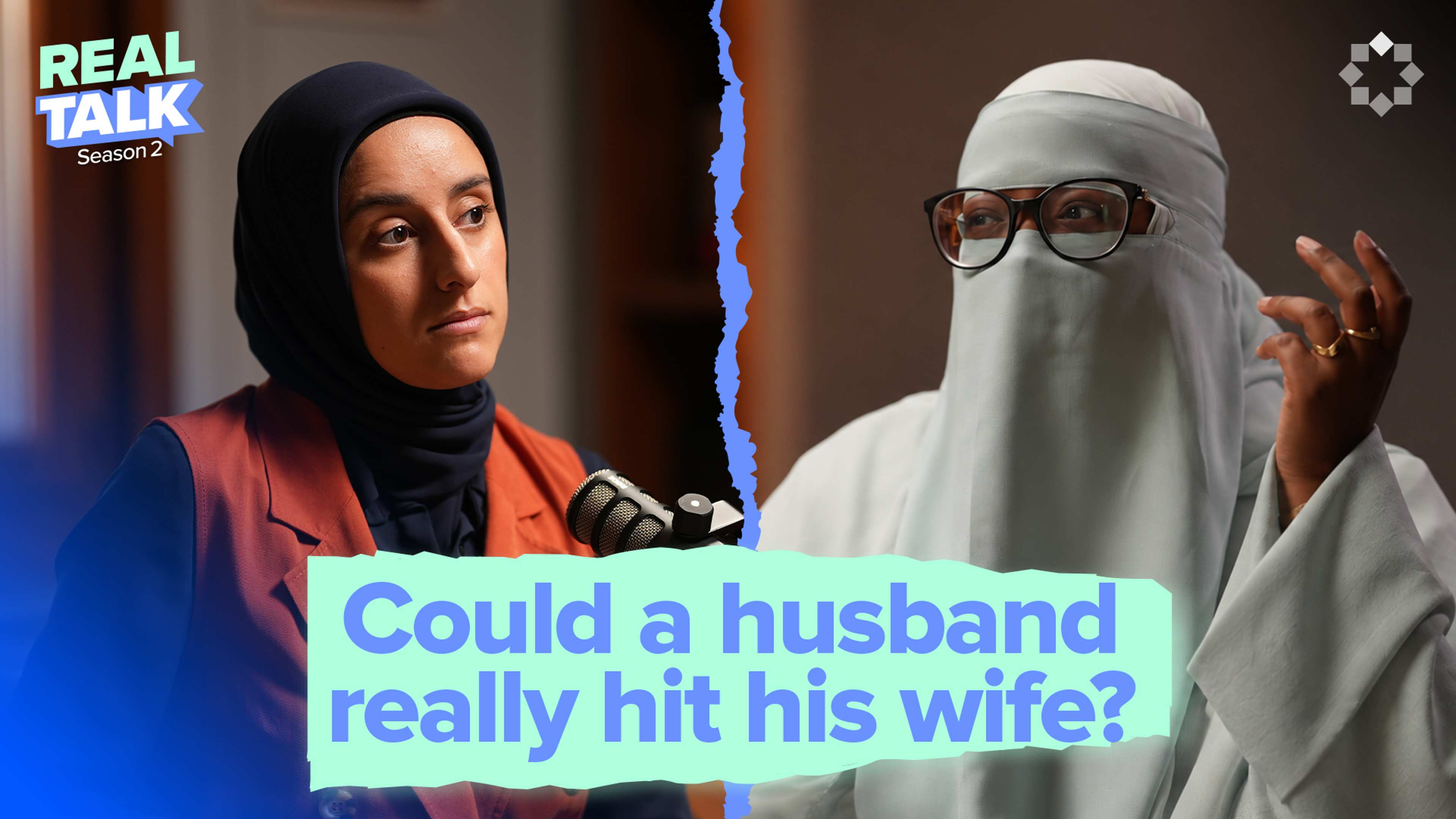
Quran 4:34: Did the Islamic Tradition Allow Domestic Violence? | Real Talk Season 2 | Dr. Tesneem Alkiek and Cadar Mohamud
Real Talk Series

Quran 4:34: Did the Islamic Tradition Allow Domestic Violence? | Real Talk Season 2 | Dr. Tesneem Alkiek and Cadar Mohamud
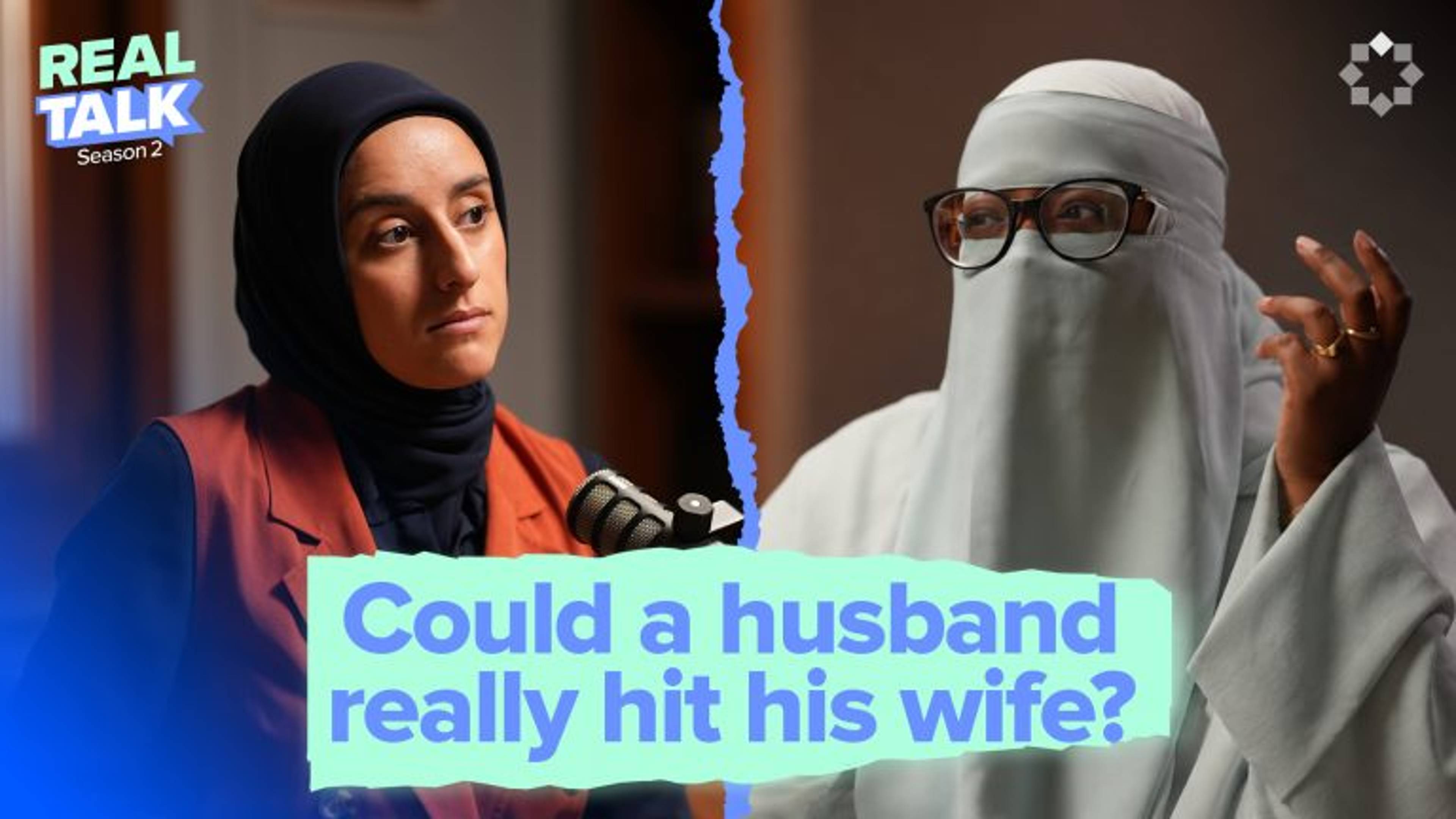
"Does Islam permit a man to hit his wife?"

Islam condemns domestic violence, and a woman is never required to stay silent in the face of abuse. So how do we make sense of Quran 4:34, the verse Muslim women often wrestle with?

Yaqeen scholar Dr. Tesneem Alkiek and host Cadar Mohamud start with a key principle in the Islamic legal tradition: marriage never erased a woman’s independent legal identity. She owns property, enters contracts, and can take her husband to court when she is harmed.

Dr. Alkiek explains how jurists defined that harm. She then looks at what classical jurists actually said about physical discipline. That includes the strict limits they placed on it and how many of them advised men to avoid it entirely. The episode ends with the Prophet’s ﷺ example and what a woman should do when patience is the wrong response.

If you or someone you know is experiencing domestic violence, please know that support is available. For faith-sensitive counseling and emotional support, you can explore:

Khalil Center: https://khalilcenter.com

Naseeha: https://naseeha.org

As our audience spans the globe, we encourage you to seek local domestic violence support services in your country if needed. Your safety and well-being matter.

To explore more resources read:

Women in Islamic Law: Examining Five Prevalent Myths here: https://yqn.io/4b7c38

"How Can I Ever Get Past This?" Reclaiming Your Future After the Abuse Has Ended here: https://yqn.io/dcc106

This transcript was auto-generated using AI and may contain misspellings.
00:00So if someone comes back to use religious language to justify that abuse, كلمة حق أريد بها باطل. It's, there's no room for it because there's context to it. And we need that context to be able to understand what this means.
00:14What if you're married to someone that doesn't fear Allah subhanahu wa ta'ala? What then? And I hope that brings comfort to anyone who's listening and thinking, you know, like, I just, it's just not speaking to me. I just can't wrap my head around it. Harm is not one-size-fits-all.
00:29He's a Granada scholar. He says, look, if you know there's a problem with a couple, and you're the imam of the community, you have to get involved. Meaning like a smiling husband, a smiling husband.
00:44He's not pursuing a job.
00:45He's not even like attempting to pay the bills.
01:00I had the privilege of sitting with Muslim women who survived domestic violence.
01:16And I have to be honest with you, that was probably the hardest conversations I've ever had. Matter of fact, I was so inspired by those conversations that I then decided to do an episode on it on our podcast, The Digital Strahd, called When the Phoenix Rises. Just imagine this.
01:30I'm having conversations with women that look just like my mother. They're my mother's age, and they're telling me what happened to them behind closed doors. And I have to say, like, it took everything in me
01:43not to just start burst up and crying, right? Like, just hearing this is just unbelievable that this is what they're enduring. These are women who come to our mosque, they're our neighbors. And they were enduring violence.
01:56And something that really struck me was the fact that their husbands justified those abuses with religious texts. And they understood it as a religious obligation to endure that violence.
02:10To endure that violence. Like, how? And this is just, it's happening. It's not some made up story. This is happening to, I believe, many women.
02:23And so, I'm left with one question. If Islam condemns oppression, condemns compression, and tells men to live with their wives in kindness,
02:36then why are we left with so many Muslim women saying, well, I have to endure this because this is my religious obligation. This is a proof of faith. Yeah, yeah. No, that's an incredible story.
02:51I can only imagine what that was like sitting with those women. And in a way, I can kind of relate because I know that feeling of being uncertain. But then something happened. I ended up pursuing a PhD in Islamic studies
03:05because I had a lot of questions about women in Islamic law. And this was one of them. Right when I start my PhD, a book is released, and it's about domestic violence in Islamic law. And it's an academic book.
03:17And the entire book is filled with quotes from scholars from all four schools of Sunni law, of cherry-picked quotes that essentially, if you read them out of context,
03:30seem like they allow for domestic violence. They allow for harm. So now I'm reading that book and thinking to myself, well, that's what the scholarly tradition that I believe in, that I follow is saying, and it seems to allow for it.
03:44What's happening here? What do I do? I'm like in this awkward place. And I didn't know, I wasn't really sure. And so I say this because I feel like I experienced a really important journey in the process of learning
03:58where I came from a place of like, I'm not sure. I kind of think a certain way, but maybe I think that way because I've been influenced by a certain type of thinking growing up. And then I started studying and my entire sort of like
04:11world shattered in a positive way. Like the expectations that I was like that hesitancy, I can tell you now I feel so clear and confident that Islam condemns domestic violence.
04:23And I can say that with no concerns, no like caveats, no exceptions. I can say that. It's not allowed by any means. And I want to walk you through that experience because I think the experience that I had, again, it's sort of like that journey of like,
04:38how do we make sense of the Ayah? How do we make sense of this Hadith? How do we make sense of those scholarly opinions that are being cited that seem to allow for domestic violence?
04:54And I'll start off with one example because I think this example really captures sort of like the zero to a hundred that I went on, right? Let's pretend we're back in the gray zone. Not really sure, this is because this is what I was. And this is what a lot of women are.
05:09I'm not really sure sometimes it does. Maybe you just need to have patience. And let's be there for a second. Two cases. First woman, two women who endured abuse and tried to get their problems resolved.
05:23One woman is in Portugal. This is over 800 years ago. She's living in Portugal, Lisbon, Portugal. She gets abused. She takes her case to court and the judge rules in her favor.
05:37We don't tolerate abuse and charges the husband with monetary damages. Wow. Case one. Case two, not 800 plus years ago, less than 200 years ago, about 100 years ago, 150 years ago, max.
05:53She's in the UK, United Kingdom. She gets beaten so badly. She's disfigured, okay? So this is not like a, maybe he hit her. No, it was violent, okay? Yeah.
06:05She goes to court and the judge is like, I can't even take your case. Go home. Oh my goodness. Now let's go back to that. Like, I really don't know what Islam says about this stuff. Who do you think is who? One's Muslim, one's not.
06:19I would think it was the latter. Right? My guess, if you asked me five, 10 years ago, I would have been like, well, maybe the one who was sent home was probably the Muslim because while men have the right to, that's the direction I would have gone in. And I love using this example
06:34because contrary to popular belief, the first woman in Portugal, this is when Muslims ruled that area. It was Ruqayya bint Yunus, a Muslim woman, who gets abused, documents her abuse, right?
06:48She has witnesses from the community, people who know that this is not, this is something that is provable, right? She goes to Ibn Rushd al-Jadd. This is not some like, oh, a scholar that no one really knows about, like, you know, buried in books.
07:02In books of history, this is Ibn Rushd al-Jadd, one of the most famous, important Maliki scholars that you have. And he comes back and look, it's very clear. You have the evidence, you proved it, you can receive a divorce
07:15and you can maintain your dower, done. Now you've got Sarah Phillips in that first case. She's living in the United Kingdom. So based on sort of Christian assumptions and conceptions of marriage,
07:31there's this idea that when you get married, it's the unity of spouses. So how romantic. You become one with your husband, right? And this ends up influencing the laws. And so now you have this concept of coverture laws.
07:45Coverture laws, again, it's this idea that you have now merged your identity with your spouse. So you become, you have one legal identity as well. Not very romantic. Because if you have one legal identity, what ends up happening is you're going to try
07:59to take your husband to court and the judge is going to look at you. You're trying to sue yourself. You can't take your husband to court because you're one human being in the eyes of the law. So it's like, again, you're just trying to sue yourself.
08:13We can't even take your case. And so she's turned away. And these laws, by the way, they were present in the United States. They weren't overturned until like yesterday. The running joke is like yesterday, right? It was just a few decades ago
08:27that in 1970 in the United States, this becomes a minority law, right? So we're not talking like, oh, back a thousand years ago, this is how women were treated. This is a huge deal.
08:40Because what I'm trying to tell you here is that over a thousand years ago, Muslims were ensuring protections for women who were harmed in marriage. They were ensuring protections for anyone in marriage, right? And particularly in the case of harm,
08:55that's when it becomes evident, right? And I say this not to be, not to like set the standard of like, look, Muslims versus the Western world. And no, I'm not going there because I don't think the Western world is our standard.
09:08But I do think it's important to recognize this conversation, like the big picture point of this conversation, because it's a huge deal. And this is not something that Muslims are now being influenced by, you know, liberal, secular, feminist ideals where they're saying, well, domestic violence is not something we should tolerate.
09:22These are scholars a thousand plus years ago, right? That are functioning under this assumption. And they're able to do that because the way Islamic law conceived of marriage was fundamentally different. And that made all the difference. So what I've understood is that
09:38Muslim women always had legal identity, right? They can make claims, they can go to court. But, you know, I think what the natural next question is, and for anybody that might be listening right now, okay, we have a legal identity. But what does that mean
09:52when it comes to actually preventing harm to women? Excellent question. So Muslim women had a legal identity. What does that mean?
10:06Let's go back for a second to talk about how Muslim scholars understood marriage. And they're doing it based on the precedent of the Prophet, sallallahu 'alayhi wa sallam. Let's take it back to the beginning. You have in the Sirah,
10:20and we'll use this example time and again, because it's so powerful, right? You have so many women who come to the Prophet, peace be upon him, to complain about a lot of things, right?
10:32But a lot of times it's to complain about their marriages, to complain about their husbands. Just like, just a quick digression, like, imagine how incredible the human being,
10:45the Prophet, peace be upon him, had to be. That women were so, like, he created a space, they felt so comfortable and open going to him to be like, look, my husband's doing this. I'm like, I'm not tolerating this.
10:58Or I need your help because this is what's happening in my personal private life. Like, you really have to have a very open, charismatic character to be able to even allow for women to feel that comfortable coming to you. So I just, I love to appreciate that
11:13about the Prophet, peace be upon him, just generally, like, that's like so many women came to him because he created that space, right? And so we have example after example, of women coming to the Prophet, peace be upon him,
11:25who are now, like, there's a problem in their marriage, and he is looking at them and not saying, go home, I can't do anything for you. No, he's saying, let's hear the full story. And many times he's getting the husband involved, what happened, right?
11:38And now, based on that, he's adjudicating. So he's coming back and saying, this is your right, this is your right, and ruling in whoever's favor. And in many cases, the women's favor. And that was a big deal because now he's coming back,
11:51the Prophet, peace be upon him, he's setting a precedent that marriage is not simply a romantic relationship. It's that, but it's more than that. But the idea is it's a contract.
12:06You as a woman, you have rights coming into this marriage, and you have responsibilities. A husband, a man, has rights, and he has responsibilities. And even though when you talk about marriage, and you're like, oh, it's a contract, it kind of feels like transactional,
12:21contract is like, what is this, a business? Like, it feels like you're just kind of like snipping the love out of the picture. But in fact, that's actually, because it's considered a contract, that protected each stakeholder's rights.
12:36So the point is, is that a woman has a right to safety. A woman has a right to, well, good treatment, right? You have the Qur'anic command, treat them in a way that is known,
12:50it's good, you've got that customary kindness. And scholars talked about this a lot. That implied you're not being harmed in the process. All of this is to say is that from day one, because of that prophetic precedent, scholars were never thinking,
13:06oh, this is something you just need to tolerate. This is something that you need to be patient with. No, no, they acknowledge there's harm. You can be harmed in your marriage. They were asking different questions. They were asking, what is harm? And what do we do?
13:19Like, if someone complains of harm, what is the way we respond? That's where the direction of the conversation was going. Not, you must tolerate it, right? So it's a whole thing. That totally changes the playing field. Now we're not questioning, is this okay? Is it not?
13:34No, it's not okay. But let's discuss, what do we mean by harm? How do we prove it? And what do we do when we see it? So here's my thing though, right? There's an ayah in the Qur'an, where Allah says, basically, men to hit their wives.
13:50Now you just mentioned that, like, it prohibits harm. There's an ayah that says you can hit them. So how does this make sense? Okay, I'll get to the ayah, I promise, in just a second. One last contextual factor here.
14:08Let's put it this way. We live in a big brother state. I don't think there's any denying that. Is that controversial to say? Right. The idea that like, there's surveillance everywhere.
14:20There's police, like police around every corner. I can pick up the phone and call an emergency hotline. I have access to resources 24/7. The reason I say this is because,
14:32look, historically speaking, most societies, no, not most, all societies didn't have this luxury, right? This is a modern phenomenon, a modern creation. So the concept of corporal punishment,
14:44the idea that you would physically punish or discipline someone, is happening at multiple levels of society. So like, number one, we have to acknowledge that because I think that affects the way,
14:58like the way we even approach hitting altogether, that visceral reaction where we don't tolerate it today. No one's saying to tolerate it. But that was a default method used historically. Let's get that out of the way. The other important thing,
15:13we'll come back to this in more detail, is that in order for societies to function, because you don't have that like extensive regulation, is that it's happening like on a layered approach. So a family unit is going to be one layer in the picture.
15:28And in most societies, most of history, with a few exceptions, they're patriarchal societies. And so a man was going to be in charge of his household and he was going to keep his family in check. Layer one, outside layer, community.
15:44Your community now, when things went wrong in the family and they need to be escalated, they're going to escalate to the community. That's another protective layer in terms of keeping society in check. Now we'll expand it one last time
15:57and you've got the governing authority, right? An empire, a caliphate, whatever the case is, you're gonna have some type of governing authority for many or most societies. That now is going to keep each community in check, right? Each district in check,
16:11however you end up divvying things up. This layered approach is gonna come back and unfold one by one by one, right? These are all protective measures
16:24that had to be in place necessarily. Because today, I don't have to go to my community for help. I can go straight to the governing authority. The layers, like I don't have to go to my family, nor do I have to go to my community. We have direct access.
16:38That simply was not the case. So that context is important because now it started reorienting what's going on here. Now let's get to the ayah. You have the famous ayah, in fact, so famous that people don't even say the surah anymore.
16:52You just say 4:34 and people are like, I know what you're talking about, right? That's how famous it has become. Surah Nisa verse 34. And it starts off as, Ar-rijalu qawwamuna 'ala an-nisa Men are the caretakers of women. Men are responsible for women.
17:06Men are whatever English translation you want to use for it. And essentially the ayah continues on to say that if you fear that your wives have committed nushuz, something egregious, they've done something out of bounds, right? Now think about this concept.
17:20If the husband, the father, the man in the family is now responsible. If his wife is doing something out of bounds, he is going to be tasked with reconciling the situation.
17:33Because we want to start off the very base layer before we escalate it anywhere. So the assumption is that now he is tasked with resolving the situation. This is where now you have the, it proceeds with a three-step process. And I want to emphasize that this is a three-step process
17:47because it doesn't jump to a physical discipline. That there is, and this is really important because what it's doing is that it's adding time, it's adding thought, it's adding like extenuating circumstances
18:02that this concept of darb, which is translated as hitting, is an absolute last resort with a lot more conditions that we'll talk about in a second. Number one, you've got the admonishment. What you did was not okay.
18:17We've got to work on this. Whatever, you're telling someone that you did something out of bounds and now we're rectifying it verbally. Yeah, we're communicating. Communicate, communication, right? Healthiest marriage. So you got that.
18:31And you have the second layer, a hajr, which is awkwardly translated as abandoning the marital bed. Which to me, a better way to translate it is physical distance between you and your spouse. Which nobody likes. Nobody likes.
18:45When you're married, it gets, it feels really uncomfortable when you know that someone is intentionally putting that space. The disconnection. The disconnection. It's uncomfortable.
18:58Yeah, and you know, like, you got to get past it. Like everyone, every marriage goes through that moment where you're kind of like in that awkward phase. And it might not be in this type of scenario, but you don't want to be in it, right? And so you work to resolve it.
19:11So now we're going from, you know, that verbal communication. Now it is sort of like a bodily communication in a way. And then you have darb, which is often translated as hitting. Not beating, by the way.
19:25Those translations blow my mind. I'm like, "Very bad word choice here." And it's important here because this is where it gets interesting, right? Because darb itself means a lot of things.
19:36Okay, so I'll give you an example, because I think where this conversation often goes in contemporary discourse, or whatever your day-to-day conversation is. Darb can technically mean, and this is not incorrect, it can mean setting an example.
19:50So Allah, Subhanahu wa Ta'ala, uses in the Qur'an, Darb Allahu Mathalan, He has struck an example. It can mean actually also withdrawing, right? So to give space as well.
20:03And whatever, and the list goes on and on. It can mean in Arabic, and I think this is the power of the Arabic language, it can have so many meanings at once. And so some individuals will come back and say, well, this doesn't mean physical hitting.
20:16I don't think that's convincing for a few reasons, but we'll save that for a different time. What I wanted to point out by mentioning the fact that it means a lot of things is that we need evidence to understand, does it actually mean that or not?
20:30Because you know what else Darb can mean? It can mean like a drive-by shooting, right? It can mean taking a sword and like attacking someone.
20:38So yes, I say that to respond to people who think like, no, Darb is obvious, it's clear, it's clear cut, like there's no room for negotiation.
20:47No, of course you need clarity. We need evidence to prove or disprove what it means. And this is fascinating because al-Qurtubi, one of the most famous exegetes, right?
20:59Mufassir in history, he comes back and he says, he includes for this ayah, 18 different reports.
21:0718 different reports about what Darb is and what hitting is and the conditions associated with it.
21:14And that's like, that just gives you a snapshot because a lot of times when you talk about this ayah, it's like, you know, you're just trying to make it complicated because you've got whatever X, Y, Z agenda. And it's very clear and you've heard the rest of the story.
21:28Nobody's coming here with 18 narrations because there's context to it. And we need that context to be able to understand what this means and how this is carried out.
21:39So number one, big part of the context is that this is phased out grammatically, linguistically, the way that the ayah is presented is that it's a step by step process.
21:51You don't just verbal, physical, emotional all at once. No, it's intentionally creating space between each action because it's escalating the situation only as a last resort. So that's interesting.
22:04The second part is that we have to start off how scholars started, which is, let's look at the prophetic precedent. What did the Prophet sallallahu alayhi wasallam do?
22:15How do we understand the Qur'an through the Prophet sallallahu alayhi wasallam? Because he set the greatest example. He understood the Qur'an, of course, as it is meant to be understood. And that's what we follow, right?
22:28And Aisha narrates that the Prophet, peace be upon him, he never hit a thing, not a woman. And she clarifies, too.
22:41I'm talking about even a woman, a servant, someone that he could have had authority over, never touched him, never lifted a finger. That's the precedent we're working with. And in fact, he called out men who did otherwise.
22:55He encouraged men not to even lift a finger. And there are so many different ways we understand what the Prophet, peace be upon him, is saying because, like you have another hadith, right?
23:05The Prophet sallallahu alayhi wasallam, he's asking rhetorically, sort of like it's a wake up call. Really? You're going to go hit your wife like she's your riding animal and then expect to sleep with her at night?
23:18And that hadith is so fascinating because what is the Prophet sallallahu alayhi wasallam suggesting? You really think that's how a relationship works? You think you can beat her and now suddenly we're just going to keep it going like nothing happened?
23:32He's appealing to our logic. Using the logic, right? And even the way he asks it rhetorically, he's inviting you to think, does that really make sense? Are you sure you should do that?
23:44So now we're working with all this context. What is it that this verse is saying and how we understand it? And so you have many scholars who come back and say it is a symbolic gesture, right? What does that mean?
23:57Take a handkerchief, take a miswak. It's sort of like, and we'll get to why that makes us uncomfortable in a second, right? But it's symbolic in the sense that it serves as a wake up call. Hey, what are you doing here? Right?
24:10But you're not harming, you're not physically beating. You're not like hitting either technically in this understanding. It's symbolic. It's supposed to be like, look, this is the last line that I'm drawing. Okay.
24:23And then you have the majority of scholars who come back and understand hitting to be physical discipline. But now we have all of those caveats, all the conditions that we see in the references that At-Tabari and others include.
24:37And the list is very long, right? We can't even get through all of them. Cannot be severe, cannot be on the face. Okay, this is where it gets interesting because there's one narration that often comes together. Can't cause disfigurement. Disfigurement.
24:50What's your initial reaction to that? Why would that even? What in the world? Yeah, it's obvious. Disfigurement. Disfigurement. Oh, geez. That means you can do a little less than that. Right. So this is where it gets interesting because narrations always come together. Can't cause disfigurement.
25:04And then it says can't break any bones. It's still pretty bad. We're getting better, though. We're getting better. And it continues on to say, like example, example. And then it comes back and says, and you cannot leave a mark. Wow.
25:17I find that so powerful because at first when you read it, you're like, oh, my God. And then it's almost like you have to take someone through a mindset and bring them back to earth. Can't do that.
25:30Like, why are we talking about that? Or that? Or that? Or that, right? It's like this layered process. And so you can't leave a mark.
25:41I don't know about you, but, like, I hit everything. I'm very clumsy, right? I'm covered in bruises because, like, I bump into walls. Like, I hit my leg or whatever the case is.
25:52And so the running joke is that, like, you touch me and I bruise, right? And I think to myself, leave a mark. Like, you really can't do anything at that point. Right?
26:02So this idea now of, like, it being more of, like, the symbolic moment makes a little more sense, right? And scholars understood hitting to be under all of these restrictions.
26:15The point is that it's really important to understand the context behind this, right? Because now we're starting to see it's not a free-for-all. It was never a free-for-all, right?
26:26And we need this context because otherwise you could make anything you want out of a verse. But guess what? You can do that with anything, right? Yeah, you can. And realistically speaking, when you come back and you shared your story at the beginning,
26:38when you're saying that these men would justify it by citing this verse, look, you can, you know, as a fascinating example.
26:47This is a word of truth which intends falsehood. That's the phrase Ali ibn Abi Talib says when he sees the Khawarij.
27:00That these are people who come back and start distorting the religion. But how are they distorting the religion? They're using the word of God.
27:08They're using quotes from the Qur'an to justify their massacres, to justify their violence, to justify their rebellion.
27:17And Ali ibn Abi Talib is like, you're saying the truth, but what you're doing is how you're using it is wrong. The same thing. You can use a verse, but you can use it for the worst of intentions. That doesn't make it right. It will never make it right.
27:30And so I want to sort of put distance between the conversations because, look, unfortunately, domestic violence is a universal problem. It's a universal problem.
27:43The list goes on. I think the statistic last I checked was one in four women every few seconds or whatever the case was. It happens so often in the United States, as an example. It's not a religious problem.
27:57So if someone comes back to use religious language to justify that abuse, there's no room for it. You can say whatever you want, but your intentions are clear. And so now we can shift the problem.
28:11Is it the verse that's the problem? Or is it those who are abusing, using the verse to justify whatever negative means or whatever ends that they have in mind?
28:23Can I just also add a reflection here, just as I'm listening to that came up was you mentioned the different degrees that were listed. I'm like, it kind of feels like they're speaking to different people that might have thought this treatment was normal. Yeah. Who thought like this is normal.
28:36They're speaking to all kinds of people who might have this different spectrum of hitting. It's like addressing them entirely. Yeah. I think that's really, really wise. Because everyone's understanding of violence, harm is like, let's be real. This, this, this and this.
28:50Yeah, yeah, yeah. And I thought that was quite wise because I think a lot of people might be experiencing different harms at different levels. I'm glad you said that because there's a point that I want to go back to for a second here.
29:00Remember how I said the handkerchief, miswak, symbolism, right? And really, ultimately, with all the conditions around hitting, what that is, is that it's almost symbolic in a way at the end of the day.
29:12And I'll tell you something, because I always found this interesting. I have so many women who come up to me and they say to Sneem, I don't care if it's symbolic. That is degrading to me as a woman. If you think that's going to make the situation better, right?
29:26I hear her. Yeah. That's not going to work. Yeah. Because that's going to just make things a lot worse. Who do you think you are to be doing that symbolically? That's humiliating, right?
29:38And I've always found that interesting because our sensibilities have changed, right? A lot of societies have no issue with that, the concept itself.
29:52It won't irk a lot of women. But for us, now I'm thinking, okay, what does it mean for us that really that's not going to work and it's going to make things worse? And I found it fascinating because scholars, and this is not a modern scholar, right?
30:06Not a, oh, someone who's just speaking to the needs of women today or whatever you want to call them. You have Ibn al-Hajib. What, 800 years ago, Maliki scholar, 13th century?
30:16He's coming back and saying that, well, let me add some context to it. What's the purpose of hitting? Maslaha, the benefit of your family.
30:27Because now we're coming back and we're assuming that the husband is keeping his family in check for the benefit of his family. Now, what happens when physical discipline, when hitting, is not conducive to public benefit?
30:41It's not helping. In fact, you're telling women today, the symbolic gesture is going to wake you up and change things. And women are going to look at you and like, absolutely not. I'm going to, like, that's not how I'm going to receive it. It's going to make it worse. It's going to make it worse.
30:55Scholars, like Ibn al-Hajib, said hundreds of years ago. If you know it's going to make it worse, you've got a good idea. There's ghalabat al-dhann that's like, you're pretty sure it's not going to help. It's prohibited. Wow. Period.
31:09You can't do it. You can't, not even symbolically, you can't do it. Why? Because ultimately, hitting is a last resort. It's something that you assume is going to help. Reality is, look, society is a lot of, you can say it about communities and societies today.
31:23Some families still function that way. And that's not backwards or barbaric or whatever the case is. If it's, again, we have all of these restrictions in place. And we have to sometimes just, like, think outside our bubble.
31:35That this worked, obviously, if God spoke about it. The Qur'an speaks to universality, right? It's speaking to cultures and communities across time and space.
31:47So if that's the case, that's relevant to some communities. For me, the second it becomes not simply irrelevant, but, like, it's going to make the situation worse. Scholars said, don't go there. Don't go there. Don't even do it. Not even, like, a recommendation.
32:01It is prohibited. That's explicit wording. That changes the conversation. And I hope that brings comfort to anyone who's listening and thinking, you know, like, I just, it's just not speaking to me. I just can't wrap my head around it.
32:15Because I think that really illustrates the beauty of our religion, of Islamic law. Because it's not like, oh, it's universal, so you've got to go, you know, you have to accept this for yourself. No.
32:27We can understand what is the objective of it. How does that look differently? How do those restrictions come into play? And no, not a contemporary scholar, but scholars for hundreds of years have said, we can prohibit it if it's not going to benefit, right?
32:41And so, again, let's push the conversation a bit more, right?
32:44Let's look at, like, what is this bigger picture in terms of how scholars understood these rulings and how the objective was, like, ultimately, there was a bigger purpose for it and for many communities that worked, right?
32:58Respect the fact that it could work. And just one last point in this regard. You have Ibn Ashur who was working in the 20th century and passed away in the 1970s.
33:10Famous, famous Tunisian mufassir who comes back and says, there were a lot of Bedouin societies where this was the norm, this was the expectation.
33:21But this is not a blanket permission. This ruling was an exception to accommodate those communities, right? And I just want to emphasize it because I think a lot of times you read this and you think to yourself, like, this is the standard.
33:34And now, like, keep it pushing. No, it was an exception for certain circumstances under very, very restrictive conditions when you knew it was going to benefit and when it was not going to benefit, that was out of the picture. So this makes sense to me.
33:48If a husband is God fearing, he's doing it with the intention to protect the well-being of his family. And he's also remembering his limitations. But the problem is, is that that's a God-fearing man.
34:02What if you're married to someone that doesn't fear Allah Subhanahu wa Ta'ala? What then?
34:11Again, this is built into the Islamic way of thinking because they're not assuming every man is going to be God fearing. Right. What do I mean by that? Let's think in the shoes of a scholar for one second.
34:26If Allah Subhanahu wa Ta'ala, like, think about what is the wisdom behind these rulings. Let's go back to our analogy of, like, the layered approach. You've got family. You've got community. Governing authority. Yes.
34:37If we're assuming, and you have to, you need these layers because, again, we don't have other systems in most of history. OK, so family unit. The husband is responsible for his family.
34:50Now, what would happen if we gave the wife the same authority in the sense that she could also resort to physical discipline? Like, let's make it equal here. Let's level the playing field. Yeah.
35:02If a woman can initiate, it probably won't end well for most women. And so Islamic law thinks about that. Scholars recognize that that's not a good idea.
35:14But that doesn't mean, sorry, you're stuck in this relationship. It's a man's, like, the only authority is him. No.
35:23It's a different solution because you need a different solution in this case. So no one's saying, woman, be patient if your rights are being violated.
35:34We have a different solution for you, a solution that makes more logical sense. You do what? You escalate to the community. You get outside help.
35:43And the way that Islamic law was set up, and specifically when it came to marital resolution, is that you have the ayah in the Qur'an that says if you fear there's going to be division between the spouses, you get what?
35:56One arbitrator from the male side, one from the female side. Involve family, involve community to help resolve the situation. So no, don't be patient in that regard.
36:09I'm talking about situations of harm. You don't tolerate harm. You seek outside help. And you know what's fascinating? Because in the event that the community cannot resolve it, you escalate to governing authority.
36:23Even then, the community still gets involved. I'm going to go take my case to a judge. That judge now needs to confirm, what are the facts of the case?
36:34Most of the time, the judge is going to go back and say, let's get in the community members involved. I need you to testify to the husband's character. I need you to testify to the woman's character. I need you to give me evidence whether or not you saw anything, you heard anything.
36:48The community, again, it's that additional protective layer, right? And it's actually fascinating because there are so many cases when you look at women going to court, they know this.
36:58And they've already collected testimony. So Raqi bint Yunus, the same person that we talked about in the beginning. She goes up to Ibn Rushd al-Jadid and she got it all. She had a story. She's ready.
37:11They knew this because that's how society functioned. You have to have that evidence. And you know your neighbor next door. You know the imam. Get this. Al-Mawwaq is a Granadan scholar.
37:23He says, look, if you know there's a problem with a couple, and you're the imam of the community, you have to get to the bottom of this.
37:31Get involved. It's not a luxury. It's not maybe I should probably ask to see what's going on. You have a religious duty to step in. To get things resolved, right? So now, okay, you got the family.
37:46The husband is unchecked. He has no restraint. The woman needs help. Yeah, community is getting involved. Family is getting involved. That's not working out. You escalate it to the governing authority.
37:55So judges were often appointed by governing authorities, and they had a final decision that you could enact. You go to a judge. He's going to now start collecting evidence. What happens in a case where a woman's trying to prove her case, but they're still collecting evidence?
38:09Do you go back to the man who's beating you and wait it out? And judges knew that. You don't, right? Judges, what would they do? They come back and say, we're trying to resolve your case. We're trying to figure out the evidence. We're trying to assess the situation.
38:24One of two things would happen. Either you, the wife, who's complaining, go live with an Amina. Go live separately with this lady who is trustworthy.
38:36Or we're going to send this lady to come back to you to live with you and your husband, depending on, again, the details of the case. And she's gonna stick around to testify what's your relationship like, right? What's going on? What's happening?
38:50And so the scholars refer to this as Dar Amina, right? The home of a safe place. Literally, a safe house. And that blows my mind, again, because now you're like,
39:02this is what happens when we get so fixated on the verse alone. You miss all this context. You miss how, you know, that there were measures in place to protect women and to appreciate, again,
39:15the precedent that Muslim communities set for the rest of the world. It's a big deal. And then you have other scholars like the al-Dusuqi who comes back and says, another Maliki scholar, he comes back and says, look,
39:28if a man knows he can't restrain himself, like in my own words, he's hot-headed or has, you know, is quick to resort to physical discipline.
39:38Al-Dusuqi says, look, you got to take your, you as a man who is normally tasked with the responsibility of caring, of keeping his family in check, you also go to your imam, your local imam, when you have a problem, don't do it yourself.
39:51You know, you can't control yourself. You go seek outside help. You don't resolve it yourself. Right? So now you've got like layers of protection. You've got opportunities for women to pursue their claims of harm.
40:04But now you start to also see the wisdom. Why is it that this would be the case in the first place? Let's look at history. Let's look at context. And let's see how this unfolded in practice. I really want to go back to the part that you said, because I think this is really powerful.
40:19When I sat with the Muslim women who survived domestic violence, something that stood out to me was they didn't know they could ask for help. Matter of fact, I think that's across the board. Muslim non-Muslims who experienced domestic violence didn't know they can go ask for help.
40:35And they felt like this was an in-house problem. If they knew they could go to their imam, if they knew they could go to, if they knew all these things, they would have gotten out of the situation a lot sooner. So I know that this statement, I think it's resonating with women a lot more deeply than we realize.
40:50Yeah. And I think an added layer is that there's also like a shame element. You don't talk about family affairs. Right. And yeah, there's wisdom, of course, in keeping things between you and your spouse in a healthy relationship.
41:02But I think the problem is people don't know how to distinguish between, and then it almost feels like you're airing dirty laundry. And that's not the case. Right. If you are being harmed, and this is why it's so important to educate men and women alike.
41:15But if there's harm involved, that's it. That you need outside help. Speaking of harm, we all know that harm is not a one-size-fits-all.
41:26And so I'm just curious how Muslim jurists defined harm. What was the legal threshold?
41:38OK, this is where I'm going to get really excited, because I think the conversation of how Muslim scholars talked about harm is incredible.
41:46Because, again, my goal is to get us out of this hyper fixation on the verse, all of which are very important.
41:56But again, when you get limited to that conversation, it's hard to see the bigger picture. And boy, was there a bigger picture. Right. So start with the Malikis. I'm a little biased because that's my area of personal research and study.
42:11But they're also a great place to start because they have a concept in marriage and divorce laws that they embedded into the law. Which is tafriq.
42:24You can receive a judicial divorce because of harm, and they made it very explicit. It's not that the other schools didn't talk about it. It's just the Malikis were very open about it.
42:36And so, for example, Mukhtasar Khalil is one of the most famous legal manuals in Maliki law. And he has this line that a woman has a right to divorce if she's harmed. Now you've got all of these commentaries who come back and explain what exactly is harm.
42:51What is it like? They're doing like tafseer of an explanation, a sharh of what that means. And so now you get really interesting examples.
42:59So you have the example of, okay, darar, harm means abandoning the marital bed. That, that phrase again, hajr for no reason.
43:10Interesting. To turn away from her. With, you know, to turn your head away from her in bed for no reason. Interesting, because I don't hear physical harm involved right now.
43:25No, right. It's sexual distance. It's emotional distance. It's like fascinating. If he's cursing you, he's cursing your family. If he's talking to you, this is the best way I can translate it.
43:39It's like street talk in a way that's very not nice. Yeah. Trashy. Yeah. If I may. Right. Those are the examples you start to see when you talk about harm. Right. It's not when he beats you so bad that he leaves you disfigured.
43:54Right. He's intentionally giving you the silent treatment. It's just fascinating because, again, now we're going back and looking at the breadth of this conversation. They were concerned about emotional harm. They were concerned about sexual harm. They were concerned about physical harm.
44:08All of them. Right. You have the example like Ibn Arabi also says this. Among the rights of a wife is that she has a right to a pleasant husband, meaning like a smiling husband, a smiling husband.
44:22Just if he's not treating you the way that you need to be treated in the sense that he's always rough or whatever the case is, that's going to enter the discussion on is it harm or not?
44:35Like these are the parameters we're working with. And so I think it's fascinating because you have, I mean, think about it. This is not like a Maliki phenomenon. Right. You have the other schools of law who will talk about this as well.
44:47You have, you know, Razi, you have those from the Hanafi school. They'll come back and talk about frowning. Is that considered ill treatment or not? Like kindness. Is that like what he said? Is that mandatory?
45:01There's so much out there. Right. And think about the concept of Zihar in the Qur'an. Right. And how does this idea. So you have a female companion who goes to the Prophet.
45:12I said, let me tell you about, and she complains, look, my husband, she complains, the Prophet, peace be upon him. My husband just did the Zihar. What's that? Seventh-century Arabian practice where he said, you're like my mom's back.
45:27OK. And what that meant culturally was no more intimacy. You're like, if you're like my mother's back, we're not having that sexual intimacy. We're not having that personal intimate relationship anymore. But you're still my wife.
45:41So now you're in this awkward situation where it's like I can't really be your wife, but also I'm stuck in this marriage, like a limbo. If you're in limbo. Yeah. But it's also a very vulgar way of putting someone in limbo, like the language itself.
45:56You're going to compare her to your mother. Like it's cruel. It's cruel. Right. It's inappropriate. It's vulgar. And I want to point out how it goes. The Prophet, peace be upon him. And the Prophet doesn't respond. Allah responds.
46:09Now you have the whole Surah, Surah al-Mujadila, that comes back and says, Zihar is out of the picture. We're not doing this anymore. Allah is not tolerating this anymore. You do it. There's consequences. You have to expiate for your sin.
46:25That is also a form of harm, right? That Allah is prohibiting, that the Prophet, peace be upon him, is restricting. So I don't want it. I don't want this conversation to be like, oh, it just seems like super Maliki, right? Because, I mean, the Malikis have been fantastic.
46:39I mean, they're great. Sure, I won't deny that. But this is not like only a Maliki phenomenon, right? Obviously, other schools of law had different ways of talking and conceptualizing harm.
46:52So let's add the Hanbalis into the picture. The Malikis and Hanbalis are very staunch against. Let's call it sexual harm. There's different ways you can understand sexual harm. I'll give two definitions.
47:06One, physical harm induced by sexual intercourse. So you have lots of examples. Women who physically cannot tolerate the intercourse for various reasons, if that's
47:20causing her harm, it becomes prohibited. So you have women coming to court. I cannot tolerate this for X, Y, Z reasons. So what, now you have to tolerate the pain for the rest of your life? No. Right. Yeah, that's one type of restriction.
47:35Malikis and Hanbalis are explicit about it. The other thing they're really explicit about is when I say sexual harm, it's harm from a lack of sexual intimacy. If my husband goes missing, I was laughing at this example because you're like, what in
47:47the world? Husbands are missing a lot in the pre-modern era, right? Because you're going, you're traveling far lands, far distances for business, for war, for moving, whatever the case is. You didn't have the technology we have today.
48:00A lot of times you go missing, you pass away, whatever the case may be. That happens a lot, right? So your husband goes missing or he withholds intimacy from you intentionally or
48:10unintentionally. Any scenario where now you are being harmed because you are not being fulfilled sexually, scholars say this is harm. We have, we need to do something about it. So, sure, there might be differences of opinion.
48:24Do we act right away? Some scholars will say, yes, this is an immediate harm. Some will say, wait a few months. Some will say, maybe wait a few years and then we can issue a divorce or whatever the
48:34case is. But the point is, is that they consider that harm, right? Look how much we're widening the circle now. Yeah, we're stuck on physical hitting. Right. And now scholars are way beyond that.
48:49We're talking about emotional harm, sexual harm. Get this one religious harm. So there's an example you have in the Fatwa collections of Al-Wazzani and Al-Wansharisi
49:03, actually, who comes significantly before Al-Wazzani. There's a case of a woman, she comes to the judge and says, look, my husband has lousy friends. They're drinking, they're doing sins, they're engaging in things that are
49:17prohibited. And I'm stuck being around them. Right. He's bringing them around her, bringing them to his house, whatever the case is. And essentially what the conclusion is that the husband is prohibited from doing that
49:28because he's exposing his wife to immoral, corrupt actions, and that is causing her harm. Right. So now your exposure as a husband, who you bring around her, if they're doing something
49:41that is haram, they're doing, they're engaging in acts that are prohibited. That's also harming you. Right. And again, this assumption that you just have to tolerate everything, keep your mouth shut when your life is falling apart because you have someone drinking in your
49:55home or because you haven't had intimacy for years on end or, or, or. And then you come back to the scholarly tradition and you're like, I have rights. I have like, of course, you have responsibilities, but if my rights are being
50:09violated, I have the right to take action. I have the right to pursue that, to live a good, decent life.
50:21No one's saying, no one's talking about luxury, no one's talking about high, impossible expectations. Live a life with dignity. Right. And this is, again, what scholars are talking about. You've got so many more examples.
50:34And I think the most important one, because I've been surprised at how little women realize this one, financial harm. Big one. Just a few months ago, someone came up to me and she said to me, I don't know
50:47what to do. It's been over 10 years. I have had to pay the bills. I've had multiple kids. I'm exhausted. My husband has not been able to, like, he's not pursuing a job.
51:00He's not even like attempting to pay the bills. And now I've got so much pressure. I can't, like, I'm crumbling under the pressure. And every time I've asked for help, I was told to be patient. He's a good man. It's okay. You know what?
51:15Sure. I can come back and tell you the scholars of all the other madhhabs. There's differences of opinion in terms of what is harm. Are they going to accept emotional or religious? There's going to be differences of opinion for sure. You know what? There's one area. There's no difference of opinion.
51:30It's financial harm. Because if a husband is consistently not providing, that's the primary responsibility he has. That's when all schools of law agree. Some say a judicial divorce. Others look at different solutions. So Hanafis will say you can go take out a loan in his name.
51:45He has to pay it back. But we're not tolerating that. And that's the one area where all scholars of law said this is not acceptable. We're not talking about, like, a season of hardship, like he lost his job. He's trying to figure things out.
51:57No, we're talking about situations where this is prolonged, persistent. There's no sign of any change. Neglect. That's neglect. That's financial neglect. And that was considered harm in the eyes of the law. And so now you see the diversity of this conversation.
52:12And it really, I think, enriches it in a way that no explanation of all the conditions on hitting will ever give you that same, like, confidence. Oh, no. Scholars talked about this. They took it seriously. And your welfare, your dignity. You mattered.
52:26Right. And I think that's where I want to see the conversation going. So we've been doing a few hypotheticals and I'm curious what real women's cases look like when they bring their cases in front of judges. So give me some real examples.
52:40Yeah. What happened? We have books filled with all of the different cases women have brought towards in front of judges in terms of their cases of harm. We saw a lot even at the beginning of our story.
52:53Right. We have another example from the 17th century. Palestinian Mufti Khayr al-Din al-Ramli, a very famous scholar. One example, a woman comes to him and her husband knocked out a few teeth. Not acceptable.
53:08He charges him with monetary damages. Well, you have another woman in Aleppo in the late 1600s as well. Her husband hits her with a stick and then she starts pleading, he gets
53:21punished. I can go story after story after story. Look, at the end of the day, you brought your case to a judge. There was disfigurement, there's blood, there's violence.
53:35That's not okay. You are going to be punished if you were the cause of that harm. Women are often going to receive monetary damages. You are going to be compensated for that harm. It wasn't tolerated. Right.
53:49And, you know, we can talk about all the different examples of the different stories, but I think it's also fascinating to just, like, let's reflect on even what scholars said. You have Al-Buhuti, a Hanbali scholar, who comes back and says, look, don't even go there.
54:03It's better to preserve the love, the intimacy that you have. Don't hit. Fakhruddin al-Razi, the famous Shafi'i, and also al-Shafi'i himself, said that it's better not to strike at all.
54:18Just don't go there. Scholar after scholar. Ibn Hajar, same thing. This is a last resort. It's an exception to accommodate certain communities. But look, whenever you get the chance, don't go there. Don't do it.
54:33And I think that's powerful, right? Yeah, that's what we need to hear. That's what we need to hear. Like this is again, because if I say something like that with zero context to steam again, of course, influenced by 20, whatever the whole nine yards.
54:48And so you have scholars time and again saying just don't do it. Right. And remember what I said earlier for women, if there's no benefits, you know, it's not going to help the situation, even if it's not going to make it worse. Right.
55:01If you know it's not going to make the situation better, it's out of the picture. And that's not coming from me. That's coming from scholars over the past several hundred years. You know, my hope is for this episode, genuinely, is that for the sisters who
55:15tuned in, because they might be experiencing abuse right now. Genuinely, they came to the episode with a little fear. I pray, from the bottom of my heart, they are leaving this episode feeling more trust.
55:27If they came with their assumptions, they have better understanding and they understand that our tradition cares about their pain. Their dignity matters. It always mattered. And that scholars wrestled with the conversation about harm
55:42because they cared about real women, real lives, real pain. I ask Allah to grant us beneficial knowledge. I mean, ultimately, I ask Allah to grant us marriages built on love, mercy,
55:54tranquility, just as Allah intended them to be. Ameen. Ameen.