Focal Point
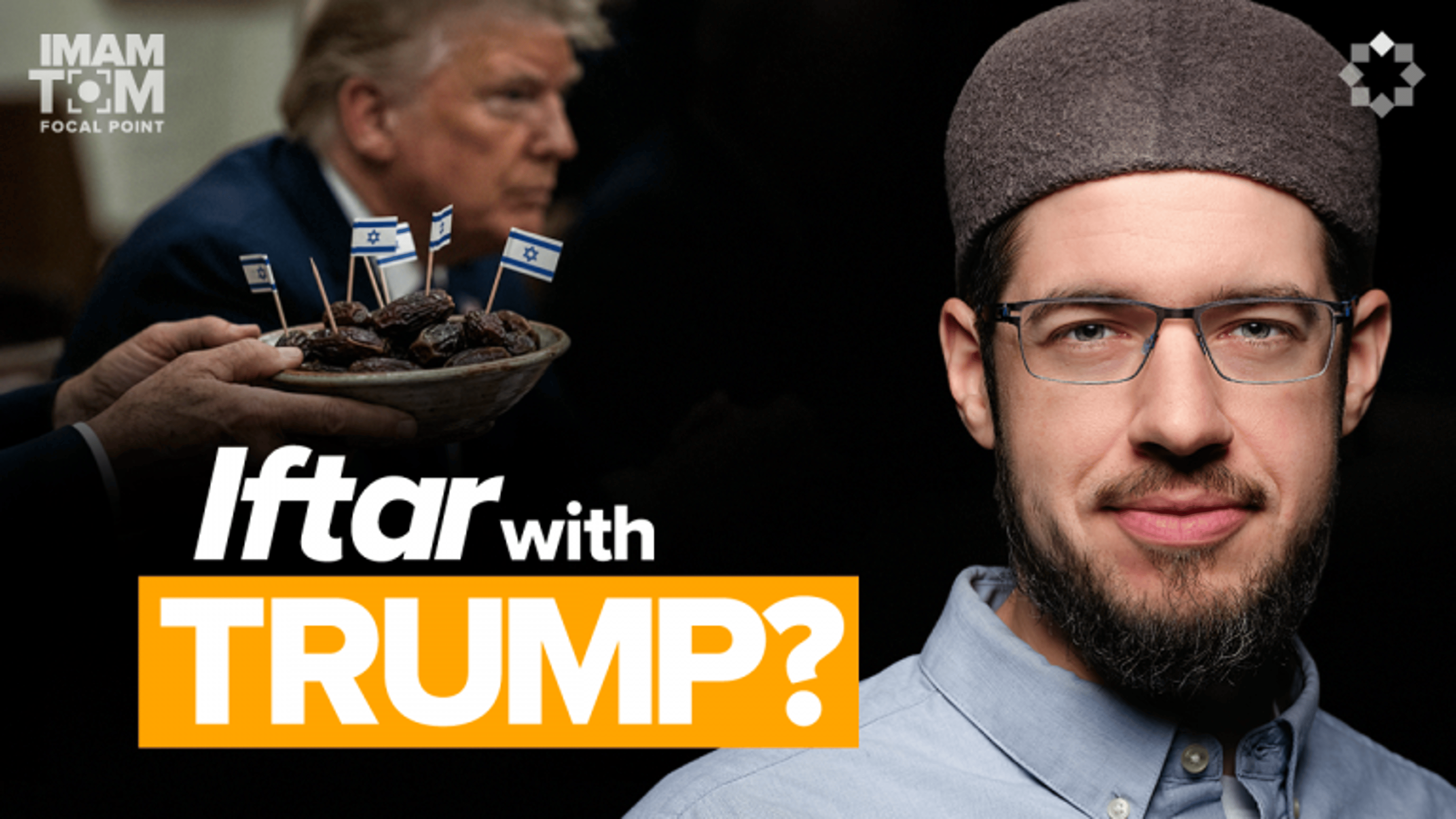
Why Your Attention is Worth More Than You Think & Who’s Buying It | Focal Point | Imam Tom Facchine

Our attention has become one of the world's most valuable commodities—and we're paying for it in ways we rarely notice.
In this Focal Point, Imam Tom Facchine explores how the attention economy grew from a simple business model into an industry built to capture our focus, shape our habits, and keep us distracted. More importantly, he asks what all of this means for Muslims trying to live with presence, purpose, and khushoo'.
This episode looks beyond social media addiction to the deeper spiritual consequences of living in an age of constant distraction.
This transcript was auto-generated using AI and may contain misspellings.
00:00The people who built the device in our pockets won't even let their kids use it.
00:09There are now multiple lines of evidence showing that social media is causing harm at an industrial scale.
00:16Peter Thiel, who co-founded PayPal and then the surveillance data firm Palantir, reportedly allows his children 90 minutes of screen time in an entire week.
00:25Bill Gates withheld smartphones from his own kids until they were 14, and he banned them from the family table outright. The chief executive of Snap holds his own child to the same 90 minutes.
00:36And Elon Musk, who has done as much as any man alive to wire the world to its feeds, has acknowledged that giving his children no rules at all may have been a mistake. The writer Adam Alter, who gathered these admissions, set them down in a line that I thought really captured it.
00:49"The greatest public technocrats are also its greatest private technophobes." Now let's compare that to an ordinary evening in a Muslim household. Many of us sit with our devices at the table or at least in our pockets.
01:03Now let's imagine someone who's standing before crowds and calling them to a way of life. And he's calling them with conviction; he's building his name on it.
01:11But then behind closed doors at home, he's actually forbidding his own family from going anywhere near the thing that he's selling. This is the opposite of a prophetic call.
01:21And no one would go near that person or listen to another word that they said. His decision with his children and how he instructs them is already a testimony against him.
01:31So the question that this opens up is not "Why can't we put down our phones?" The question is: What did these men who ran these companies understand about these devices and how they work that keeps their kids away from them?
01:45One of the things that we want to call out is that it's not as simple as your willpower. "I just need more discipline, I need to try harder, I need a detox, I need to maybe download this app or have a better morning routine. If I just tried harder, it would be fine."
01:58And there's definitely an element to that story which is true, but it's certainly not the whole truth.
02:05And sometimes if we put all of the responsibility and blame on ourselves, it can mask just how sophisticated this system is that we're up against.
02:15It also blinds us from who's responsible for making these things as addictive as they are. And when that responsibility even crosses over to criminal culpability, we shouldn't stop other people from having to answer for that.
02:28It also doesn't pass scrutiny. Tristan Harris, who served as a design ethicist inside Google and has since been called the closest thing Silicon Valley has to a conscience, put it very plainly.
02:40"The trouble was never a shortage of willpower. It's that a thousand people on the other side of the screen are paid full time to dismantle whatever self-regulation a person carries."
02:53The fight that we're being told is fair was never fair. It was never built to be fair. So once we at least neutralize or delay our self-blame—and there is blame to be had for ourselves, but let's just put that aside for a second—
03:06what are the other things that we can point to? Well, we might point to the iPhone, but in fact, it actually goes back a lot longer than that. It doesn't begin in Cupertino.
03:16It begins, maybe we could say, even as far back as 1833 in New York with a man named Benjamin Day and a paper called The Sun, which he sold for a single penny.
03:25Day understood earlier and more clearly than anybody else that if he gave away his own paper at a loss, what he is gaining is an enormous crowd.
03:34And that crowd, when it's all pulled up, is about the attention that's being paid. And so that's what he could actually sell to other people, namely advertisers.
03:45So he would assemble the paper as cheaply as possible, but he's selling the space to the advertisers within it. The advertisers would pay and more than make up for the shortfall of what he was getting from people buying his paper. So his readers thought that they themselves were the customers.
03:58In fact, no, they were the inventory. His business model depended on amassing a huge crowd and thus summoning forth and printing whatever is going to draw a crowd, which is not often what happens to be true.
04:11Tim Wu actually traced this whole lineage back and he gave it a name: the attention merchants. And he is the one who marks Day as the first person to figure out this modern arrangement.
04:22Now, two years later, just to demonstrate what kind of ethical shortcomings result from this model, in 1835, The Sun reported that Sir John Herschel, the most celebrated astronomer of the age, had built a telescope of unheard of power.
04:36And he looked at the moon and he found that there were forests and inland seas and winged men and all these things. It was an amazing tall tale.
04:45So the paper published that and they actually cited a real respected journal, the Edinburgh Journal of Science, and they used Herschel's real name. And they happened to know at the time that Herschel was in a remote location in South Africa.
04:57No one was going to be able to reach him to verify or corroborate the story. Of course, by the time it was identified as a lie, the story had made it throughout the entire world.
05:07Circulation for the newspaper, The Sun, climbed past 19,000 and The Sun became the most widely read newspaper on the face of the earth.
05:15So that manufactured wonder, the borrowed credibility, the fabrication that was refined and converted into circulation, it was not started in Silicon Valley. It actually started here, two centuries before we ever had anything to do with our thumbs.
05:29But what changed across those two centuries, it's not the logic—the logic is the same. It's simply the concentration of techniques. For decades, American broadcasting actually answered to a public interest mandate. It was a legal obligation.
05:41In the words of the statute, it was to serve the public interest, convenience and necessity. Something past the broadcaster's own financial incentive. Across the 1980s, that obligation was taken apart on principle.
05:54Ronald Reagan had told the country at his first inaugural that, quote, "The government is not the solution to our problem. Government is the problem." A now very famous line. And in that climate, the Fairness Doctrine was abolished in 1987.
06:08The old rules that had shielded young children from being targeted by advertising were stripped away. And the anti-monopoly architecture of American media was completely gutted.
06:20Most decisively by the Telecommunications Act of 1996. The roughly 50 companies that used to own the bulk of American media in the early 1980s became just 6 companies by 2012.
06:33News Corp, Disney, Viacom, Time Warner, CBS and Comcast. All of them hold something like 90% or around there of what the country watched and read.
06:45Since then, the ownership of media has only gathered towards a single point. As this is being filmed, a $111 billion merger would fold Warner Brothers Discovery into Paramount.
06:56And the man at the center of it, Larry Ellison, already holds Paramount, Skydance, CBS News, and he has a stake in TikTok. So that one family stands to command the studios, a national newsroom, and the feed all at once.
07:09And the posture of power toward that arrangement is not even hidden. When CNN, which is a Warner Brothers network, covered the American and Israeli war on Gaza in a manner that the administration disliked,
07:21the Secretary of Defense told reporters of Ellison's son that, quote, "The sooner David Ellison takes over that network, the better."
07:30They're telegraphing the fact that the consolidation of media is going to pay off dividends for the government. When that much of what people are permitted to see runs through such few hands, it's not even valid to call it a marketplace anymore.
07:44It's not a marketplace at all. It's a choke point. And that choke point, it doesn't only govern what we notice. It governs what we never get around to noticing.
07:54So how does the choke point reach all the way down into your own quiet evening in your home at the dinner table? There are three parts to this answer. Each of them has a piece of the puzzle, but not all of the puzzle.
08:05The first part of the answer is that the thing was engineered to be irresistible. Just like a slot machine never pays on a schedule, it pays unpredictably. And that unpredictability is the entire engine.
08:17It's what gets people to keep pulling because the reward that somebody can predict is one that you can walk away from. While a reward that might land on the next pull or might not, that's what keeps you pulling the lever as long as possible.
08:31The anthropologist Natasha Schull, who spent years among the machines in Las Vegas, called the state they induce the ludic loop. The sensory groove that a player falls into and can't climb out of. And the same loop is built into the screens.
08:45The pull to refresh that pays out sometimes a reward, sometimes nothing. And the infinite scroll that never offers a clean floor to stand on. Even the autoplay that begins the next thing before anyone's even chosen it, so that you have to opt out of viewing it.
08:59But also the notifications that are tuned into that precise circuit in your mind that is used to maybe identifying a predator or a danger. Now it fires off when you get a stranger's comment or a like.
09:10And those people who built this machine, they actually have confessed that that was their intention the entire time. Sean Parker, Facebook's founding president, described the founding question unflinchingly.
09:22He said, quote, "How do we consume as much of your time and conscious attention as possible?" End quote. Then he answered it in his telling with a little hit of dopamine—a like, a comment, right?
09:34Just giving you enough of a drip feed in order to keep your habit alive. Adi Erskine, who invented the infinite scroll, later testified against the industry that he had helped to raise.
09:44He explained with open and clear regret that the scroll was built for one purpose: to defeat the brain's natural cues to stop. And in a California courtroom in early 2026, a jury did a thing no one had done before.
09:57They awarded her six million dollars.
10:11So the second part of the answer, beyond addiction, is what's being sold here? Like, why do people care so much? And it's not even just about attention, or it used to be just about attention perhaps, but now it's moved to talk about prediction and selling prediction.
10:20Shoshana Zuboff gave this a name and called it surveillance capitalism and laid out its movements. Human experience is taken as free raw material.
10:34It is refined into a surplus of behavioral data and it's fed into machine intelligence to manufacture predictions of future conduct. It's those predictions that are sold to advertisers and insurers and lenders—that's the actual good that is being exchanged here.
10:45Google stumbled onto this as early as 2002 when its engineers watched a sudden flood of people searching on their search engine for the maiden name of a character from an old television show.
10:53And they noticed that the flood of this search arrived in five distinct waves, each beginning 48 minutes past the hour and marching across the time zones exactly as a game show aired.
11:04And its host posed the question. The queries reaching Google's servers before the broadcast in each zone had even finished.
11:17The company was watching the country's mind move before traditional media could report it. From that moment on, the ordinary searching, the phrasing, the typos, how long a cursor hovers before clicking, that became a diamond mine.
11:28And the user stopped being the one who was served and they actually became the thing that was being worked and mined.
11:38Safiya Noble put the upshot in a single sentence, quote, "Google creates advertising algorithms, not information algorithms." So that is very important and it's also an important part of the answer because a market, a real one, would leave you a way out.
11:52You'd be able to leave it, walk away from the table, go home, wait for another day. But that's not what's happening here: a person can't work, they can't bank, they can't hold a job or keep up a friendship without surrendering somewhat at least to these tech regimes, to the algorithm, which resembles much more of a kingdom than a market.
12:02And that brings us to the third part of the answer. The economist Yanis Varoufakis calls this techno-feudalism.
12:18The open square of free exchange is being completely replaced by closed cloud fiefdoms. Every interaction inside that fiefdom is mediated by an algorithm that decides what you see and what you're permitted to do.
12:30The rest of us are just serfs. We're working on the plantation, we're laboring on the land. We're never going to own anything and we have to pay our own rent for that land and we pay that in attention.
12:41Under capitalism, he says, Marx could at least name the worker alienated from the product of his hands. Under the new arrangement, we don't even own our own minds because cloud capital has gone into the business of asset-stripping the brain itself.
12:52The identity that the state once mediated through the passport now sits in the keeping of a handful of private clouds.
13:00Your purchases, your locations, your affiliations, even the half-formed thoughts that are typed into a search bar and then deleted a second later. And this is not just innocent and it's not just theoretical. This actually becomes a matter of life and death.
13:14And when we look at the genocide that is happening in Gaza, we see where the rubber meets the road with a lot of this stuff. As journalists Ian Bogost and Charlie Warzel have reported, an effort to consolidate the federal government's own data on its own citizens:
13:26Records long kept compartmentalized that were hard to pull across agencies. They've been removing the friction that once stood between an agency and a complete dossier.
13:37The country they warn already owns every tool a surveillance state would need. And they've only been waiting for someone who was willing to use them. And the same merged data sets have reportedly already been used.
13:50Now, if you're married to the granular location data held by private companies, such records could let an authority reconstruct the movements and associations of nearly every single person whom it chose to watch.
14:02And the same merged data sets have reportedly already been used. ...being turned towards deportations here. And at the far side of the very same pipeline, investigative reporting describes commercial cloud contracts... ...placing this infrastructure directly in the hands of the military.
14:16Two years before October 7th, the former head of an elite Israeli signals intelligence unit... ...argued in a book that armies would need to bind themselves to the cloud giants... ...the way they once had bound themselves to the makers of jets and missiles.
14:30In 2021, Israel signed exactly such a contract worth $1.2 billion with Google and Amazon... ...under the name Project Nimbus.
14:39And in Gaza, according to reporting, the military leaned on an artificial intelligence system called Lavender... ...that assigned almost every person carrying a phone a score...
14:51...estimating their likelihood of affiliation with prescribed groups... ...a system trained on the data of identifying members... ...and used, the reporting says, to generate targets at a scale...
15:04...that no room of human analysts could ever have matched... ...with the strikes landing often while the marked man was at home with his own family. We see the same logic being applied only in different theaters.
15:18Gather data ubiquitously, predict the behavior, optimize outcomes... ...and at the shallow end, we could say, it costs a believer an evening... ...that he should have been giving time and attention to his family.
15:32At the deep end of it, the very same logic decides who lives and who dies. So the three parts of our answer, as we said, one was the addiction. That's how they get you hooked. The second is the surveillance, and that is kind of, you know, what they're selling.
15:46And the third is the techno-feudalism that shows how the state and the military intervene. Part of the power here is deciding what people notice, what they're afraid of. The new media does what the old one couldn't.
15:59It hands each person alone a single stream calculated to keep that particular person busy... ...with exactly what will distract him or her. The nafs is handed the spotlight and then turned against the one who carries it.
16:13And the timing is definitely not innocent. Studies of decades of coverage, including the economists Ruben Durante, Ekaterina Zhurovskaya... ...if that's pronouncing that correctly, they found that military actions, operations...
16:27...likely to produce damning next-day footage, they are actually timed to the hours... ...when the news is already crowded. So they're betting on the noise being a cover for their deeds.
16:40And another parallel study found that heads of state, they slip in their most unpopular orders... ...in the very same kind of atmosphere when it's likely to be ignored or overlooked.
16:50So the timing is one aspect of it, but also the erosion of our attention is another aspect of it. Consider this, in 1858, when the presidents or the presidential candidates were debating... ...their debates were like multiple hours long.
17:05People were standing in like hot fields under the sun, listening to arguments. The opening segment of these debates was an hour long. A century later, when that same format, the debate moved to television...
17:17...the whole program was reduced to an hour and the opening statements were just eight minutes long. Now, of course, we have like eight-second clips and that's literal, that's not an exaggeration. It demonstrates that there's a mind that's being harvested...
17:30...but the soil of the field is running thin, so to speak. The psychologist Daniel Kahneman, he names these two gears at work... ...the slow, effortful, analytical thinking that a three-hour debate demands...
17:42...and the fast, intuitive reflex that a swipe rewards. The machine trains the second at the cost of the first... ...until an entire people grow quick to react and slow to examine. That makes them, and us, easy prey for the next moon hoax.
17:56We're no longer able to sit long enough with a difficult ayah... ...or two seemingly contending narrations to think our way through to the truth. What is spent? Every hour that the machine holds on to a person is time.
18:09And in Islam, we take time very, very seriously. Ibn al-Qayyim, rahimahullahu, he wrote that squandering time is even worse than death. And he was not exaggerating because he reasoned that...
18:19...death severs a man from this world and the people in it, but returns him to Allah. But wasting time severs you not just from the world, but it also severs you from Allah. The secular world half sees this.
18:30William James wrote that at the end, a man's life will have equated to what he paid attention to. But Ibn al-Qayyim goes to an extent that William James doesn't. He names the breath itself as a coin that won't return.
18:42And a believing people will guard its money with real vigilance... ...while unfortunately handing over their hours. That's a type of wealth that never replenishes. And thanking that machine for the convenience of the theft is criminal and obscene. Now, we have a name for this.
18:56It doesn't happen all at once. And that means it's a slow draw. It's a descent that's so gradual that you don't even notice that it's happening. You might even think that you're climbing or progressing.
19:08You're giving more and more time to productivity or what you love doing. But the second that you stop asking whether it's what you wanted to do is the second that they have got you. Neuroscience talks about a similar mechanism from another perspective.
19:22In the gap, it is found between wanting and liking. The circuits that drive a man to seek a thing are stronger and grow more sensitive with use... ...than the circuits that let him enjoy it once it is in his hand.
19:35So the seeking, right, and the thrill of the chase outlives the pleasure. And the believer scrolls on, wanting, wanting, wanting. Liking it a little bit, maybe, sometimes, but largely dissatisfied.
19:47Whereas we are slowly being taken down, istidrajan, ruwayda, ruwayda, into an abyss. The top of that funnel might be a harmless meme. But the bottom is a heart that no longer flinches at what displeases Allah, subhanahu wa ta'ala.
20:00In the reports, we have al-Shafi'i, rahimahullahu, who complained to his teacher, Waki', of a failing memory. And the advice that he got is that knowledge is light. And the light of Allah is not granted to anybody who disobeys.
20:14So if we put that besides all of the hours that we spend by our own choice... ...through everything that the heart was never built to actually hold, or observe, or maintain...
20:25...we have to ask ourselves what's happening to our, not just memory, but our insight, our basira. And that's something that our relationship with Allah, subhanahu wa ta'ala, thrives on.
20:35If our hearts are split among a thousand calls and notifications, it can't gather itself into presence. And that presence we call khushu'. The newsfeed is precisely the opposite of tadabbur and slow reflection.
20:48The scroll is the opposite of dhikr. And the corrosion reaches even into our sincerity, because once we start measuring our lives in views and watch time... ...our worship itself might end up being performance.
21:02And the question in the soul, it can slide without any announcement, without any clarity... ...from whether Allah accepted this, towards whether the people liked it. That's why it's very dangerous to film yourself doing acts of worship. Allah, subhanahu wa ta'ala, is a shaheed.
21:17He's the witness that sees everything and only sees everything. And it's his witness that ultimately counts. The machine is built on the opposite creed entirely, that nothing is real and nothing happened... ...unless everybody has seen it.
21:29When was the last time any of us sat with a long surah or a long book... ...all of it from start to finish without the hand drifting towards your device? The shattered attention that can't even survive that surah or that book...
21:42...it's the same shattered attention that we carry into everything else. Into the structures that bear down on this ummah, that we can't hold and focus long enough to organize against. We're kept too busy to notice what's happening to us.
21:55Even into the summons to be better, to be stewards of the earth, things that people might say... ...but what's our capacity to actually answer that call...
22:04...if we have self-sabotaged and removed the ability to pay attention to what needs to be paid attention to? 'Umar Osman, he makes a plain observation, it's very profound...
22:15...that by stuffing every idle moment and pocket of the day with a screen... ...whether you're in the line or waiting for a bus or even in bed before you fall asleep...
22:25...you've traded away the very silence and space that du'a actually requires. You can't even bear your own company in silence. How can you bear the company of Allah, subhana wa ta'ala?
22:36Because being able to be alone with yourself is a prerequisite to being able to be alone with Allah. Tim Wu names those vanished pockets the conquest of the fourth screen... ...the handheld one that finally reached the small idle particles of time...
22:51...that the theater or the television could never get to. Now if you zoom out a little bit and you look at an entire people... ...so it's not just having the individual level but it's happening at a societal level... ...and we have an entire culture that's trained for fragmentary awareness.
23:03We lose our sanctuaries. The home is not a sanctuary. The masjid is not even a sanctuary. They're not places where we're able to have sustained attention. They're not fenced off from the marketplace. The machines have infiltrated.
23:15And if we zoom out even more, we see something that Simone Weil saw... ...and named in a different way than we would maybe call it. Quote, attention is the rarest and purest form of generosity. If you look closely at that, that's khushu'.
23:29We call that khushu'. Like the inner mechanics of khushu' itself. You have to empty yourself in order to turn towards Allah ﷻ with full attention. So going back to where we started, the tech bros who built these things...
23:42...but won't let their kids near them, they were telling us the truth. They were telling us the truth the whole time. The truth was in both their statements, what they said, but also in their decisions. They do something at home that's different from what they're saying on the stage.
23:55But there is a silver lining in that this can be undone. This is not a death sentence and it's not the end of the road. Yes, the mind can be shortened, but the mind can also be lengthened again. Your attention is not a fixed inheritance. The brain is able to rewire.
24:09And it rewires according to what it is made to practice. Which is why a thousand hours of scrolling actually trains the mind to scatter. But if you train it on deliberate demanding reading, you can train it back towards depth.
24:22And that's not so much a matter of heroic motivation, though motivation is important. But it is about something small and consistent. The type of act that the Prophet ﷺ loves and that Allah ﷻ loves. Tim Wu called this the human reclamation project.
24:37And our tradition always called it, or we could call it, tarbiyah. Right? That you are actually forming yourself. You are a building. And inside that ordinary life, these small sanctuaries of attention are where you start rebuilding that structure.
24:50You have to put up a very, very thick wall that this is not for sale. You have to guard the quiet. You have to guard the time where you can be alone with Allah ﷻ. That restoration is the important starting point, but it goes beyond that.
25:03Al-Ghazali in the Ihya' drew a picture like this. Attention, when it's put and turned in the right direction, it doesn't simply defend that emptiness. But it transfigures it. It transforms it. So that even when we sit down to do our ordinary acts,
25:17if we are attentive to Allah ﷻ in those moments, it actually becomes an act of worship. So you can have a day with no wasted hour anywhere in it,
25:27where every moment is pressed into the service of Allah ﷻ that it was made for. Philosopher Josiah Royce, centuries later than Al-Ghazali and far, far away, circled the same truth from the outside.
25:39A self, he held, is finally nothing but a life lived according to one plan, one loyalty, and a life with no single thread running through it boils dry the instant that it ends.
25:51A believer already has the thread. The thread is tawhid. The machine's whole business is to fray that thread into a thousand loose strands. So let's think about, you know, again, how do we interact with social media
26:03or even basically all of the things that we choose to do. We can run it through three filters, and it's important. One, why am I doing this thing? Two, why do I want to see this?
26:15Three, would I still do this if no one were to ever know? If you're to stick to those three questions, it can take you far, both in terms of what you let yourself see and what you're putting up online. And there is a model that we claim to follow whose presence was so complete
26:30that when a person spoke to him, he actually turned his whole body to face them. He never divided his attention. He never once was half elsewhere. Sallallahu alayhi wa sallam, the Prophet Muhammad,
26:40which is precisely the thing that this machine has been quietly trying to kill in every single one of us. At the end of the day, everybody worships something, and worship isn't just in rituals, it's actually in obedience.
26:54So you can spend, and any given person can spend an entire day and never actually consciously choose a ritual act of worship or a god, but they can still spend that whole day in an obedience of a type,
27:05whether that obedience is to a feed or to a notification or to an algorithm, an algorithm that studied him more closely than he has ever once studied his own soul. So the question is not whether a man does or doesn't obey,
27:18it's only what is it that you're obeying at the end of the day. Time is your capital, but be very, very aware that that time and that capital does not come back.
27:28And the people behind the feed, the people behind these algorithms are actually counting on you, especially as a Muslim, counting on the ummah staying asleep. We have to decide where we're going to put our attention and where we're going to spend our time.
27:42Are we going to give it to the feed that is counting on the ummah staying asleep and distracted? Or are we going to give it to Allah subhanahu wa ta'ala, who handed us the earth and told us to keep watch of it?