fbpixel
How Your Victim Mindset is Destroying You | Snapshots with Imam Tom Facchine
Why the Islamic Calendar Matters | Snapshots with Imam Tom Facchine
Why the Islamic Calendar Matters | Snapshots with Imam Tom Facchine

What Activism Is Missing Today | Snapshots with Imam Tom Facchine

What Activism Is Missing Today | Snapshots with Imam Tom Facchine

How to Stop Chasing Validation | Snapshots with Imam Tom Facchine

How to Stop Chasing Validation | Snapshots with Imam Tom Facchine

Is This Da’wah or Entertainment? | Snapshots with Imam Tom Facchine

Is This Da’wah or Entertainment? | Snapshots with Imam Tom Facchine

Islam Isn’t Just Therapy | Snapshots with Imam Tom Facchine

Islam Isn’t Just Therapy | Snapshots with Imam Tom Facchine

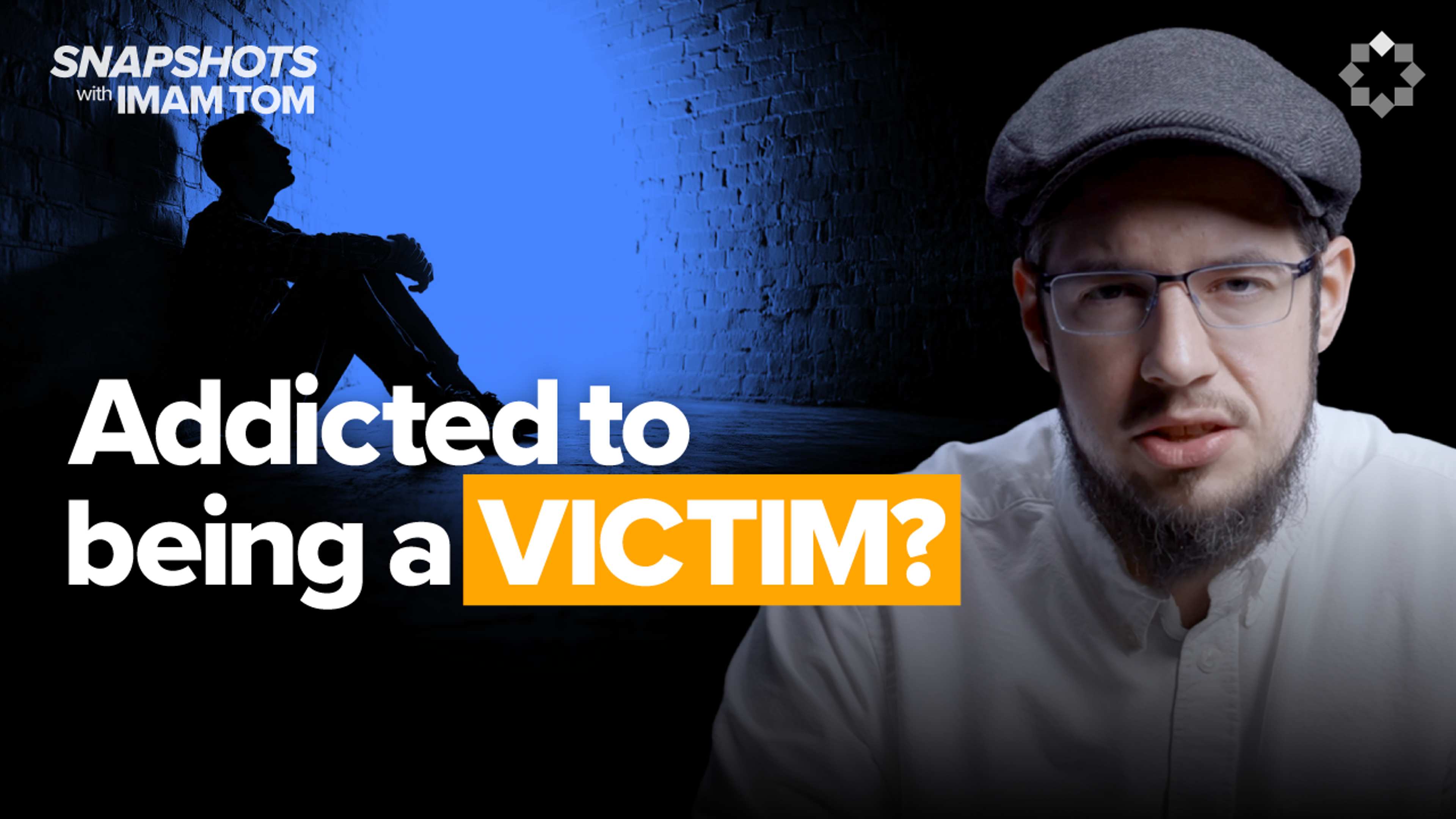
How Your Victim Mindset is Destroying You | Snapshots with Imam Tom Facchine
Playing

How Your Victim Mindset is Destroying You | Snapshots with Imam Tom Facchine

Modesty Is More Than What You Wear | Snapshots with Imam Tom Facchine
Modesty Is More Than What You Wear | Snapshots with Imam Tom Facchine

Will Recognition Help Palestine? | Snapshots by Imam Tom Facchine

Will Recognition Help Palestine? | Snapshots by Imam Tom Facchine

Living Up to the Prophet’s ﷺ Final Speech | Snapshots with Imam Tom Facchine

Living Up to the Prophet’s ﷺ Final Speech | Snapshots with Imam Tom Facchine

How Should We View Gaza’s Celebrity Support? | Snapshots with Imam Tom Facchine

How Should We View Gaza’s Celebrity Support? | Snapshots with Imam Tom Facchine

How to Stop Falling for Fake Mahdis | Snapshots with Imam Tom Facchine

How to Stop Falling for Fake Mahdis | Snapshots with Imam Tom Facchine

Why You Can’t Escape Organized Religion | Snapshots with Imam Tom Facchine

Why You Can’t Escape Organized Religion | Snapshots with Imam Tom Facchine

Kings Chased Thrones. He ﷺ Chased This Instead | Snapshots with Imam Tom Facchine

Kings Chased Thrones. He ﷺ Chased This Instead | Snapshots with Imam Tom Facchine

What Real Masculinity Looks Like | Snapshots with Imam Tom Facchine

What Real Masculinity Looks Like | Snapshots with Imam Tom Facchine

The Truth About AI’s Intelligence | Snapshots with Imam Tom Facchine
The Truth About AI’s Intelligence | Snapshots with Imam Tom Facchine

What the Qur’an Says About Christianity | Snapshots with Imam Tom Facchine
What the Qur’an Says About Christianity | Snapshots with Imam Tom Facchine

How Does the Qur’an View the Bible? | Snapshots with Imam Tom Facchine

How Does the Qur’an View the Bible? | Snapshots with Imam Tom Facchine

What ‘Allahu Akbar’ Really Means (And Why It Scares Them) | Snapshots with Imam Tom Facchine
What ‘Allahu Akbar’ Really Means (And Why It Scares Them) | Snapshots with Imam Tom Facchine

Debunking the Myth of the ‘Oppressed Muslim Woman’ | Snapshots with Imam Tom Facchine
Debunking the Myth of the ‘Oppressed Muslim Woman’ | Snapshots with Imam Tom Facchine

What Sharia Law Actually Means | Snapshots with Imam Tom Facchine

What Sharia Law Actually Means | Snapshots with Imam Tom Facchine

Does Islam Actually Oppose Science? | Snapshots with Imam Tom Facchine

Does Islam Actually Oppose Science? | Snapshots with Imam Tom Facchine

How ‘Taqiyya’ Became an Islamophobic Talking Point | Snapshots with Imam Tom Facchine

How ‘Taqiyya’ Became an Islamophobic Talking Point | Snapshots with Imam Tom Facchine

Who's Your Real Enemy? | Snapshots with Imam Tom Facchine
Who's Your Real Enemy? | Snapshots with Imam Tom Facchine

Epstein and the Double Standard of Justice | Snapshots with Imam Tom Facchine
Epstein and the Double Standard of Justice | Snapshots with Imam Tom Facchine

Are You Sincere? | Snapshots with Imam Tom Facchine

Are You Sincere? | Snapshots with Imam Tom Facchine

Intelligence vs. Wisdom in Islam ( And What Iblis Teaches Us) | Snapshots with Imam Tom Facchine
Intelligence vs. Wisdom in Islam ( And What Iblis Teaches Us) | Snapshots with Imam Tom Facchine

Why Toxic Competition Feels Normal (But Isn't) | Snapshots with Imam Tom Facchine

Why Toxic Competition Feels Normal (But Isn't) | Snapshots with Imam Tom Facchine

Why Flock Cameras Aren’t Making Us Safer | Snapshots with Imam Tom Facchine
Why Flock Cameras Aren’t Making Us Safer | Snapshots with Imam Tom Facchine

The Difference Between Knowledge and Discernment | Snapshots with Imam Tom Facchine
The Difference Between Knowledge and Discernment | Snapshots with Imam Tom Facchine

Snapshots with Imam Tom Facchine

How Your Victim Mindset is Destroying You | Snapshots with Imam Tom Facchine

How do you respond to trauma? Do you let it consume you and strip you of your power?

We all experience painful events. It’s resilience that restores your dignity, not dwelling in victimhood. The perfect example? Prophet Muhammad ﷺ. He faced unimaginable hardship, but turned his pain into purpose.

This transcript was auto-generated using AI and may contain misspellings.
00:00Islam teaches resilience, not self-pity. This is one of the casualties of our victim culture, culture war, and the left-right antagonism, and also with the proliferation of therapy culture.
00:16There's a sweetness to being a victim in certain audiences, in certain company. That to be perceived as oppressed or to be perceived as a victim of something gives you street cred.
00:26It gives even a type of social currency, and that can actually mess with your intentions. Allah actually says explicitly in Surah An-Nisa, "Are they seeking dignity from elsewhere? For all dignity belongs to Allah."
00:37All dignity belongs to Allah. You're not gonna get dignity from anybody else on the face of this earth. You're not going to get dignity by being somebody else's oppressed minority or somebody else's victim case.
00:51Dignity comes from Allah subhanahu wa ta'ala, and you find a lot of difference when it comes to how we tend to behave these days versus how the Companions behaved and how the early Muslims behaved.
01:00With a modern therapeutic eye, we would say they experienced a lot of trauma. Absolutely. Both psychological, physical, tons of hardships.
01:09Even the Prophet Muhammad (ﷺ). You look at being raised as an orphan and having his caregivers pass away one at a time. Being ostracized from his clan and tribe and his homeland. Things that we would call today traumatic.
01:22And yet we don't see the same leaning into that as we do today. We see a different type of resilience and response.
01:29One that's not suppression, by the way. We don't want to run to the other extreme or the other caricature of just boomer generation robots that just don't talk about their feelings.
01:38That's not what we're saying. But certainly the way that the early Muslims responded was through dignity and strength and redemption. Redemption of themselves but also redemption of those around them.
01:50It wasn't falling prey to a grievance culture where we're constantly just indirectly benefiting from being a victim. One of the Hanbali scholars, he talked about how people can show off in anything.
02:02And certainly if you've ever heard of the oppression Olympics, people can show off in anything. How oppressed you are or how messed up your life is or whatever. You might remember back in university or in high school you used to complain about how much work you had to do.
02:15And somebody else sort of one-ups you and then you try to one-up them about how little sleep you got, how little food you've eaten. People can show off in anything. So we have to be careful not to fall into this funnel of being pleased or content with being a victim.
02:29Even if we are victimized. Allah subhanahu wa ta'ala has a purpose to the things that we suffer. And the purpose to the things that we suffer is supposed to bring us transformation.
02:40It's supposed to bring us to another place and another reality where we're actually closer to Allah subhanahu wa ta'ala. We're actually more dedicated to our principles and our values.
02:48We're actually more willing to sacrifice in His cause and suffer things in His cause because we have been shown something of reality. We have been shown something of Allah's control.
02:59So we have to understand that as Muslims we rely upon Allah subhanahu wa ta'ala for everything. And we trust that Allah subhanahu wa ta'ala has a plan for us. There's this idea of wayfaring.
03:12And perhaps that's one of the things missing from victim culture or grievance culture is that there's no wayfaring. Where are we going? Where are we headed? Where's our redemption? Where's our triumph?
03:22If we are Yusuf (عليه السلام), to give a Quranic example, we might be in the well now. We might be in prison now. But how do we get to the end?
03:32How do we make Allah's hope for us, which is better than our hope for ourselves to be honest, how do we make that happen? And what do we have to do to get there?