In the Name of Allah, the Most Gracious, the Most Merciful. It is fitting that we look to the experiences of the Muslims who came before us as we ourselves grapple with plague and pestilence, not to compile an exhaustive record, but to draw a few lessons from their trials. Everything our predecessors did was not sacred, yet it was profoundly human, for they too wrestled with the meaning of Islam, the will of Allah, and a developing tradition that we have inherited, even where their understandings differed from our own.
In the pre-modern period, Muslims sought to explain the emergence of widespread disease through both medical and spiritual causes. They commonly believed that an imbalance in the body's humors, brought about by corrupted air or miasma, sparked ṭāʿūn and wabāʾ—terms whose meanings are, in truth, more complex than the simple translations of "plague" and "pestilence" suggest, as Lawrence Conrad has discussed. At times they even attributed such illnesses to the pricks of evil jinn. Whatever the accuracy of their science, their conviction that all such things occur by the will of Allah prevailed. Seeking an explanation for illness and affirming the power of Allah are not mutually exclusive, nor are taking precautions and placing trust in Him. In their day, precaution might have meant seeking open spaces with cleaner air; in ours, it means isolation and heeding the consensus of medical professionals.
The Prophet ﷺ described plagues as a mercy and a means of martyrdom for the believers, and a possible punishment for others. In a well-known hadith recorded in Ṣaḥīḥ al-Bukhārī, he ﷺ said, "If you hear of an outbreak of plague in a land, do not enter it; but if the plague breaks out in a place while you are in it, do not leave that place." When plague struck Syria during the caliphate of ʿUmar (may Allah be pleased with him), the Companions debated the meaning of this hadith and sought how best to protect the army stationed there. In doing so they demonstrated the difference between caution and fear: they accepted what befell them as the decree of Allah, yet still strove to prevent death rather than surrender to it.
The Muslims of the past, including our pious predecessors, likewise expressed very human reactions to affliction. Perhaps the first epidemic the early community faced directly was the sickness of Medina, when many of the muhājirūn, unaccustomed to the local climate, fell gravely ill. A hadith in Ṣaḥīḥ al-Bukhārī relates that both Abū Bakr and Bilāl (may Allah be pleased with them) contracted the disease and each turned to poetry to voice his condition, Abū Bakr recalling the nearness of death and Bilāl longing for his home in Mecca. Their example shows that we may be human in the face of hardship—feeling loss, grief, and nostalgia—so long as we keep turning toward Allah. During the same plague in Syria, several Companions perished, among them Muʿādh b. Jabal, Abū ʿUbaydah, Faḍl b. ʿAbbās, and Abū Jandal, and thousands died in all. Al-Yaʿqūbī records that prices soared and people began to hoard, whereupon ʿUmar (may Allah be pleased with him) prohibited hoarding. Hoarding was wrong then, and it remains wrong now.
A widely cited account tells of an early Abbasid official visiting Damascus, a city long struck by plague in the Umayyad and pre-Islamic periods, who observed that under Abbasid rule no epidemics had occurred and urged the people to be grateful. One person replied, "God is too just to give you power over us and plague at the same time!" Beyond hinting at a real decline in epidemics and at local resentment of the Abbasids in former Umayyad strongholds, the account was likely preserved so often for its comic resonance—an indication of human resilience in the face of difficulty.
In the fourteenth century, Ibn al-Wardī, who himself experienced the Black Death in Mamluk lands and eventually died of it, composed a poetic treatise on the pestilence. He believed the plague to be a punishment from Allah, yet rather than dwell on that punishment he sought refuge and hoped for moral and spiritual improvement, writing, "We ask God's forgiveness for our souls' bad inclination; the plague is surely part of His punishment. We take refuge from His wrath in His pleasure and from His chastisement in His restoring." Referencing the belief in corrupted air, he remarked, "They said: the air's corruption kills. I said: the love of corruption kills." He accepted the decree of Allah while refusing fatalism, declaring, "I fear not the plague like others do," and affirming that "When the Muslim endures misfortune, then patience is his worship." His act of continuing to write amid devastation shows that acceptance of Allah's decree does not mean a failure to act, for the Islamic notion of patience is not passive.
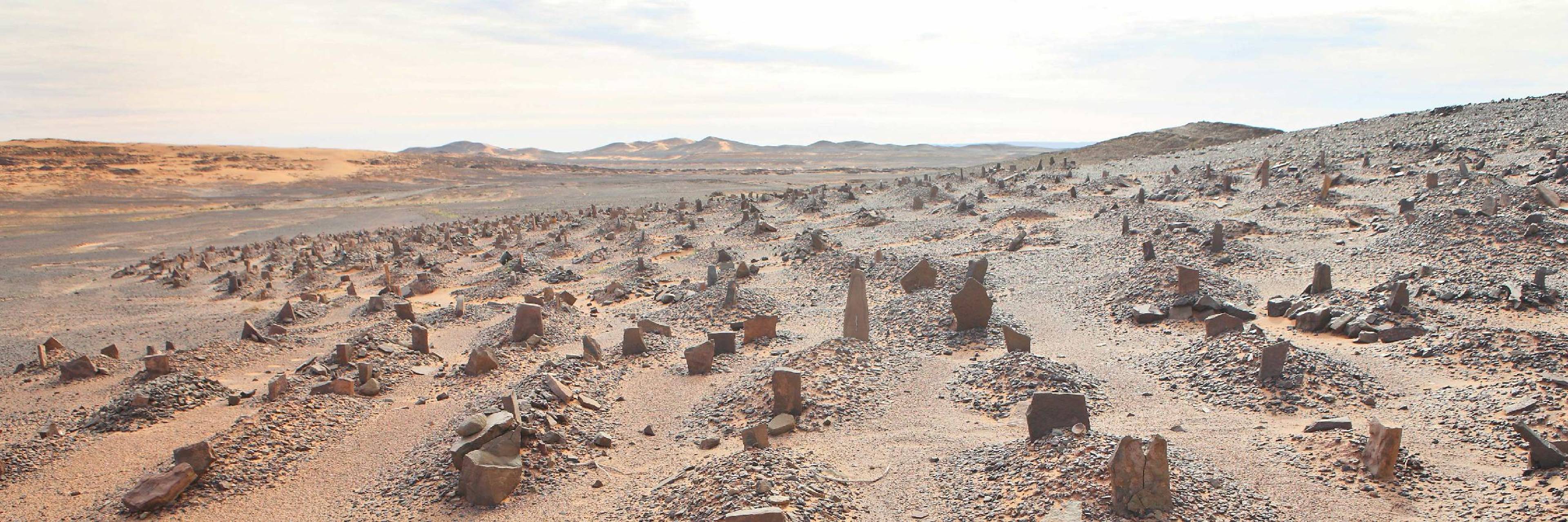
When the Black Death and later recurring plagues struck Cairo in the fourteenth and fifteenth centuries, the dead were so numerous that funeral processions resembled camel caravans, and bodies were sometimes left in the streets or cast into the river. Stuart Borsch estimates that nearly half of Egypt's population perished from the disease and its effects by the late fifteenth century. Yet the Muslims strove to maintain ritual purity and to continue burials, persisting in their acts of faith and their obligations to one another. Though many rightly feared it might be the end of the world, they were not paralyzed by apocalyptic dread, for the Prophet ﷺ said, as narrated in Musnad Aḥmad, "If the Resurrection were established upon one of you while he has in his hand a sapling, then let him plant it."
Pre-modern Muslims often responded to affliction with an abundance of worship as well as caution. Ibn al-Jawzī records that when pestilence overcame Ahwāz in 449 AH, the people turned back to Allah, repented, gave much of their wealth in charity, and poured out their alcohol. In Cairo a prayer for reprieve resembling that offered for rain in drought was performed on the desert outskirts, extra fasts were kept, and recitations of the entire Ṣaḥīḥ al-Bukhārī and of the Qur'an were undertaken. Dols relates that in 749 AH the qāḍī of Damascus dreamt of the Prophet ﷺ instructing the people to recite Sūrat Nūḥ—a sūrah concerning protection and survival—thousands of times and to beseech Allah for relief, whereupon they did so, sought forgiveness, and slaughtered animals to feed the poor.
The closure of masjids, one of the most trying features of our present crisis, is not without precedent, though its current scale is unmatched. The masjids of Qayrawān stood empty in 395 AH, those of al-Andalus closed in 448 AH amid pestilence and famine, and during the Black Death many masjids and shrines in Egypt were shut. In those earlier cases the closures likely arose because so many had fallen sick, died, or were tending the ill, rather than from prevention as understood today; yet in both eras the preservation of life was a valid reason.
In his chronicle centered on Egypt, Ibn Taghrībirdī (d. 874 AH) mentions plague again and again, often noting that a given figure died of it and comparing the severity of different outbreaks. His history makes for grim reading, yet it always moves on: the plague subsides, its curve reaches a peak and declines, and other events draw his attention onward. So too shall our situation pass, in shāʾ Allah. People we know may succumb, and there may even be recurrence, but history will move forward, and this is neither all that is happening nor all that matters. Historical accounts teach us to respond with caution, patience, and increased worship and care for one another, and they remind us that we have moved past such trials before. As Allah says in Sūrat al-Raḥmān, verses 26–27, "All on earth perishes. And the Face of your Lord, Owner of Majesty and Honor, persists."