Jump to:
Imam Tom Live
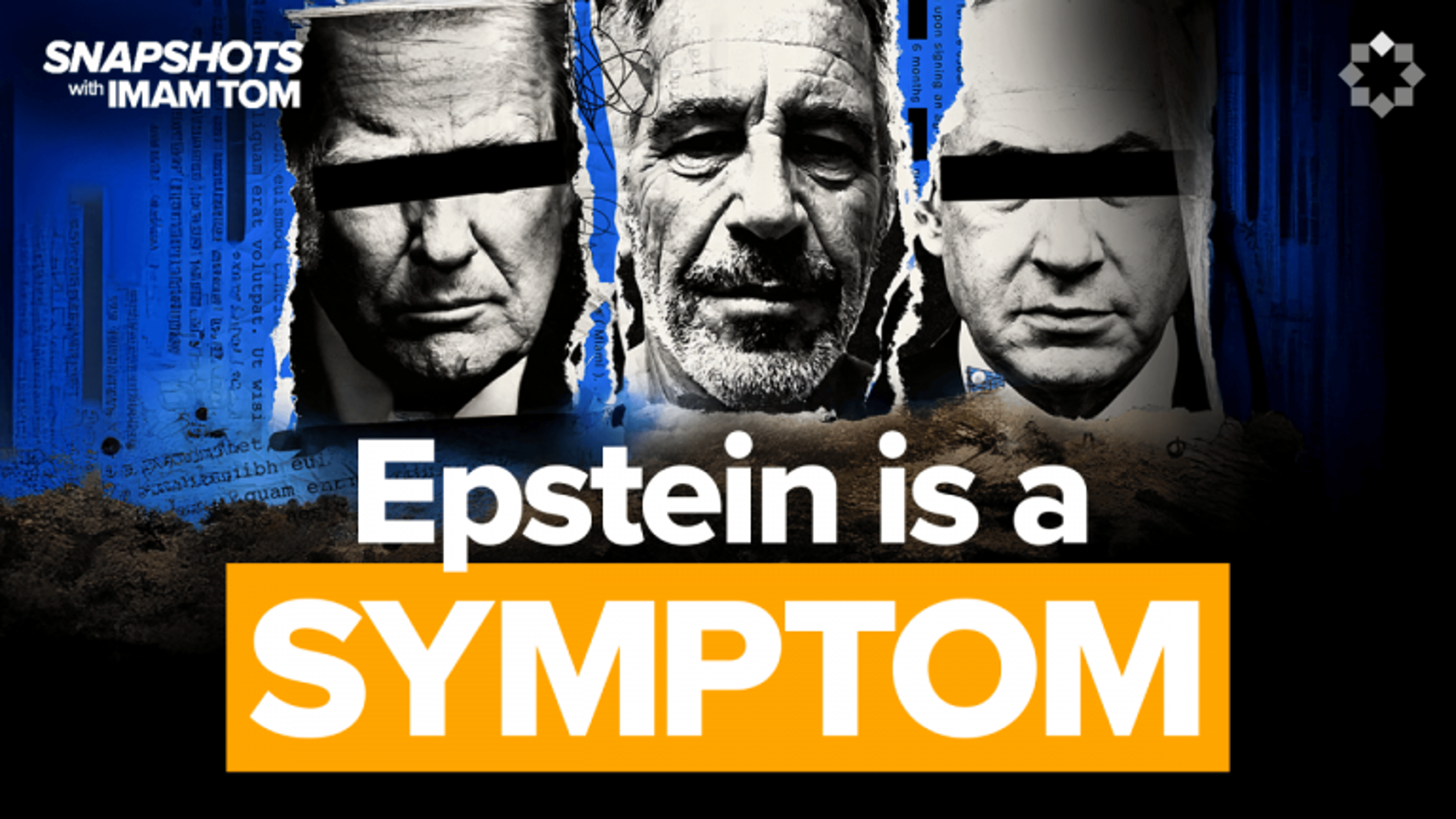
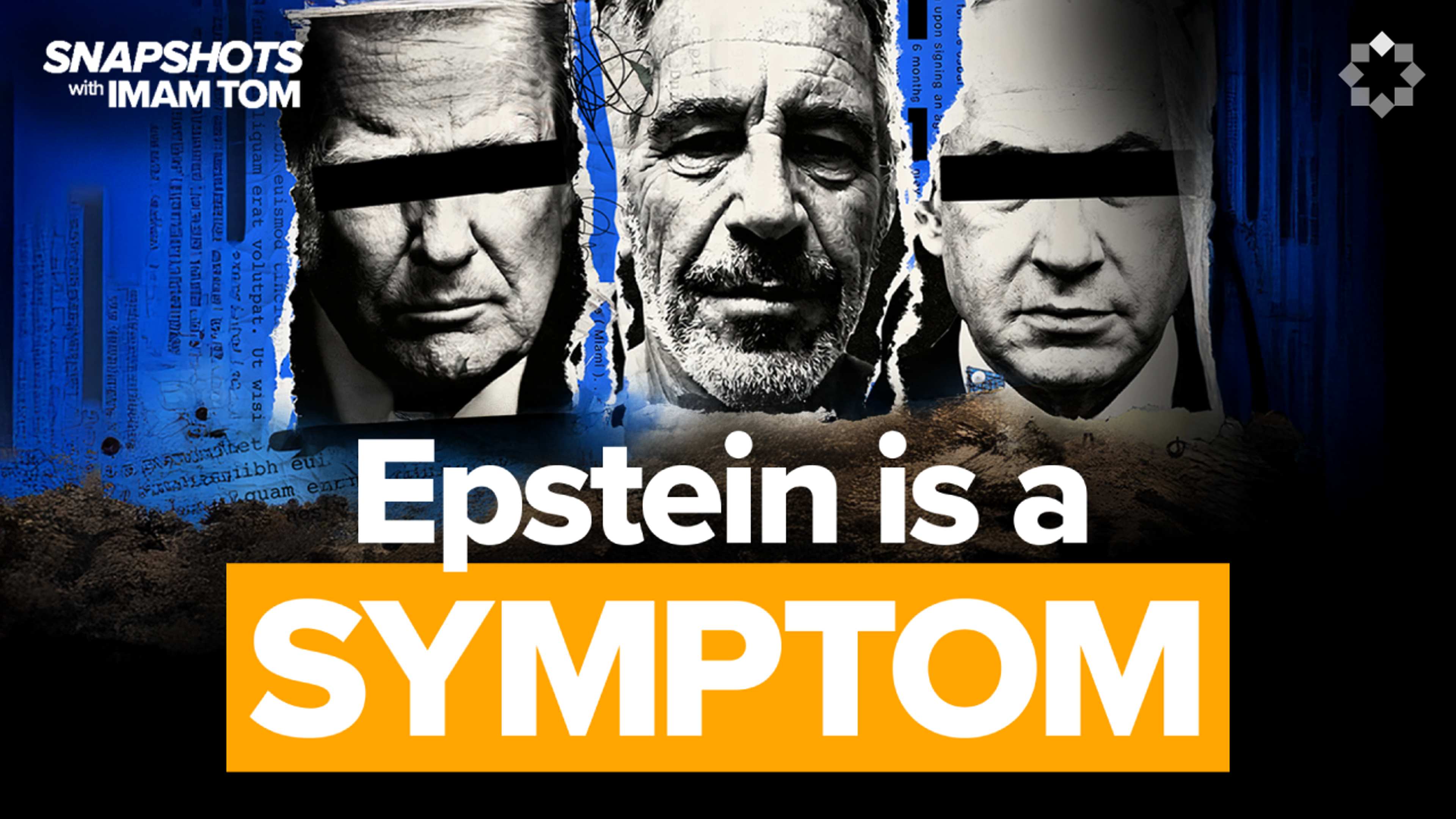
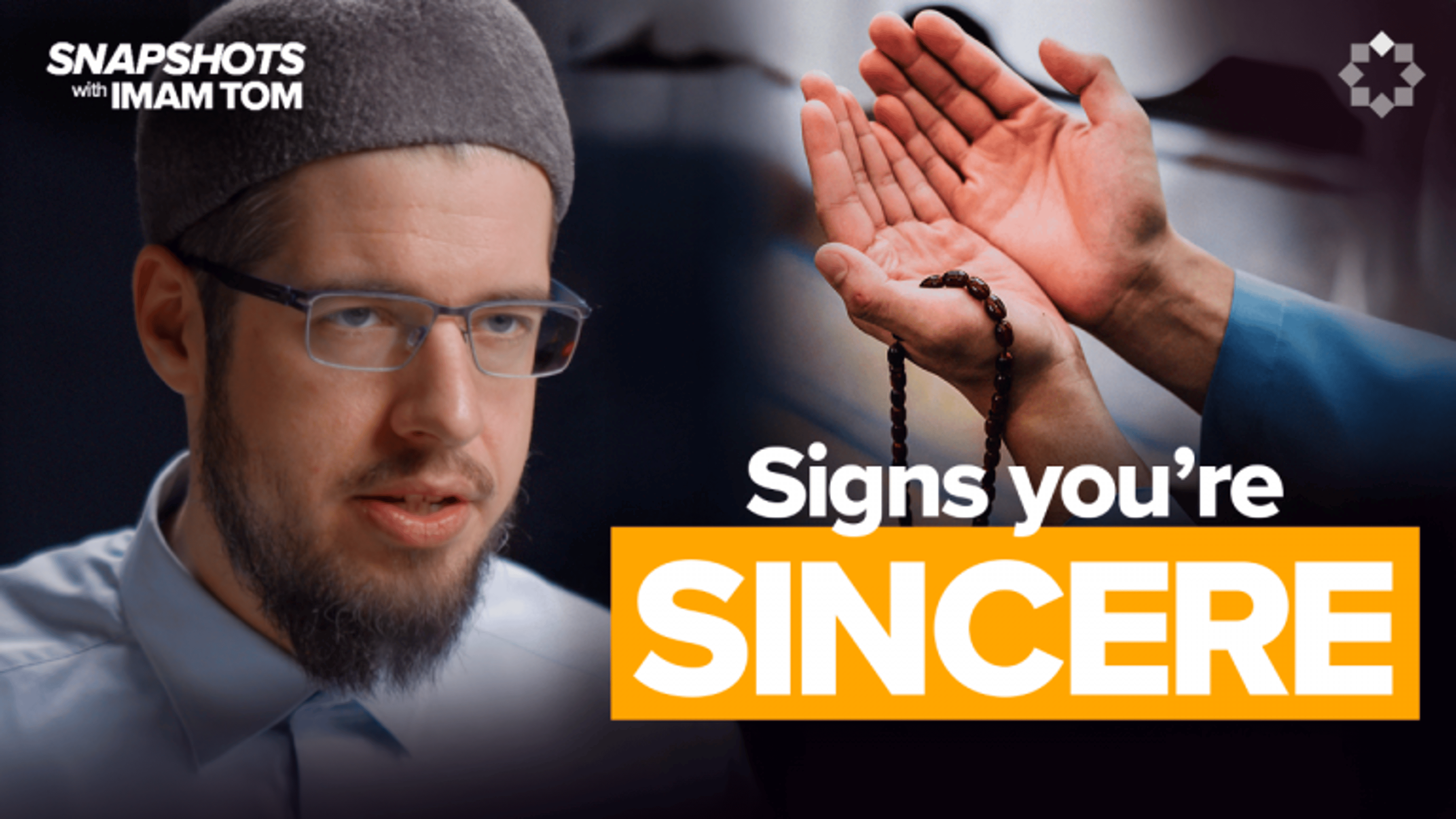
Epstein and the Double Standard of Justice | Snapshots with Imam Tom Facchine
Why does the exposure of elite corruption keep shocking the world but never seem to change anything?
In this episode, Imam Tom Facchine examines what the Epstein files reveal about the nature of power, accountability, and moral rot at the top of society.
The question this moment demands is not who is on the list. It is whether we have the moral courage to build systems where no one is above accountability, regardless of their wealth, influence, or connections.
This transcript was auto-generated using AI and may contain misspellings.
Alhamdulillah, I just want to announce that I have been marked safe from the Epstein files. I was not mentioned whatsoever. I'm sure most Muslims weren't.
We didn't see a lot of Muslims in the Epstein files, Alhamdulillah. And part of that, hopefully, is because Islam is very, very clear when it comes to corruption, the elites in power, and problems of being in this upper atmosphere.
This isn't necessarily a critique of power or wealth or influence as such. Of course, many of the Companions were wealthy, and having power is not a problem if you use it for good. The Prophet, sallallahu alayhi wa sallam, had power and used it for good.
The Khulafa' al-Rashidin after him had power and used it for good. But there are certainly particular things that you have to be aware of, traps that you can fall into very easily as somebody with a lot of power and influence and wealth.
And corruption is one of them, that we notice, that the leaders of society are the people who have a greater responsibility. When the Prophet, sallallahu alayhi wa sallam, said, كُلُّكُمْ رَاعٍ وَكُلُّكُمْ مَسْؤُولٌ عَنْ رَاعِيَتِهِ
He said, "Every single one of you is a shepherd, and every single shepherd is responsible for his flock." And then he goes vertically. He starts with the ruler. The ruler is responsible for everybody. That's a big deal. You're responsible for everybody underneath you.
And if you look at the examples of 'Umar ibn al-Khattab and the other Khulafa', they took it so seriously. There was barely time for sleep. 'Umar would be walking the streets at night, making sure everybody had enough food to eat, making sure that everything was going according to plan and that no one was being oppressed.
And if he found out that someone was being oppressed, he was afraid of being held accountable by Allah, subhanahu wa ta'ala, for it. That's a method and a model of just and righteous leadership. On the other hand, when it comes to being in that category,
the temptation is to get comfortable. The temptation is to think that you deserve this. The temptation is to look down on other people. And the temptation within society is to have two different standards, to have second-class citizenship and apply a different standard to the elite and powerful
and a different standard to the poor and the weak, which is something that the Prophet, sallallahu alayhi wa sallam, mentioned. He said that one of the things that ruined and destroyed the people that came before you was that when a rich person or a powerful person committed a crime,
they would look the other way. And if a poor or weak person committed the same crime, they would throw the book at him. They would punish him. And certainly this is actually what happened in pre-Islamic Arabia.
One of the Qurayshi chiefs, I believe it was Abu Jahl if I'm not mistaken, committed some crime and he was let go. Nothing to see here.
Whereas the Prophet, sallallahu alayhi wa sallam, said that even if it came to his own daughter, he would implement the criminal punishment, the criminal penalty on his own daughter if it came to it, because of how important it is to be consistent.
Allah, subhanahu wa ta'ala, also indicates that luxury is something that is a fitnah. And it is something that only increases your burden in front of Allah, subhanahu wa ta'ala. So in Surah al-Isra, chapter 17, verse 16, Allah says,
وَإِذَا أَرَدْنَا أَن نُّهْلِكَ قَرْيَةً أَمَرْنَا مُتْرَفِيهَا فَفَسَقُوا فِيهَا فَحَقَّ عَلَيْهَا الْقَوْلُ فَدَمَّرْنَاهَا تَدْمِيرًا
"When we intend to destroy a city, we command its affluent, its luxurious people, its elite, but they defiantly disobey. So then the word comes into effect upon it and we destroy it with complete destruction."
So the people of influence and might, the elite, have a higher responsibility or a higher degree of responsibility than the commoner. Another hadith of the Prophet, sallallahu alayhi wa sallam, is that a poor person will enter Jannah 500 years before a rich person.
Why? Simply because Allah, subhanahu wa ta'ala, said, وَلَا تُسْأَلُنَّ يَوْمَئِذٍ عَنِ النَّعِيمِ "On the Day of Judgment, you're going to be asked about what you had." And if you're wealthy, if you were an elite person, if you had a lot of power and influence,
you're going to be asked about every single part of that. Whereas if you're poor, you don't have anything. What are you going to be asked about? You don't even own anything. Nothing's in your name anyway. So with all of the revelations that are coming out about how evil the elite of society are,
and you've got trafficking of human beings, you've got all types of evil behavior that's happening at the top echelons of society. We've seen this show before. We know how this ends, and it's not good. Allah, subhanahu wa ta'ala, will destroy a nation,
and destroy a people who are engaged in these types of things, if they don't hold their elite accountable.
For more Yaqeen videos visit www.yaqeeninstitute.org