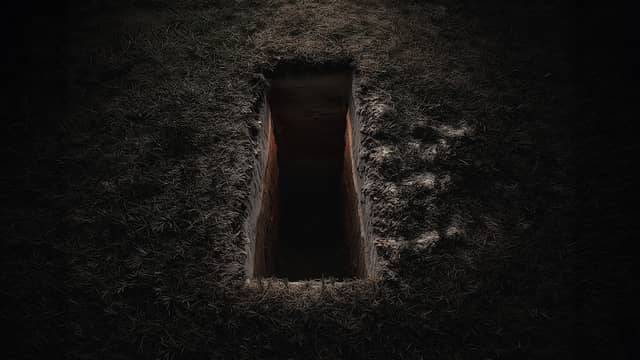
In Islam, fear is understood not as a weakness, but as a natural and divinely intended aspect of the human experience. It is a compass, guiding the believer toward moral clarity and spiritual growth. Far from diminishing the self, it motivates careful reflection, ethical action, and awareness of one’s responsibilities before God. Fear, when rightly oriented, becomes a mercy and a source of protection, helping one avoid harm and align one’s choices with divine guidance. This contrasts sharply with the modern secular worldview, which often pathologizes fear, particularly fear related to moral accountability, as something to be eliminated or suppressed.
Islam gives us the most beneficial spiritual framework to address our fears through its two primary sources—the Qur’an and the Sunnah—which offer clarity and depth on the subject, acknowledging it as a natural instinct and emotion God has placed within us to test us. Fear is meticulously detailed in over one hundred verses, including its nuanced manifestations.
20 The Qur’an and Sunnah provide us with purpose and guidance. We are given essential knowledge of this world and how to navigate it, as well as knowledge of what awaits in the Hereafter and how to prepare for it. Divine perfection comes to light in the holistic prescription Islam provides us to benefit and guide humanity, in order to strengthen our spiritual, emotional, and physical welfare, which includes how to overcome our fears of loss, suffering, and death.
God does not leave us to ourselves without providing us with the way forward in all situations, especially in regard to the means to attain His pleasure and to cure our ailing hearts. Divine mercy and love for His servants is clearly articulated in His affirmation that even those closest to Him dislike death, in order to provide us solace, spiritual fortitude, and motivation. The Messenger ﷺ informed us:
Allah said, “I will declare war against him who shows hostility to a pious worshiper of Mine. And the most beloved things with which My slave comes nearer to Me are what I have enjoined upon him; and My slave keeps on coming closer to Me through performing nawafil [praying or extra good deeds beyond what is obligatory] until I love him, so I become his sense of hearing with which he hears, and his sense of sight with which he sees, and his hand with which he grips, and his leg with which he walks; and if he asks Me, I will give him, and if he asks My protection, I will protect him; and I do not hesitate to do anything as I hesitate to take the soul of the believer, for he hates death, and I hate to disappoint him.”21
Classical Insights into Fear
Islamic scholarship has long approached fear as a complex and multidimensional phenomenon, examining both its causes and its potential for spiritual and ethical growth.
Ibn al-Qayyim (d. 1350), writing in
Ranks of the Divine Seekers, holds fear as a distinguished station on the path to God, beneficial for a living, faithful heart. He outlines its varying shades—from
khawf, the basic anticipation of harm, to
ijlal, the trembling awe of those nearest to God—showing that fear deepens as knowledge and awareness of the Divine deepen. He famously summarized this state in a paradox: The one who fears God “flees from his Lord to his Lord.” Fear becomes protection, not paralysis, a mercy that directs the seeker away from harm and toward righteousness.
22This spiritual logic anchors Ibn al-Qayyim’s broader approach to human weakness in
The Disease and the Cure, where he argues that every ailment has a God-given treatment. The Qur’an, he emphasizes, is the most complete healing, offering both clarity and certainty to an overwhelmed heart. Rather than pushing fear aside, revelation orients it: toward the One who created life, death, and the soul that will endure beyond the body.
23Writing centuries before modern psychology, Ibn Sina (d. 1037) recognized that fear often masks deeper distortions in belief or perception. Although his broader metaphysical commitments were not universally accepted by scholars of the normative Islamic sciences, Ibn Sina’s diagnosis is nevertheless worth noting. He classified anxious responses into causes, such as ignorance of what death is, uncertainty about the afterlife, dread of pain, fear of punishment, or attachment to worldly possessions and relationships. His solutions closely resemble cognitive behavioral therapy: provide accurate knowledge, correct misunderstandings, and align one’s emotional responses with truth. For example, those who fear death because they do not know what awaits them are not truly fearing death itself, but the unfamiliar. The antidote, he argues, lies in sacred knowledge that affirms the soul’s continuity and the certainty of the Hereafter.
24Classical scholars further identified the root causes behind the fear of death. Al-Ghazali (d. 1111) adds another dimension: heedlessness (
ghafla). In
Ihyaʾ ʿulum al-din, he warns that preoccupation with worldly pursuits dulls one’s awareness of mortality, causing people to recoil from death rather than benefit from reflecting on it. In contrast, the believer intentionally remembers death, not to despair but to prioritize repentance, meaning, and purpose.
25 Ibn al-Qayyim shares this concern, describing how attachment to fleeting pleasures blinds the heart to the eternal, while the Prophet ﷺ commanded believers to “remember often the destroyer of pleasures [meaning: death].”
26Other scholars, including Ahmad ibn ʿAbd al-Rahman Ibn Qudama al-Maqdisi (d. 1290), identified complementary manifestations of the same disease. In
The Remembrance of Death and the Afterlife, he highlights lengthy worldly hopes—rooted in love of
dunya or ignorance of life’s fragility—as powerful contributors to spiritual decay. These attitudes delay repentance and heighten anxiety, for when death finally confronts the heedless, fear becomes compounded by regret. Instead, Ibn Qudama urges believers to cultivate awareness of resurrection, reflect on God’s creative power, and let fear motivate sincere action rather than avoidance.
27Across these classical insights, a shared theme emerges: Fear is not the problem; misdirected fear is. The scholars describe fear of death as a spiritual signal pointing to deeper issues, such as ignorance, doubt, guilt, attachment, and heedlessness. Note the timeless correlation of these deeper issues to the reasons people fear death, cited in context to our modern secular society. The cure lies not in erasing fear, but refining it by replacing confusion with knowledge, avoidance with remembrance, despair with repentance, and worldly fixation with eternal orientation. In doing so, fear becomes a force of transformation that brings the believer closer to God and equips them to face the inevitable with clarity, hope, and trust.
Practical lessons emerge when these theoretical insights are applied to everyday life. For instance, a believer confronted with personal mortality, loss, or uncertainty can reflect on Ibn Sina’s counsel to examine the source of fear, use reason to contextualize it, and redirect it toward moral and spiritual growth. Following Al-Ghazali, they might engage in regular remembrance of death as a means to motivate gratitude and repentance. The Prophet ﷺ advised the believers to frequently remember death and also to visit the graveyard: “I had prohibited you from visiting graves, but you may visit them now. For it will produce abstinence in this world and remind you of the Hereafter.”
28 Additionally, the Prophet ﷺ informed us of the tremendous reward of attending funerals and accompanying the burials of the believers, serving as motivation and practical guidance that also bring about collective moral support.
29 Ibn Qudama reminds the believer to assess their worldly attachments and reflect on Allah’s power, and Ibn al-Qayyim provides tools to discern when fear is corrective versus destructive.
By situating fear within this classical framework, we see that fear can be transformative. It is not a sign of weakness or deficiency but a divine gift that, when rightly understood, aligns the believer’s heart with God’s guidance, encourages ethical conduct, and fosters spiritual resilience. When the Prophet ﷺ was asked, “Which of the believers is the wisest?” The Prophet ﷺ replied, “Those who remember death the most and have best prepared for it; such are the wisest.”
30Fear in Action: The Battle of the Trench
These classical insights prepare us to understand how fear functions not only in theory and reflection but also in lived experience—a reality vividly illustrated in the Qur’an and sira, especially during the Battle of the Trench.
As we have discussed, not all fear is the same. The Qur’an details numerous situations in which fear is present, and it is the believer’s response that determines whether fear is praiseworthy or blameworthy in the sight of God, whether it is a source of strength or a pathway to loss. This standing before God is the key motivator for adhering to His guidance and navigating every fear successfully. The following verse offers a clear case study, vividly capturing fear of death in the moments leading up to the Battle of the Trench in the year 5 AH:
They massed against you from above and below; your eyes rolled with fear, and your hearts reached your throats, and you entertained conflicting thoughts about Allah.31
“They” refers to the enemy forces, namely, an ill-fated alliance between the Quraysh of Mecca, the Jewish tribe of Banu Nadir (previously expelled from Medina), and neighboring Arab tribes in the Arabian Peninsula, referred to as the Confederates, or al-Ahzab. They conspired with another Jewish tribe in Medina, Banu Qurayza, to break a peace treaty with the Prophet Muhammad ﷺ and eliminate the Muslims and Islam altogether. In what was intended to be the most treacherous and genocidal encounter yet, an army roughly ten thousand strong set out to launch a surprise assault on the vastly outnumbered Muslims in Medina. The situation resulted in a hostile, month-long siege that became a test of endurance, sincerity, and truthfulness over hypocrisy and disbelief. Ultimately, a test of faith and resilience over fear and annihilation.
Hearing news of the imminent onslaught, the Prophet ﷺ instructed the Muslims to dig a trench, or
khandaq, along the most vulnerable entry point to the city, a strategy unfamiliar in Arabia at the time. For almost ten days, it was all hands on deck, with the Prophet ﷺ working in their midst around the clock, staving off hunger and fatigue. The trench, estimated to be some two kilometers long and thirteen feet wide, had to be deep and wide enough to prevent the enemy cavalry from crossing.
32 During the digging, the Prophet ﷺ prayed for his companions, “O Allah! The real life is the life of the Hereafter, so forgive the Helpers [Ansar] and the Immigrants [Muhajirun].”
33“You” in this verse is addressed to the believers, drawing our attention to their state of mind and overwhelming sense of fear. These are the best generation of believers, yet they were not reprimanded by God for feeling fearful. While the external threat alone was enough to strike terror in the hearts and minds, another threat emerged: Banu Qurayza’s betrayal inside the city. Numbering as many as eight hundred fighters, their potential attack on Muslim women and children sheltering in their homes, presumed safe from the frontlines, posed an even greater danger. Hence God’s description “They massed against you from above and below”—namely, the Confederates’ approach from above and Banu Qurayza from below.
34One companion’s testimony brings this fear into sharp focus. Hudhayfa ibn al-Yaman later detailed the intense emotions in the Muslim camp. It was during a particularly stormy night, so dark that he could not even see his own fingertips, with the cold wind escalating, that he recounts being sent by the Prophet ﷺ to the enemy camp for reconnaissance. The narration vividly illustrates fear, obedience, and reliance:
I was with the Messenger of Allah ﷺ on the night of the Battle of Ahzab and we were gripped by a violent wind and severe cold. The Messenger of Allah ﷺ said: “The man who goes and brings me the news of the enemy shall be ranked with me on the Day of Judgment by Allah.” We all kept quiet and none of us responded to him. Again, he said: “A man who brings me the news of the enemy shall be ranked with me on the Day of Judgment by Allah.” We kept quiet and none of us responded to him. He again said: “A man who brings me the news of the enemy shall be ranked with me on the Day of Judgment by Allah.” Then he said: “Get up Hudhayfa, bring me the news of the enemy.” When he called me by name, I had no alternative but to get up. He said: “Go and bring me information about the enemy and do nothing that may provoke them against me.”
When I left him, I felt warm as if I were walking in a heated bath until I reached them. I saw Abu Sufyan warming his back against a fire; I put an arrow in the middle of the bow, intending to shoot at him, when I recalled the words of the Messenger of Allah ﷺ, “Do not provoke them against me.” Had I shot at him, I would have hit him. But I returned and felt warm as if I were walking in a heated bath. Presenting myself before him, I gave him information about the enemy. When I had done so, I began to feel cold, so the Messenger of Allah ﷺ wrapped me in a blanket with which he used to cover himself while praying. So I continued to sleep until it was morning. When it was morning, he said: “Get up, O heavy sleeper.”35
This was the condition of the followers of the Prophet ﷺ, who eagerly anticipated every opportunity to earn the favor of their Lord. Those who lived by “we hear and we obey” and followed the Prophet’s ﷺ commands without hesitation now found themselves debilitated by their own fears.
36 It was in the extremes of desperation, fatigue, hunger, and fear of death that God tested them and that true faith manifested itself.
After the Prophet ﷺ prayed for Hudhayfa, his fears miraculously dissipated—an indication of divine help that accompanies trust in God and effort. Despite being shaken to the core, the sincere believers remained unwavering, while the hypocrites made excuses and deserted the Muslims. Eventually, in a miraculous turn of events, the Confederates became increasingly fearful they would not outlast the severe conditions and what appeared to be internal betrayal as their allegiances began to collapse. As a result, they retreated in defeat, crippled by fears of humiliation and death.
37Despite minimal combat and casualty, this incident underscores how overwhelming fear can be and how one’s inner orientation determines whether it paralyzes or pushes an individual toward productivity, trust, and obedience. Islam redirects one’s fears toward the best outcome—one that is driven and bound within a far greater and noble fear—the overarching fear of God’s displeasure,
taqwa.
38 Believers who positively direct their fears in this manner are blessed with the guidance, wisdom, and resilience to overcome them, even if their fears are not entirely eliminated. After the enemy retreat, the Prophet ﷺ said, “After this battle we will go to attack them and they will not come to attack us.”
39Ultimately, the believers’ steadfastness and foresight secured a victory well beyond the Battle of the Trench. Their trust in God and His promise of the Hereafter framed the entire encounter and stood in stark contrast to those who could not see beyond that moment, fixated on their pursuit of worldly gain.
When the believers saw the enemy alliance, they said, “This is what Allah and His Messenger had promised us. The promise of Allah and His Messenger has come true.” And this only increased them in faith and submission.40