In the name of Allah, the Most Merciful, the Bestower of Mercy.
The question that presents itself is whether the plight of Palestine constitutes a distinctly Islamic concern, and if so, what response the Prophet Muhammad ﷺ would have shown toward it. It is rare that a political situation of our age reveals the prophetic way as clearly as the Palestinian struggle does. Many matters of policy are morally ambiguous because they differ so greatly from the circumstances of the Prophet's time; yet in this case, the choice between seeking justice through resistance and surrendering to a far more powerful oppressor carries a plainly normative and religious dimension. For believing Muslims, on such normative questions the Prophet ﷺ is the final authority. This does not exclude non-Muslims from drawing inspiration from his model, for the values God revealed to him resonate with human nature (fiṭrah) and are accessible to all. Islam appeals to those striving for liberation precisely because it does not elevate submission to tyranny into a virtue.
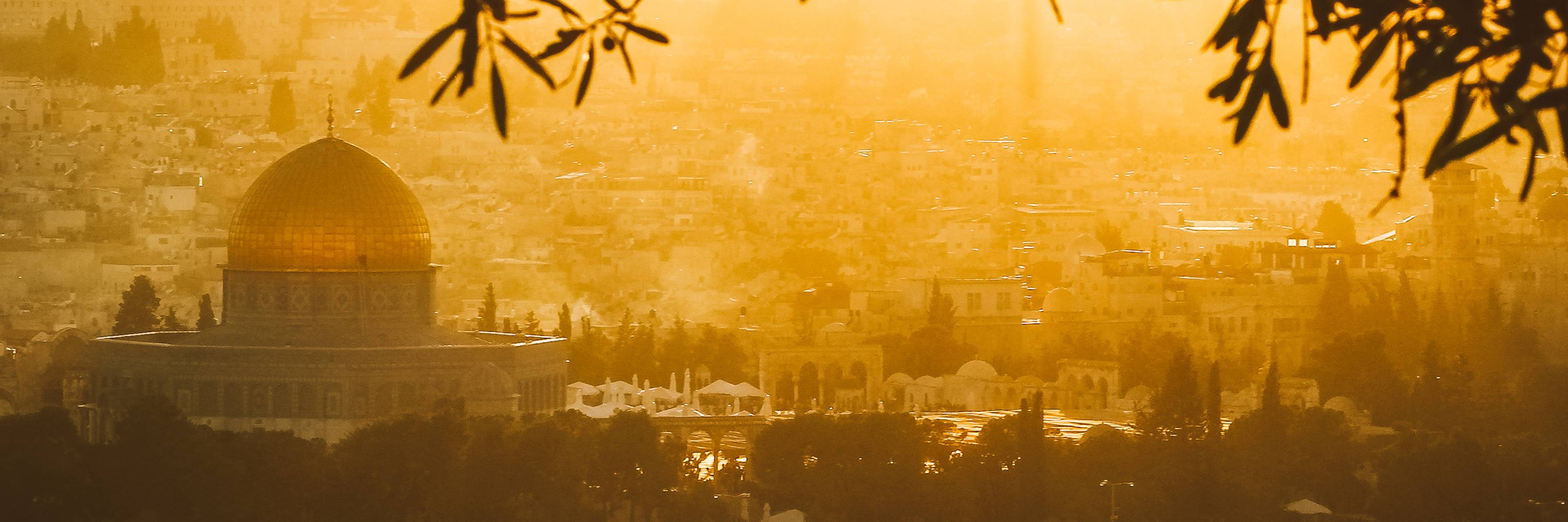
The plight of the Palestinians unfolds under a settler-colonial reality that has dispossessed them, restricted access to Masjid al-Aqsa—Islam's third holiest shrine—and subjected them to persecution and periodic violence. Yet to say Palestine is especially an Islamic issue is not to say it is exclusively so. Palestinian Christians are likewise oppressed, some of the foremost advocates for Palestinian rights are of Jewish origin, and Christian Zionism has been central to the harm inflicted. Meanwhile, the leaders of Arab-Muslim states have often betrayed their Islamic duty toward their brethren for personal and political gain. The secular and colonizing roots of the claim that only nationalist or human-rights framings are legitimate have been examined by Muneeza Rizvi, while the Palestinian American scholar Steven Salaita, who is not Muslim, has argued from a decolonial standpoint that it is indeed a Muslim issue.
The Islamic dimensions of this matter are manifold. The occupation of Masjid al-Aqsa makes it an Islamic question in principle no different from the occupation of Madinah. Beyond this, Allah declares the land surrounding al-Aqsa blessed in at least six verses of the Qur'an—an honor granted to no other land—and the Prophet ﷺ, in his prophecies of the end-times, singled out those defending Masjid al-Aqsa as among the last people who will stand firm upon the truth. These teachings are familiar to any Muslim moderately versed in the tradition.
Yet there is a deeper way in which the cause is Islamic, one often overlooked: the Palestinian struggle to protect al-Aqsa closely resembles the Prophet's own paradigmatic struggle against the Meccans, which was the occasion for much of Qur'anic revelation. This appreciation is made urgent by the misuse of prophetic teachings by the religious spokesmen of opportunistic autocrats, who invert the lesson of the sīrah and the Treaty of Ḥudaybīyah, insinuating that normalization with an apartheid regime models prophetic peacemaking—when in truth the negotiators are not the aggrieved party but rulers who have betrayed the Palestinians.
After thirteen years of persecution in Mecca, the believers migrated to Madinah, where Allah granted them the political agency to counter oppression. The reasons named in the verses permitting fighting closely resemble the drivers of the Palestinian struggle: persecution, expulsion from homes, usurpation of property, and blocked access to a sacred mosque. Allah revealed: "Permission [to fight] has been given to those who are being fought, because they were wronged... [They are] those who have been evicted from their homes without right—only because they say, 'Our Lord is Allah.'... And were it not that Allah checks people, some by means of others, there would have been demolished monasteries, churches, synagogues, and mosques" (Qur'an 22:39-40). Scholars agree that a verse's particular occasion of revelation does not restrict its general application, and this verse is emphatic in its universal character: acquiescence to tyranny leads to the destruction of all piety.
The Prophet ﷺ then chose to pressure Mecca economically by intercepting its caravans rather than through direct confrontation. When the expedition under ʿAbdullāh b. Jaḥsh attacked a caravan within the sacred month—which the Prophet ﷺ had not ordered and greatly disapproved of, refusing the spoils—Allah revealed: "They ask about the Sacred Month, about fighting in it: Say, fighting in it is an enormity, yet, blocking Allah's path and its rejection and [blocking] the Sacred Mosque, and expelling its people from it, are greater enormities with God: And persecution (fitnah) is greater than killing" (Qur'an 2:217). The reasons for retaliation were thus persecution for faith, prevention from the Sacred Mosque, and expulsion from homes—not self-defense in the ordinary sense, for the Quraysh had not yet declared war at Badr.
The prophetic mission was not merely secular peace. Its prescriptive aspect was to preach, upon which no coercion could be employed, for "There is no compulsion in dīn" (Qur'an 2:256); its preventive aspect was to remove obstacles and end tyranny through armed struggle. The Muslims were told to incline toward peace if the enemy did (Qur'an 8:61-62), yet were forbidden to seek peace out of cowardice (Qur'an 47:35). Allah further declared: "Allah does not forbid you to deal kindly and justly with anyone who has not fought you for your faith or driven you out of your homes: Allah loves the just" (Qur'an 60:8). The Prophet's love of justice is shown in his words concerning the alliance Ḥilf al-Fuḍūl: "I witnessed the Alliance of al-Muṭayyabin with my uncles as a boy, I would not like to break it for any number of red camels," and in another version, that he would ratify it even in Islam, for it pledged to prevent the oppression of any weak party.
Classical exegetes and jurists agreed that jihad was legislated in phases, with the middle phase lasting from the Hijrah until the Conquest of Mecca in 8 AH. By the time of the Truce of Ḥudaybīyah, four years after Badr, two of the original grievances had been mitigated, though access to the Sacred Mosque remained. In the treaty the Prophet ﷺ secured a ten-year truce and the right to perform ʿumrah the following year, conceding that Meccan converts be returned—a concession the Muslims found humiliating. Yet the Qur'an named it a decisive victory, for the Prophet ﷺ had forced the Meccans to recognize him as a legitimate, independent party. This recognition parallels the denial that the Palestinians are a people at all. Only after fourteen hundred Companions pledged to fight to the death—the Pledge of Divine Pleasure (Bayʿat Riḍwān), which Allah declared pleasing to Him (Qur'an 48:18)—were the Meccans brought to terms. The lesson is that oppressors do not make peace by choice; they must be compelled to the negotiation table and held to their bargain. This is the opposite of the "peace without justice" advocated today.
Economic pressure emerges as a neglected sunnah. The account of Thumāma Ibn Uthāl, chief of Banū Ḥanīfah, illustrates this: captured, treated honorably, and freed, he embraced Islam and then imposed a grain embargo on Mecca until the Prophet ﷺ interceded—whereupon the Prophet ﷺ acted with mercy the Meccans had never shown him. The Prophet ﷺ foretold: "People will one day summon one another to attack you... you will be a multitude, but you will be like scum carried by a torrent... Love of the world and dislike of death." Yet through fortitude and willingness to sacrifice, bloodshed was minimized—by one estimate, some two hundred Muslims were killed over eight years, less than one percent of Madinah's Muslims. Hence Allah declares: "Fighting has been prescribed upon you and it is hateful to you. Perhaps you hate a thing and it is good for you" (Qur'an 2:216).
Compromise born of weakness only emboldens the tyrant. To the objection that Muslims today are helpless and should follow the Meccan rather than Madinan conduct, it must be recalled that Ḥudaybīyah was itself a daring risk, and that the hypocrites of Madinah made the same excuses, "looking at [the Prophet] as if overcome by the fainting of death" (47:20). The Qur'anic principle stands timeless: victory depends not on numbers but on God's backing. In the absence of a unified ummah and leader, each part must act as it can, and none has greater right to decide the course than the Palestinians themselves. The BDS movement, inspired by the peaceful anti-apartheid struggle of South Africa, revives the prophetic policy of sustained economic pressure. To send oil for the lamps of al-Aqsa is worship, as the Prophet ﷺ advised those unable to visit it; so too is boycotting the oil of those who occupy it.
Finally, the Conquest of Mecca in 8 AH teaches mercy in victory, as the Prophet ﷺ entered with head bowed in humility, consoling his former persecutors—a sunnah followed by Ṣalāḥ al-Dīn al-Ayyūbī toward the Crusaders. Those who invoke religion to demand humiliating submission without justice must distort the entire message of the Qur'an and the Prophet's mission, for Allah and His Messenger ﷺ left no doubt that there can be no peace without justice: "And how many a small group has overcome a mighty one by Allah's leave!" (Qur'an 2:249).