fbpixel

End the year with a tax-deductible donation.

Yaqeen Institute Logo

Blog

Psychology & Mental Health

General Psychology

Mary in the Qur’an: The Power of Faith in the Face of Pain and Scorn

For all those who feel overwhelmed, scorned, or misunderstood, the story of Maryam (RA) reminds us of Allah’s mercy and that He is our ultimate Guardian. 

Authored by Yaqeen Institute

Published: December 17, 2025Jumada al-Thani 26, 1447

Updated: December 18, 2025Jumada al-Thani 27, 1447

Read time: 10 min

Mary in the Qur’an: The Power of Faith in the Face of Pain and Scorn
On this page
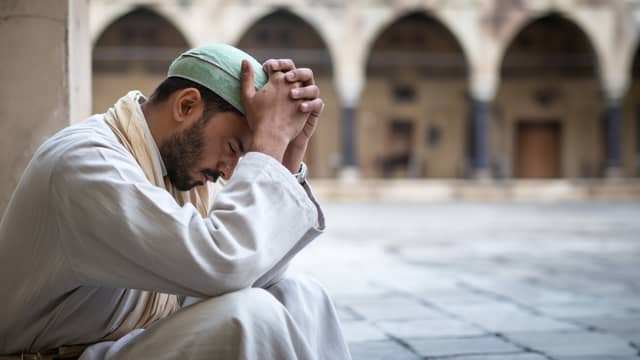
Imagine yourself alone in a barren desert, withdrawn from the world, immersed in solitude and worship. You’ve sought this seclusion to draw closer to Allah, to find peace in His presence. Suddenly, everything changes. Unmarried and chaste, you are told by an angel that you will bear a child that is destined for greatness. As the realization sets in, the weight of the future and what your community will think presses down upon you, and in a moment of anguish, you cry out,

Oh, I wish I had died before this and was a thing long forgotten!

(Qur’an 19:23)

This was Maryam, or Mary, the mother of Prophet ʿIsa (Jesus in English, as the original in Hebrew came to be after passing through Greek and Latin), peace be upon them both, in her moment of deepest grief. Preserved in Allah’s Eternal Word of guidance for humankind, her pain is palpable and her cry echoes through time as a testament to the profound struggles of those who are misunderstood, shamed, or burdened with trials that seem unbearable. Was her anguish due to the physical pain of childbirth or was it the shame and judgment she anticipated from her community? Perhaps it was both—a combination of physical and emotional hardship that would challenge the strongest of hearts. 
And yet, in this moment of vulnerability, Maryam’s story becomes a universal symbol of resilience, faith, and divine relief. This story was revealed to the blessed Prophet ﷺ at a time when he was scorned by his own family and clan. A sensitive soul, he ﷺ was accused of lying about God by the same people who sang songs of his truthfulness, integrity, and good character. This story also gave comfort and instruction to the first wave of Muslim migrants who had to flee to find refuge with Abyssinia’s just and kind Christian King, Negus. 
Our Prophet ﷺ said, “Maryam, the daughter of ʿImran, was the best among the women [of her time] and Khadija is the best amongst the women [of this nation].” On another occasion he ﷺ said, “Many men have attained perfection but no women have attained perfection except Maryam, the daughter of ʿImran, and Asiya, the wife of Firʿawn.”
The Qur’an mentions many inspiring figures—most of them are prophets and most are mentioned once or twice. To Maryam’s story, however, the Qur’an gives great attention and depth, detailing her family, birth, upbringing, and status. As well as a surah of the Qur’an being named Maryam, the third surah in the Qur’an is named “ʿImran’s Family,” after Maryam’s father, ʿImran (Joachim in Christian texts, such as the apocryphal Protevangelium of James). More remarkably, even though he was not a prophet, ʿImran and his family are praised and mentioned alongside prophets for their exceptional piety and devotion to Allah. Allah says, “Indeed, Allah chose Adam, Nuh, the family of Ibrahim, and the family of ʿImran above all people [of their time]” (Quran 3:33)—a reminder that raising righteous Muslim children starts with building a home grounded in faith, sincerity, and devotion to Allah. 

Maryam’s devotion 

The Qur’an begins with Maryam’s birth and how her mother (named Anna in the Christian tradition) dedicated her unborn child to Allah. While still pregnant, Maryam’s mother called out to Allah, “My Lord, indeed I have pledged to You what is in my womb, consecrated [for Your service], so accept this from me. Indeed, You are the Hearing, the Knowing” (Qur’an 3:35). This act of dedication shows that Maryam was chosen to serve Allah from the moment of her birth. Naming her daughter Maryam, meaning “one who worships” or “devoted servant,” also signified her mother’s hope for her daughter’s piety and dedication to Allah. Maryam’s mother sought protection for her, beseeching Allah to protect her and her offspring from Satan, the accursed (Qur’an 3:36). This earnest supplication was accepted by Allah and is now echoed amongst believers today. It is narrated that Maryam and her son ʿIsa were among the few humans protected from Satan’s touch at birth. 
Maryam was then raised by her maternal uncle, Prophet Zakariyya, upon him be peace, and lived a pious life, renowned for her purity and devotion (Qur’an 66:12, 3:37, 3:45). Prophet Zakariyya was so inspired by the young girl’s faith that he too prayed to Allah for a son, despite his and his wife’s old age, which was far beyond the usual age of childbirth (Qur’an 19:4–6). Allah answered his du’a and blessed him with a son, Yahya (John the Baptist in the Christian tradition), who would grow up to be a prophet himself and play an important role in ʿIsa’s early mission.
As she grew, Maryam exemplified the importance of practicing intentional solitude and seeking moments of quiet reflection and worship—a practice often overlooked in today’s fast-paced world. The Qur’an describes how she withdrew from her people to a remote place, seeking peace and connection with her Creator. These moments of seclusion not only prepared her for the immense challenges ahead but also deepened her trust in her Lord. Her practice teaches us the value of stepping away from the chaos of daily life to find clarity, strengthen our faith, and prioritize our mental and emotional well-being.

More like this

When Scrolling Breeds Despair: A Prophetic Cure to Comparison Culture

When Scrolling Breeds Despair: A Prophetic Cure to Comparison Culture

Between Pharaoh’s Riviera and the Divine Promise: Gaza as a Metaphor for the Muslim Soul in Ramadan | Blog

Between Pharaoh’s Riviera and the Divine Promise: Gaza as a Metaphor for the Muslim Soul in Ramadan | Blog

What Are We Worth? Redefining Muslim Value with Dignity and Honor | Blog

What Are We Worth? Redefining Muslim Value with Dignity and Honor | Blog

Allah’s mercy in the midst of despair

Maryam’s devotion and purity was further exemplified when Allah commanded her to give birth to ʿIsa, upon him be peace, without any human intervention. Notwithstanding her great status, Maryam’s cry, “Oh, I wish I had died before this and was a thing long forgotten!” (Qur’an 19:23) is a sincere reflection of her vulnerable humanity. Despite being chosen by Allah and described as one of the best women to ever live, she faced the very real pain of being misunderstood. For a woman of her piety, the thought of returning to her people with a child must have been excruciating. Her chastity was her honor, and she knew the accusations that awaited her. Moreover, the thought of losing control of her body and enduring such physical pain alone and so unexpectedly would have been terrifying. In this respect, her example touches those of us who may have felt the sting of unwarranted judgment or shame, scorn, or pain for circumstances beyond our control. Maryam’s story reminds us that even the most righteous among us are not immune to being falsely accused or tested with great pain, and her response teaches us how to navigate such moments with faith.
At the height of her despair, Allah’s mercy enveloped Maryam,

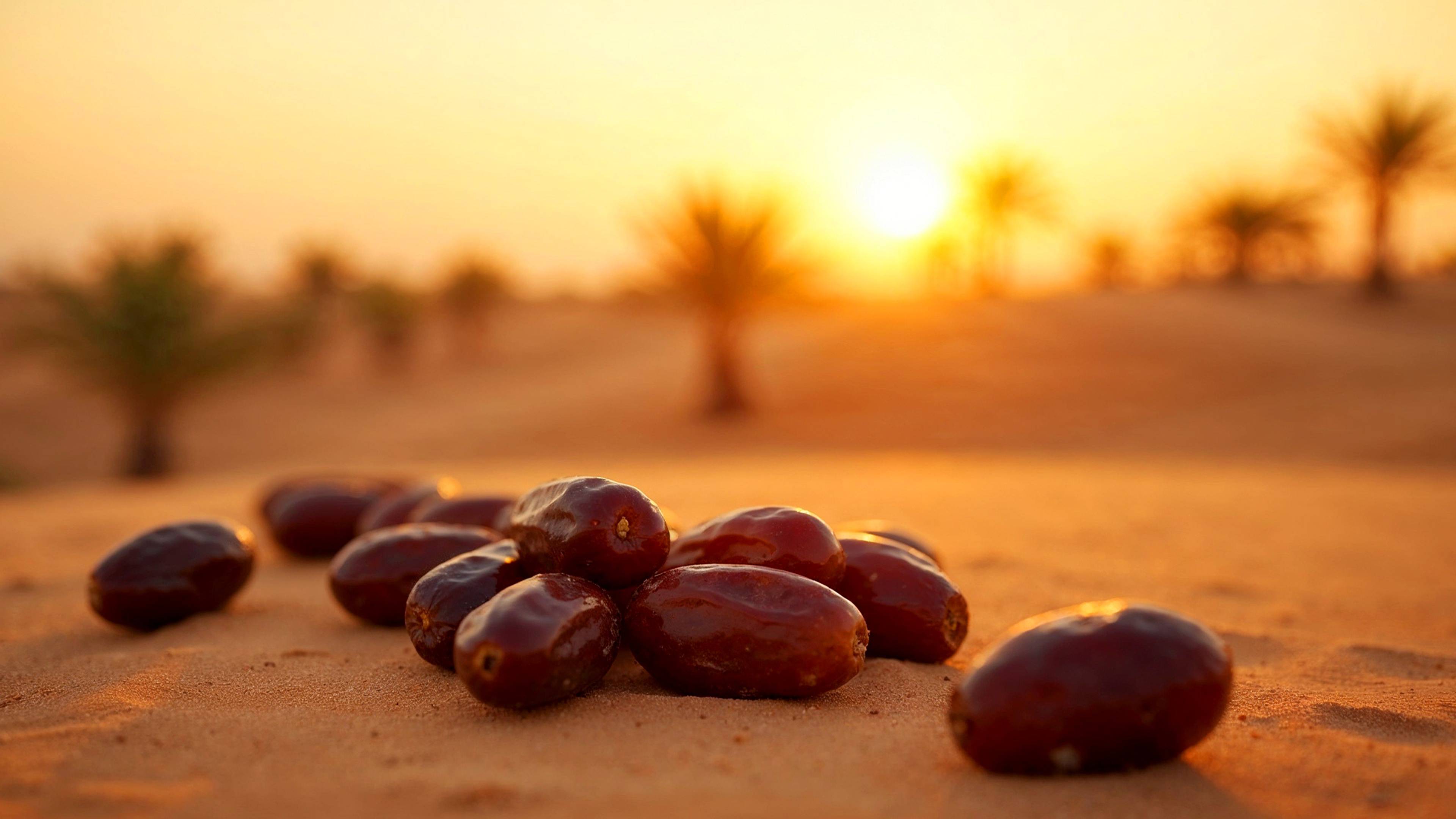
So a voice reassured her from below her, “Do not grieve! Your Lord has provided a stream at your feet. And shake the trunk of the palm tree toward you; it will drop fresh, ripe dates upon you. So eat and drink and be comforted.”

Qur’an 19:24–26

In this powerful moment, Allah responded to Maryam’s cry with care. He provided her with water and dates—symbols of sustenance and comfort. The physical act of shaking the palm tree, though seemingly impossible for a woman in the pains of labor, is a profound reminder that even in our weakest moments, we are called to make an effort, trusting that Allah will provide ease and blessings through means we often cannot imagine. 
For anyone who has felt abandoned or overwhelmed in their trials, this moment in Maryam’s story offers reassurance. When we call out to Allah, His help is near and His mercy unaffected by the magnitude of our pain or the judgments of others.
As anticipated, when Maryam returned to her people carrying baby ʿIsa, upon him be peace, they reacted with shock and indignation,

They exclaimed, “O Mary! You have certainly done an outrageous thing! O sister of Aaron, your father was not an indecent man, nor was your mother unchaste.”

(Qur’an 19:27–28)

Rather than defending herself against such heinous accusations, as all humans naturally incline to when they are unjustly accused and humiliated, Maryam obeyed Allah’s command to remain silent (Qur’an 19:26), relying on His divine plan. She pointed to the infant, and ʿIsa, upon him be peace, miraculously spoke in her defense,

I am truly a servant of Allah. He has destined me to be given the Scripture and to be a prophet. He has made me a blessing wherever I go and bid me to establish prayer and give alms as long as I live.

(Qur’an 19:30–31)

In this extraordinary moment, Allah vindicated Maryam, silencing her accusers, preserving her honor, and elevating her status as the mother of a prophet. Her silence and trust in Allah teach us the power of relying on Him throughout our greatest hardships, and, perhaps most profoundly, when words fail us. The wisdom in Allah’s command is a reminder that Allah is the greatest and ultimate defender of the innocent and oppressed.

Resilience and trust in Allah

Maryam’s story is one of resilience. Despite her anguish, she never wavered in her trust in Allah. She bore the weight of her trials with dignity, patience, and perseverance. Her life is a testament to the reality that divine favor does not exempt one from hardship. Through hardship, Allah gives us deeper trust and greater strength.
For women, Maryam’s story is especially poignant. Her role as a mother, her faithful conviction, and her endurance in the face of pain and societal scorn highlight the spiritual and emotional strength of believing women. For men, her story serves as a reminder that true resilience and piety transcend gender and are qualities to be admired and emulated by all.
Maryam’s life offers a profound message for anyone who feels burdened by their trials:  
        1.  Pain is part of the journey: Maryam’s moment of deepest despair at the palm tree reminds us that even the most pious can feel overwhelmed. Pain and trials are not signs of Allah’s abandonment but opportunities for closeness to Him.
        2.  Allah’s help is near: Just as Allah provided Maryam with sustenance in her moment of need, He is always near to those who call upon Him with sincerity.
        3.  Allah’s plan is better for us: Maryam’s silence before her accusers and her reliance on Allah show us that true strength lies in trusting His wisdom, even when we cannot see the outcome.
        4.  Every test has a purpose: Maryam’s trials were part of a divine plan that elevated her and brought light to the world through her son, ʿIsa (peace be upon him). Our struggles, too, have a purpose, even if we do not understand them.
Maryam’s story culminates in one profound truth: Allah tests those He loves but never forgets them. Maryam’s journey—from her cry of despair to the miraculous vindication of her honor—is a testament to divine care and mercy. For all who feel overwhelmed, scared, scorned, or misunderstood, her story offers hope and reassurance. Allah’s mercy is ever-present and He is our ultimate Guardian. 

And whoever relies upon Allah—then He is sufficient for him. Indeed, Allah will accomplish His purpose.

(Qur’an 65:3)

For all who walk the path of trials, Maryam’s story is a guiding light, showing us that when the world turns away, Allah remains near and His help is always on the horizon.

References

1.
Ṣaḥīḥ al-Bukhārī, no. 3432.
2.
Ṣaḥīḥ al-Bukhārī, no. 3411.
3.
Robert C. Gregg, Shared Stories, Rival Tellings: Early Encounters of Jews, Christians, and Muslims (Oxford University Press, 2015), 481–482, 556; Morteza Rezazadeh, “Mary in Early Christianity and Islam,” Religious Inquiries 6, no. 11 (2017), 43.
4.
Gregg, Shared Stories, Rival Tellings, 481–482, 556; Rezazadeh, “Mary in Early Christianity and Islam,” 43.
5.
In Tafsīr al-baḥr al-muḥīṭ by Abū Ḥayyān al-Gharnāṭī regarding the mentioned verse [Qur’an 3:36]: “Maryam in their language [i.e., Aramaic] means ‘the worshiper.’ With this name, she wanted to be optimistic for her, [for her to have] closeness to Allah the Almighty, to implore Him that her actions be in accordance with her name, and that [Maryam’s mother’s] hopes for [Maryam] come true. Do you not see that [Maryam’s mother] seeks Allah’s refuge [for Maryam] and for her children from Satan? She addressed Allah with these words to arrange for [Maryam herself] to seek refuge in Him.”
6.
Ṣaḥīḥ al-Bukhārī, no. 3431.

Disclaimer: The views, opinions, findings, and conclusions expressed in these papers and articles are strictly those of the authors. Furthermore, Yaqeen does not endorse any of the personal views of the authors on any platform. Our team is diverse on all fronts, allowing for constant, enriching dialogue that helps us produce high-quality research.

Want to appear on Yaqeen?