
Understanding the Uṣūl: The Foundation of Islamic Sciences
The bases of the Islamic sciences, the usul, serve not only as a source of academic regulation for scholars, but also as a gateway for the everyday Muslim to understand the fabric of Islamic thought.


Dr. Mohamed AbuTaleb, Dr. Omar Husain
Published: December 25, 2020 • Jumada al-Awwal 10, 1442
Updated: July 22, 2024 • Muharram 16, 1446
35 mins • Methodology (usul)

Introduction
More Like This





What are the uṣūl?
Were the uṣūl practiced at the time of the Prophet ﷺ?
Nor does he speak from [his own] inclination. It is not but a revelation revealed.[4]
The foundations of the Islamic religion
Ijtihād, reasoning, and evidence
Towards a classification of the Islamic disciplines of knowledge: How the uṣūl fit in with other Islamic sciences
“If you see someone doing an action upon which there is disagreement, and you have a different opinion than them, do not prevent them from what they are doing.”[9]
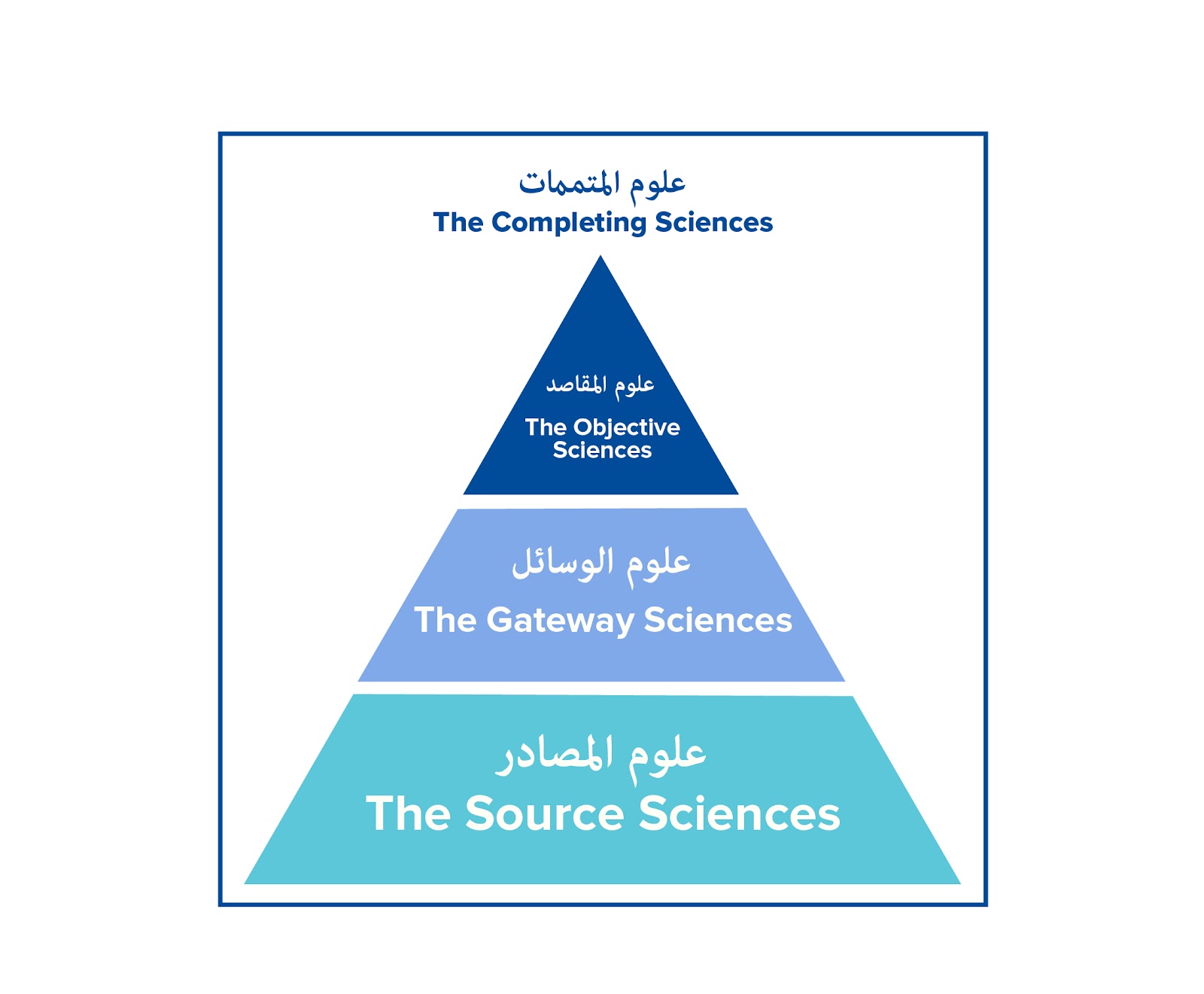
“The more fundamental and more needed by humanity a particular knowledge is, the more evident its proofs are—as a mercy from Allah to His creation.”[10]
The primary sources
Part 1: The Qur’an
Say, 'Allah is One
(Qur'an 112:1)
The Messenger has believed in what has been revealed to him from his Lord, and the believers as well. All have believed in Allah and His angels and His Books and His Messengers.
(Qur'an 2:285)
Your Lord has decreed that you worship none but Him, and be the best to your parents.
(Qur'an 17:23)
Part 2: The Sunnah
Say, ‘Obey Allah and the Messenger.’
(Qur'an 24:54)
- The Sunnah emphasizes a Qur’anic demand. For example, Allah mentions prayer and ḥajj in the Qur’an. The Sunnah, in turn, emphasizes their rewards and importance.
- The Sunnah explains a Qur’anic concept. For example, how do we pray? The Qur’an commands us to pray, but does not mention all of the rituals, conditions, or integrals of the prayer. Similarly, the Qur’an commands us to fast. But what exactly does it mean to fast? What breaks the fast, what does not break the fast? We must turn to the Sunnah for many of these details. The same reasoning applies to zakāh and hajj.
- The Sunnah contains commands that are not mentioned in the Qur’an. An example of this is the prohibition of men wearing gold and silk.[14] This prohibition is not mentioned in the Qur’an; however, the Prophet ﷺ expressly forbade this in his Sunnah.
The secondary sources
Part 3: Ijmāʿ
Whoever breaks away from the Messenger after the right path has become clear to him, and follows what is not the way of the believers, We shall let him have what he chose, and We shall admit him to the hellfire, which is an evil place to return.
(Qur'an 4:115)
Part 4: Al-qiyās
- The Fundamental Issue (aṣl): One must first identify the fundamental issue. The example we will use is wine or alcohol.
- The Secondary Issue (farʿ): Next, we identify a secondary issue that is not directly addressed in the Qur’an and Sunnah, but we need to determine its ruling. This secondary issue is known as the farʿ, which literally means branch. In our example, let us attempt to determine the ruling on heroin or cocaine, which is now our secondary issue.
- The Ruling on the Fundamental Issue: In order to determine the ruling on heroin or cocaine, we need to establish the ruling on the fundamental issue. When it comes to wine or alcohol, the ruling is that it is ḥarām or forbidden based on a clear Qur’anic commandment.
- The Effective Cause (ʿillah): Finally, the fourth prerequisite requires us to determine the effective cause, or the ʿillah, between our fundamental issue and the secondary issue. We can establish that both heroin and wine are detrimental to our state of mind. The reasoning behind prohibiting wine is because of its intoxicating effects. Thus, based on the original ruling that wine is ḥarām because of the ʿillah of intoxication, scholars rule that heroin and other mind-altering drugs are also ḥarām because of their intoxicating effects.
Part 5: What about differences of opinion?
O you who have believed, when you rise to [perform] prayer, wash your faces and your forearms to the elbows and wipe over your heads and wash your feet to the ankles.
(Qur'an 5:6)
It is important, of course, to remember that our yardstick in addressing benefit or harm is not the yardstick handed to us by secular humanism, hedonistic materialism, or western liberalism. Rather, benefit and harm must be assessed according to the hierarchical value structure inherent in Islam, which situates human beings on a spiritual journey towards God as custodians upon His earth.
Notes

Dr. Mohamed AbuTaleb
VP of Research and Content Strategy

Dr. Omar Husain
Senior Fellow
Disclaimer: The views, opinions, findings, and conclusions expressed in these papers and articles are strictly those of the authors. Furthermore, Yaqeen does not endorse any of the personal views of the authors on any platform. Our team is diverse on all fronts, allowing for constant, enriching dialogue that helps us produce high-quality research.
Want to appear on Yaqeen?
Cite this paper
AbuTaleb, M., & Husain, O. (2020). Understanding the Uṣūl: The Foundation of Islamic Sciences. Yaqeen Institute for Islamic Research.
Feedback
We'd love to hear your thoughts on this unit!
Sharia

Related
