
Gauze, Prayers, and Healing Wounds: Finding Strength from Grief for Gaza
This piece is part of a storytelling collaboration between Yaqeen Institute and Muslim Youth Musings (MYM), written by an MYM author.
Authored by Shazia Khan
Published: February 6, 2026 •Shaban 18, 1447
Updated: September 30, 2026 •Rabi al-Thani 19, 1448
Read time: 6 min
“Bismillah,” I whisper as I push the needle into my patientʼs tiny arm. A piercing cry escapes, and I murmur apologies in a soothing voice. When the blood is drawn, I press a piece of gauze against the small puncture wound.
Gauze. Something we waste. Something that is a luxury for many. Images of children lying bloodied on hospital floors an ocean away flood my mind. Open wounds and empty hands, while my patient’s wounds are closed, and my hands are full.
I stroke the arm gently and whisper endearments, all while feeling the weight of helplessness settle on my shoulders. I place a bandage over the wound and hand out a Spider-Man sticker. Even the sight of superheroes leaves a bitter taste in my mouth.
I throw away the soiled gauze with a crimson stain, glancing at the endless supply available for the patients.
Gauze. A fabric born in a land now under occupation.
I think of the cruel irony of how the very people who created it are now deprived of it.
What can I do other than pray?
“Ya Razzaq, You provide in ways we cannot even imagine. Send the Palestinians gauze and all the medical equipment they need to help the wounded. Ameen.”
“Bismillah,” I whisper while placing the premature baby on her belly. I marvel at the miracles of Allah. How this preterm baby, weighing less than one kilogram, lies covered in tubes and wires, yet gains weight and strength each day. Her tiny hand grips my finger right before she stops breathing. I rub her chest to stimulate her and increase the oxygen. I watch her chest rise and fall again, placing her back on her belly, where she is most comfortable.
Comfort. Something that babies across the ocean are not given. An image of an abandoned premature baby in a destroyed hospital flashes through my mind and pierces my heart. I tuck a blanket around the baby in the incubator and close the small windows.
How are the babies in Gaza sleeping tonight? Are they cold?
Do they have enough oxygen?
Are there any nurses left to help them breathe again?
What can I do other than pray?
“Ya Shafi, shower your ease upon the babies of Gaza and bless them with Your protection. Give them comfort and warmth, and shield them from harm. Ameen.”
“Bismillah,” I say as I pour baby formula into the bottle. The baby in the crib cries from hunger, having woken up just five minutes earlier after a morning full of medical procedures. I fill the bottle to the top and take him into my arms. Heʼs still learning how to coordinate his breathing while feeding. He chokes a few times, then finds his rhythm between the burping and pauses. When he finishes the bottle, he continues to search for more milk.
“Good job! What a champ,” I say softly. “Do you want a little more milk?”
As I prepare a second bottle, images of starving babies with exposed ribcages seize me. I glance at the hospital cupboard filled with baby formula and then remember all the formula lying at the bottom of the ocean, never reaching the babies of Gaza.
What can I do other than pray?
“Ya Razzaq, ya Rahim, ya Karim, provide nourishment for the starving babies and people of Gaza. Bless them with Your mercy and protection. Ameen.”
A doctor asks to borrow my stethoscope, the one that has hung around my neck for eleven years. I notice all the scuff marks worn into it. How many heartbeats have I listened to with it? How many heart murmurs have I heard with it? I reflect on the four times my stethoscope rested on a babyʼs chest only to hear silence. The pink stethoscope looks childlike resting on the shoulders of a doctor and seeing it in another medical professional’s hands gives me pause.
What are we doing?
How is the world still moving?
How are we all not crying in outrage?
Do I even deserve the honor of using that stethoscope?
Guilt’s icy grip holds me by the throat. Why am I safe at work while my fellow nurses in Gaza are being targeted and tortured? How can I freely move around, easily providing care to every child in my hospital while my colleagues in Gaza perform amputations without anesthesia?
Guilt. It pulls me into its darkness until I’m completely engulfed. How is it fair that I remember the names of each child I have placed in a shroud, but my fellow nurses in Palestine place nameless children without surviving families in shrouds by the dozens.
What can I do other than pray?
“Ya Ghafur, forgive me for not being able to do more for our brothers and sisters in Gaza. Forgive me and this ummah for not doing more. Guide us to help in any small way we can, Ya Rabbi, ameen.”
“Bismillah,” I say as I place a baby on a scale. I blink back tears, remembering the images of our children in Gaza buried under the rubble. When I look up, I see a new colleague moving quickly among us. I pause, feeling a light spread in my chest. She adjusts her hijab, and I notice a watermelon-patterned lanyard with a map of Palestine pinned on it. Our eyes meet, and in a brief moment, we recognize the pain we both carry. A few days later, she hands me a watermelon lanyard as a gift, and I understand the assignment. A moment of solidarity was enough to cause a ripple.
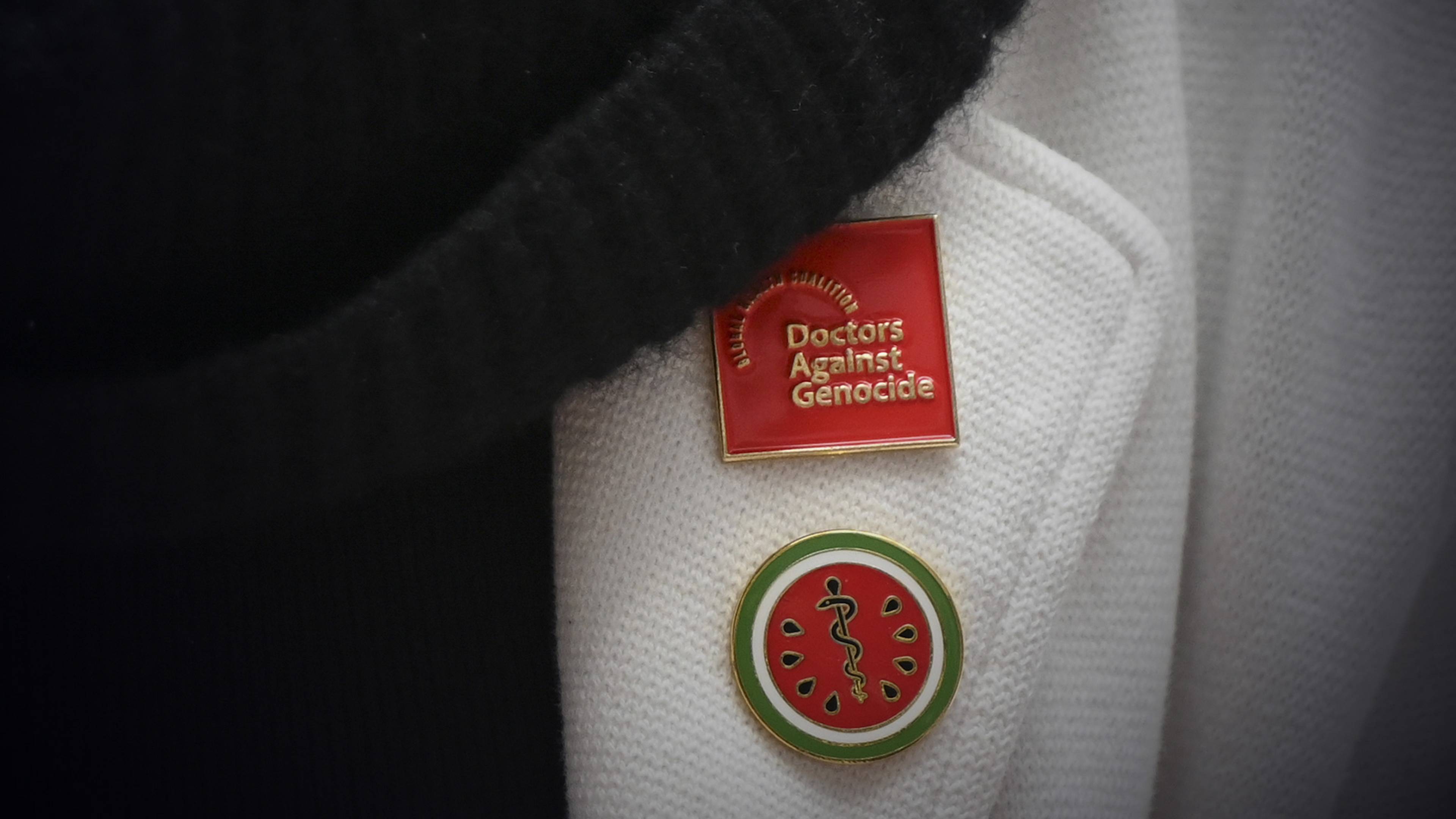
I walk into the hospital displaying a pin on my watermelon lanyard. It brings me some comfort knowing that the flag of Palestine sits on my chest, for all to see, and near my heart as it breaks every day. I feel the searing gazes burn into me as I walk by, dressed in the colors that bleed through the ummah. I take in the scowls, the looks of disgust, carrying them with a calmness, while taking in all the silence and the subtle nods of solidarity.
I clutch the Palestine pin and keep walking forward. It feels like a piece of gauze covering my wound from seeing a part of my ummah in pain.
I wear the pin and never lower my gaze. Let it make people uncomfortable.
Let the guilt seep into their hearts.
Let it be a reminder that we will never forget.
“Bismillah,” I whisper as I step into my workspace, carrying in my heart the names of the children who needed a nurseʼs healing hands but never got the chance. I straighten the pin on my lanyard, remembering the names of the persecuted doctors and nurses who refused to leave their patients behind. I listen to the overhead announcement in our hospital and think of the hospitals in Gaza that have been destroyed. I carry this ache in my chest yet put on a smile to greet my first patient of the day. A part of my ummah is in pain, and so I will carry and feel this pain with them.
I remove my lanyard to pray Dhuhr, and when I rise to make space for the next person, I notice her staring at my Palestine pin. She gently moves her stethoscope aside and shows me a pendant of Al-Aqsa Mosque resting on her chest. Later that day, I take my keffiyeh from my locker and drape it over the back of my chair. I realize that every prayer opens a door to solidarity. Every sujud allows me to lay down my guilt and the heaviness on my shoulders. Every dhikr on my lips gives me the strength to not fear those in power. Every turn of the Qur’an’s pages reminds me that Allah’s mercy is vast and that where I see destruction and loss, the martyrs see beauty and freedom.
Hasbun Allahu wa niʿmal wakil.





Guest Contributor
Shazia Khan is a Kashmiri Canadian writer with a background in Psychology and Nursing. She is a pediatric nurse and a dedicated reader and storyteller. Shazia is also a writer and editor for Muslim Youth Musings. She shares more of her writing on her independent blog on Substack.
Disclaimer: The views, opinions, findings, and conclusions expressed in these papers and articles are strictly those of the authors. Furthermore, Yaqeen does not endorse any of the personal views of the authors on any platform. Our team is diverse on all fronts, allowing for constant, enriching dialogue that helps us produce high-quality research.
Want to appear on Yaqeen?