fbpixel

Introduction

How to use Yaqeen Curriculum
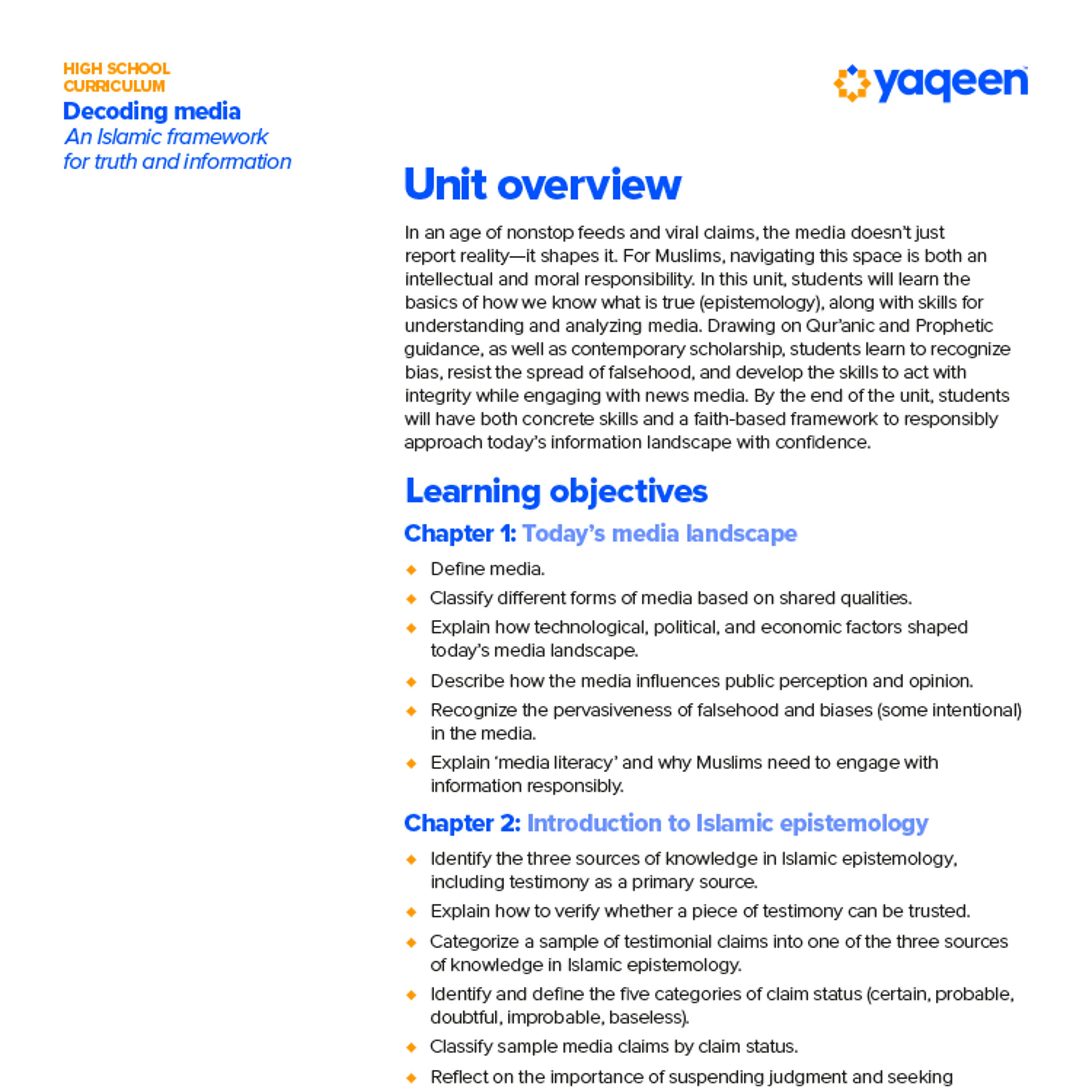
Unit overview and learning objectives
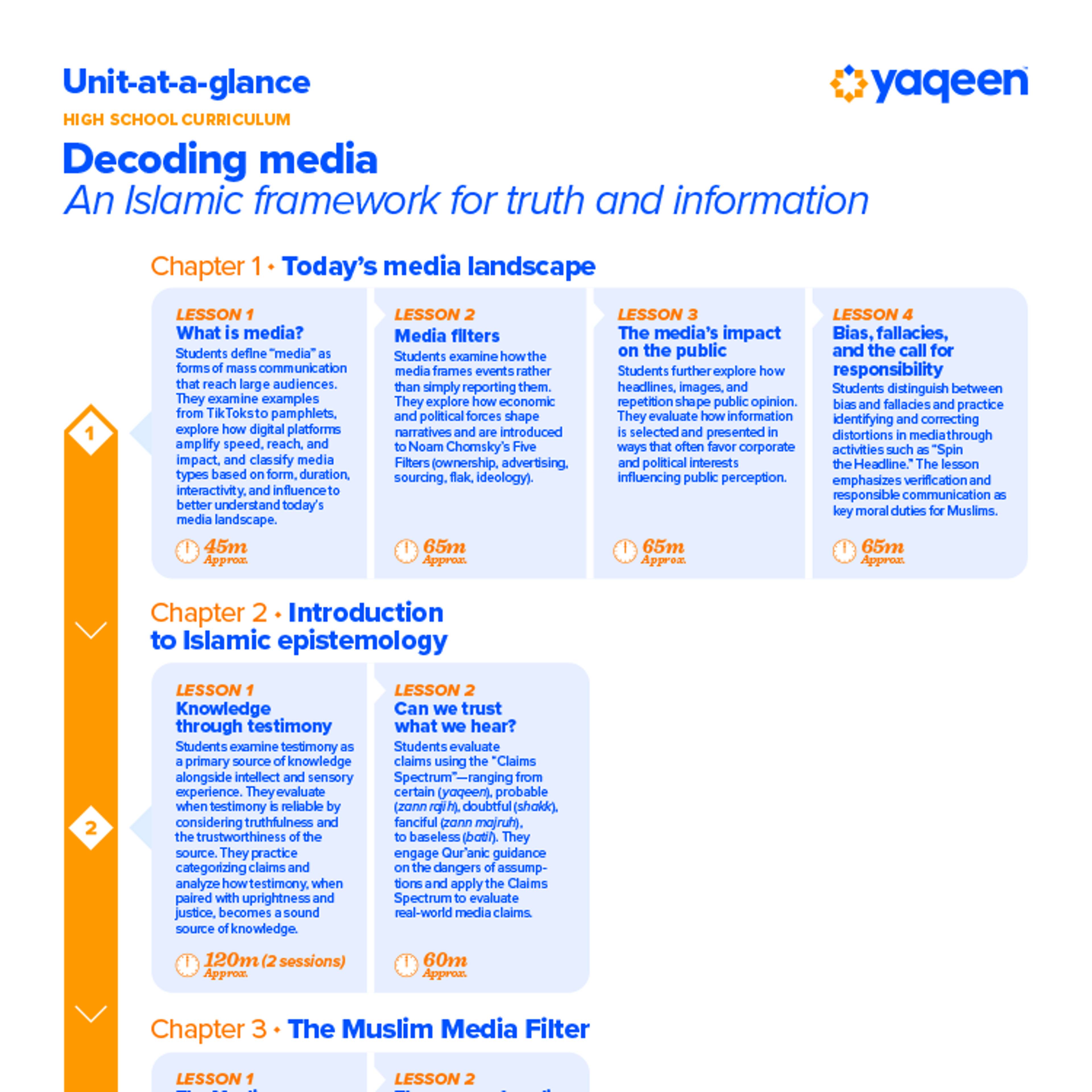
Unit at a glance
Unit at a glance
Chapter 1

Today’s media landscape

The opening chapter introduces students to the contemporary media ecosystem that shapes beliefs and behaviors. They trace the history of media, learn how political and technological forces shape narratives, and explore the prevalence of misinformation online. Alongside this, they reflect on their own media habits and recognize the Islamic imperative to verify claims and communicate truthfully.

Students begin by defining “media” as any channel of mass communication that influences people widely. They explore examples past and present, from TikToks and podcasts to town criers and pamphlets, and notice how today’s digital environment has scaled speed, reach, and influence. Through classification activities and a guided case study, they learn to distinguish between media types by qualities such as form, duration, interactivity, and impact to understand the nature of our current news media landscape.

Lesson plan

Lesson plan

Slides

Slides

Worksheets

Student companion

Student companion

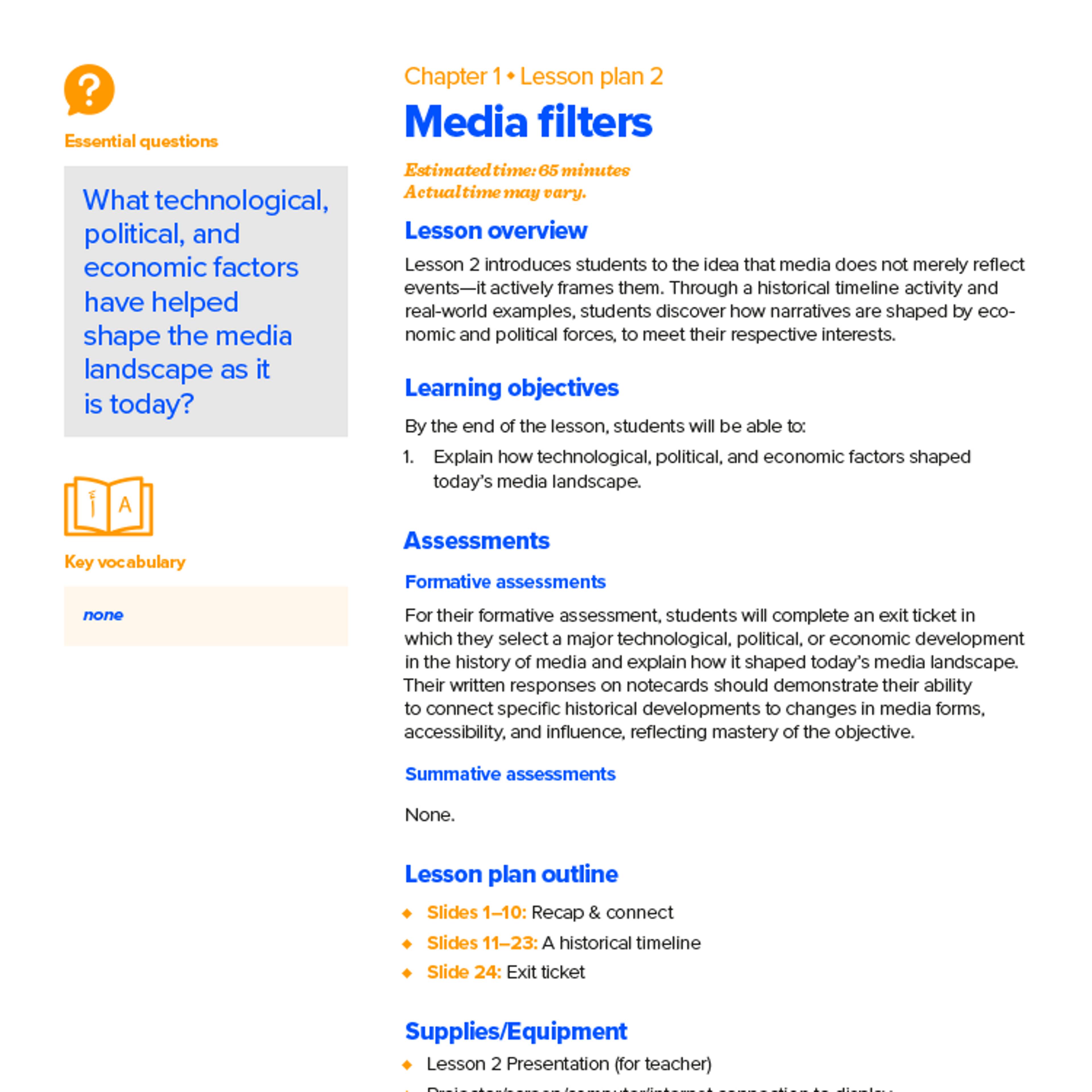
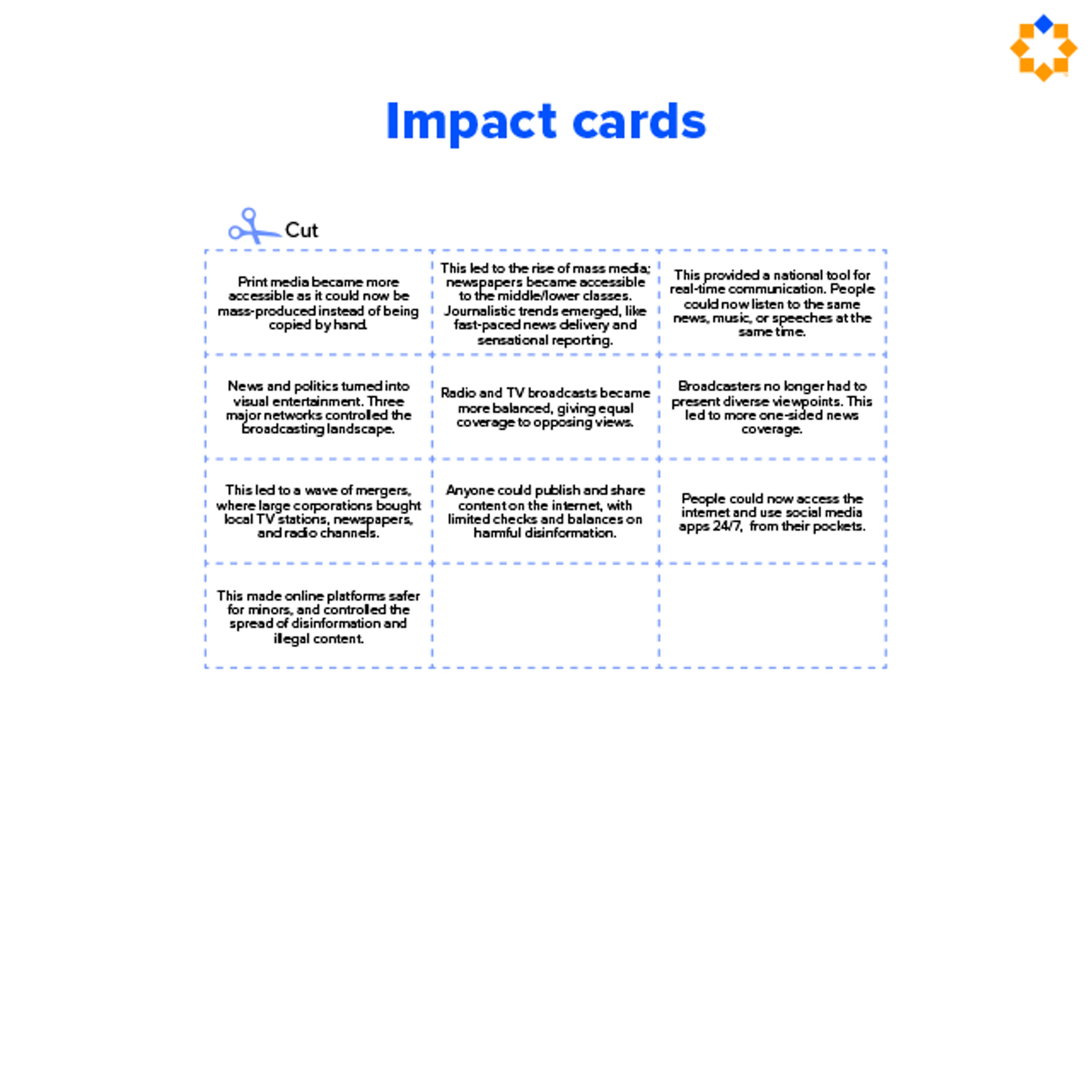
Lesson 2 introduces students to the idea that media does not merely reflect events—it actively frames them. Through a historical timeline activity and real-world examples, students discover how narratives are shaped by economic and political forces, to meet their respective interests.

Lesson plan

Lesson plan

Slides

Slides

Worksheets

Student companion

Student companion

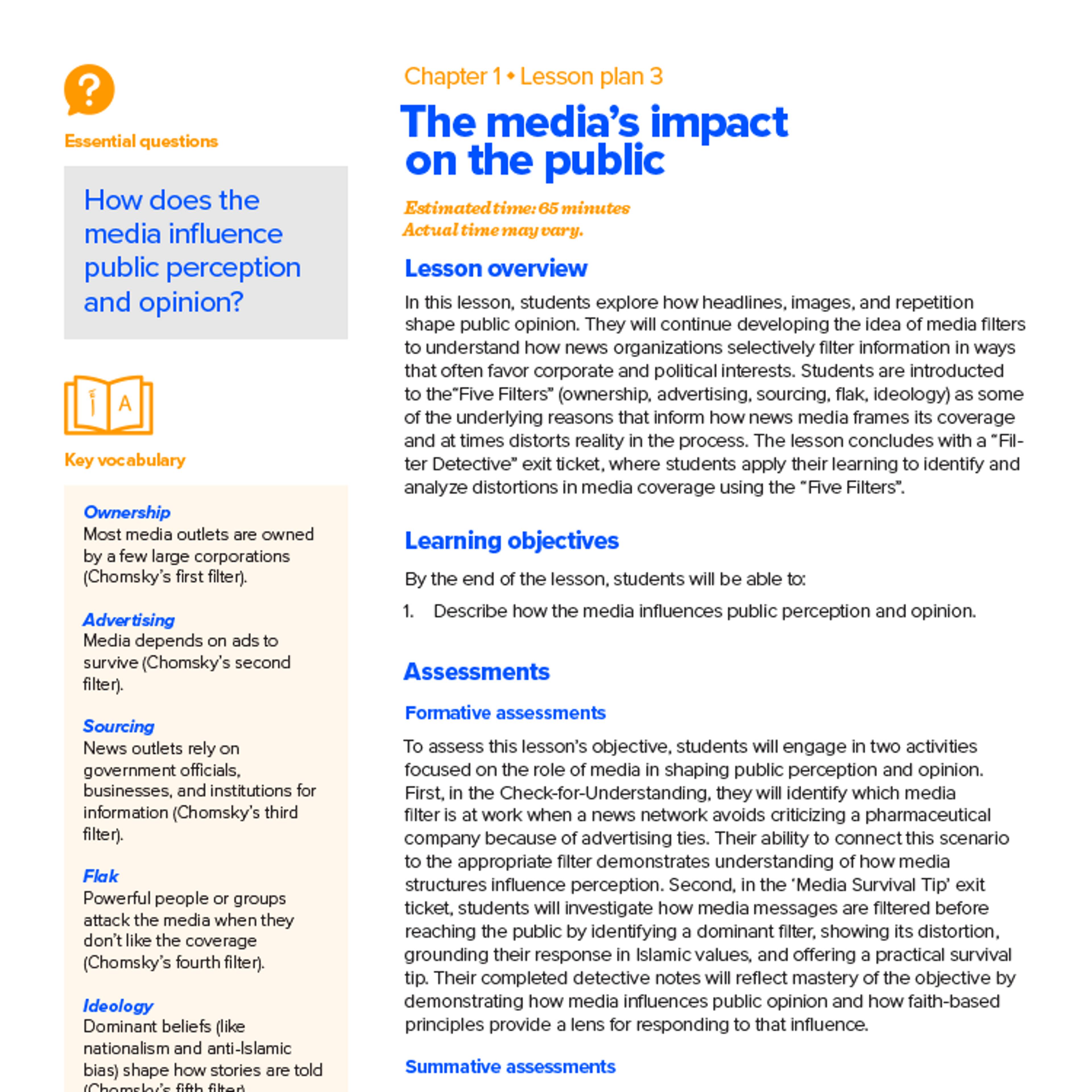
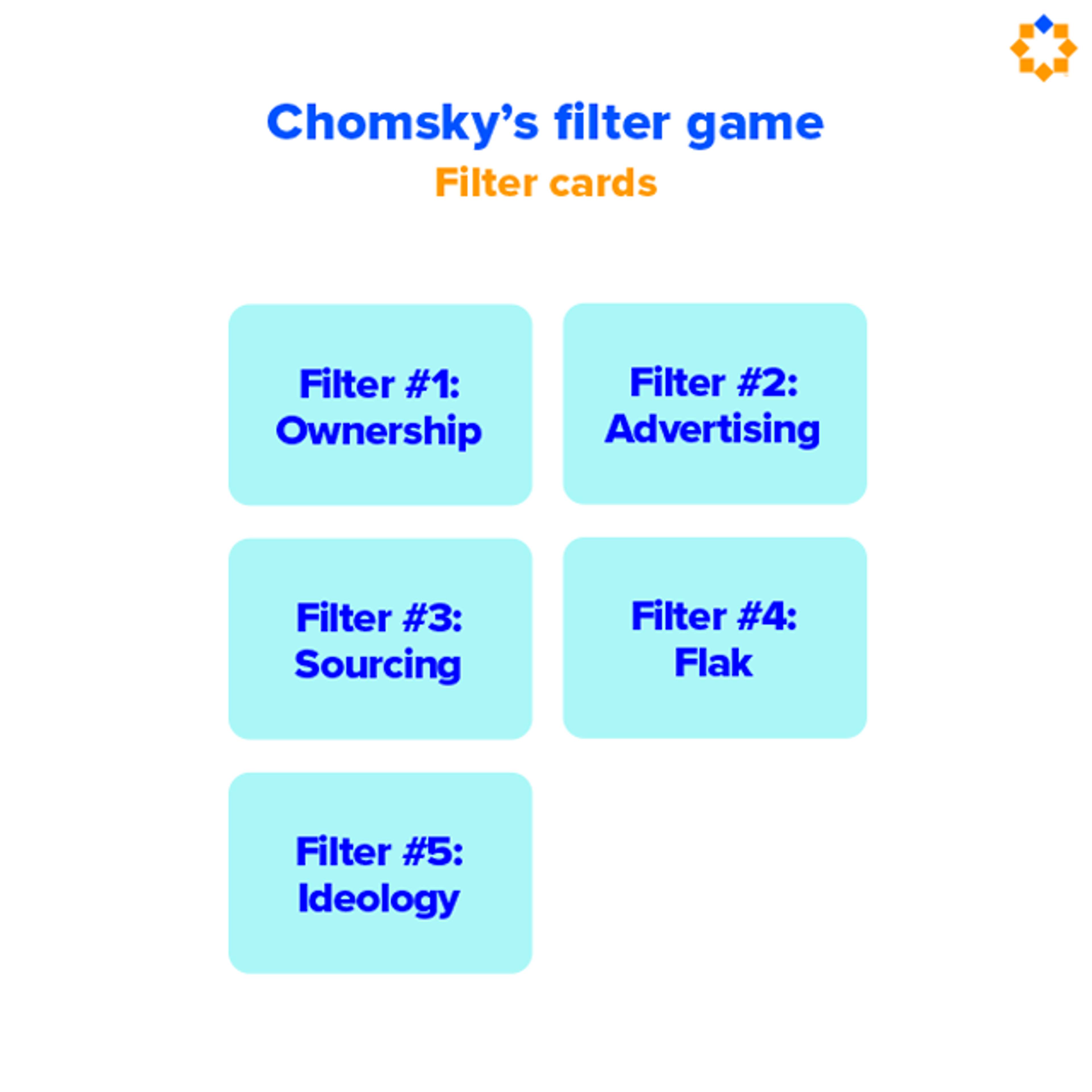
In this lesson, students explore how headlines, images, and repetition shape public opinion. They will continue developing the idea of media filters to understand how news organizations selectively filter information in ways that often favor corporate and political interests. Students are introduced to the“Five Filters” (ownership, advertising, sourcing, flak, ideology) as some of the underlying reasons that inform how news media frames its coverage and at times distorts reality in the process. The lesson concludes with a “Filter Detective” exit ticket, where students apply their learning to identify and analyze distortions in media coverage using the “Five Filters”.

Lesson plan

Lesson plan

Slides

Slides

Worksheets

Student companion

Student companion

In a media environment saturated with both misinformation (shared unintentionally) and disinformation (spread deliberately), students learn to distinguish biases from fallacies. Biases represent distortions in perspective, while fallacies reveal errors in reasoning; both can warp headlines and narratives. Interactive activities, such as “Spin the Headline,” train students to detect and correct distortions. The chapter ends with a warning against hearsay, underscoring the importance of careful verification and responsible communication as moral duties for Muslims in the digital age.

Lesson plan

Lesson plan

Slides

Slides

Worksheets

Student companion

Student companion

Feedback

We’d love to hear your thoughts on this unit!